
Birefringent Optical Crystals
Last Updated: February 12, 2025
Description
Birefringent optical crystals are specialized materials that manipulate light by altering its polarization state. These crystals have unique refractive indices that vary depending on the polarization direction of the transmitted light. This property allows them to separate light into two distinct beams, each with different polarization characteristics.
Working Principle
The working principle of birefringent optical crystals is based on their ability to exhibit different refractive indices for light polarized in different directions. As light passes through a birefringent crystal, it experiences a phase delay between its orthogonal polarization components. This phase delay is a result of the crystal's internal structure, which causes light to propagate at different speeds depending on its polarization direction. By carefully selecting the material and geometry of the crystal, birefringent polarizers can effectively manipulate or separate polarizations, making them useful for various optical applications.
Applications
Birefringent optical crystals are commonly used in the creation of waveplates or retarders, polarizers, and prisms. These components are essential in various optical systems, including laser applications, where precise control of light polarization is required. For example, they are used in laser systems to control the polarization state of the laser beam, enhancing the performance and efficiency of the system.
Advantages over other Optical Crystals
Birefringent crystals offer distinct advantages over other optical crystals due to their ability to manipulate light polarization effectively. This capability makes them ideal for applications requiring precise control of light polarization, such as in laser systems and optical communication devices. Their unique refractive properties allow for the creation of highly efficient polarizers and waveplates, which are critical in many advanced optical systems.
Limitations
One limitation of birefringent optical crystals is their sensitivity to environmental conditions, such as temperature changes, which can affect their refractive indices and, consequently, their performance. Additionally, the fabrication and alignment of these crystals require precision and expertise, which can increase the complexity and cost of optical systems that utilize them.
Considerations
When considering the use of birefringent optical crystals, it is important to account for initial costs, which can be higher due to the precision required in their manufacturing. Operating expenses may also be influenced by the need for careful alignment and maintenance to ensure optimal performance. Durability is another factor, as these crystals must withstand environmental conditions without degrading their optical properties. Accuracy in manipulating light polarization is a key advantage, but it requires regular calibration and maintenance to maintain performance. Replacement and maintenance costs should also be considered, as any misalignment or damage can significantly impact the system's efficiency.

from CASTECH, Inc.
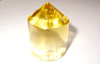
The Yttrium Orthovanadate (YVO4) is a positive uniaxial crystal grown with Czochralski method. It has good temperature stability and physical and mechanical properties. It is ideal for optical polarizing components because of its wide transparency range and large birefringence. It is an excellent... [See More]
- Type: Birefringent
- Material: YVO4
from Artifex Engineering
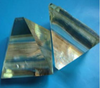
Crystals for polarizing and non-linear optical applications. [See More]
- Type: Birefringent
from UNI OPTICS(Fujian) Co., Ltd
Crystal are main applied for laser application. UNI OPTICS offers the following crystal products. 1. Laser Crystals and Rods: YAG crystal, Nd: YVO4 Crystal. 2. Nonlinear Crystals: BBO, KTP, LiNbO3, LBO. KDP &DKDP. 3. Birefringent Crystals: YVO4, a-BBO, Calcite. [See More]
- Type: Birefringent; Laser; Nonlinear
- Material: BBO; KDP and KD*P; KTP; LBO; LiNbO3

from HG Optronics, Inc.
alpha;-BBO ( α-BaB2O4) is a negative uniaxial crystal which has large birefringence over a broad transparent range of 190nm to 3500nm. α-BBO is an excellent crystal especially in UV and high power applications. The physical, chemical, thermal, and optical properties of alpha-BBO crystal... [See More]
- Type: Birefringent
- Optical Application: Ultraviolet
- Material: BBO
- Damage Threshold: 750000