
Grommets Information
Last revised: January 21, 2025
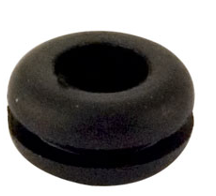
Grommets are eyelets that are used to strengthen or protect an opening, or to insulate and protect an object passing through an opening. They are made from metal, plastic, or rubber materials and are usually round, oval, oblong, square or rectangular. Sizes vary by application. For nonstandard shapes and sizes, the grommet material is often furnished in a strip or roll. Most rubber grommets feature a one-piece construction. Metal and plastic grommets are usually made of two pieces. There are three types of metal grommets, each of which mates with a washer. Plain grommets and washers consist of a domed grommet and flat washer that does not have teeth or spurs. By contrast, rolled rim grommets and washers have interlocking spur teeth to grasp the material. They are less common than plain grommets and washers, but designed for heavier duty applications. Self-piercing grommets and washers are designed to pierce the material without the need for pre-punching a hole.
Materials
Grommets are made from a variety of metal, plastic, and rubber materials. Brass provides good strength, excellent high temperature ductility, reasonable cold ductility, good electrical conductivity, excellent corrosion resistance, good bearing properties and low magnetic permeability. Nickel alloys consist of nickel and one or more other metals, such as copper. Steel, a commercial iron that contains carbon in any amount up to about 1.7 percent, is malleable under suitable conditions and distinguished from cast iron by both its malleability and lower carbon content. Stainless steel is chemical and corrosion resistant and can have relatively high pressure ratings. Butyl, a common term for the isobutylene isoprene elastomer, is resistant to water, steam, alkalis, and oxygenated solvents. Butyl has low gas permeation and is capable of providing both high-energy absorption (dampening) and good hot tear strength. Nitrile and styrene butadiene rubber (SBR) are used with most oils, hydraulic fluids and alcohol. A variety of proprietary compounds are available for specific applications.
How to Select a Grommet
Selecting grommets requires an analysis of physical specifications. Inside diameter (ID) is the diameter of the hole through the center of the grommet. Groove width corresponds to the thickness of the material into which grommets are inserted. Groove diameter is the inside diameter of the groove in the grommet. Other physical specifications for grommets include overall thickness and outside diameter (OD) or length. Width is an important measurement for oval, oblong, square and rectangular grommets. Some grommets are measured in inches (in). Others are measured in centimeters (cm).
Standards
ADS AS1902—Cable grommets
ADS AS44404-406—Elastomeric grommets (various), for aeronautical purposes
AN 231—Grommet & drainage, plastic
Grommets FAQs
What are the key factors engineers should consider when selecting a grommet for a specific project?
When selecting a grommet for a specific project, engineers should consider several key factors to ensure the grommet meets the project's requirements. Here are the main considerations:
Material Selection
Grommets are made from various materials, including metals like brass, nickel alloys, steel, and stainless steel, as well as rubber materials like butyl, nitrile, and styrene butadiene rubber (SBR). Each material has specific properties such as corrosion resistance, electrical conductivity, and resistance to oils and chemicals, which should be matched to the application's environmental conditions and mechanical requirements.
Physical Specifications
Inside Diameter (ID): The diameter of the hole through the center of the grommet.
Groove Width: Corresponds to the thickness of the material into which the grommet is inserted.
Groove Diameter: The inside diameter of the groove in the grommet.
Overall Thickness and Outside Diameter (OD): These dimensions are crucial for ensuring the grommet fits properly in the designated space.
Shape and Size: Consider the shape (oval, oblong, square, rectangular) and size of the grommet, as these will affect its fit and function in the application.
Environmental Conditions
Consider the exposure to extreme temperatures, moisture, oils, and corrosive chemicals, as these can affect the grommet's performance and longevity. The material should be chosen based on its ability to withstand these conditions.
Application Standards
Ensure that the grommet complies with relevant industry standards, such as ADS AS1902 for cable grommets or ADS AS44404-406 for elastomeric grommets used in aeronautical applications.
These factors will help in selecting a grommet that is suitable for the specific requirements of the project, ensuring durability and functionality.
What are the industry standards for grommets and how do they apply to different projects?
When considering industry standards for grommets and their application to different projects, several standards are relevant depending on the type of grommet and its intended use. Here are some key standards and their applications:
Cable Grommets
ADS AS1902: This standard applies to cable grommets, which are used to protect cables from sharp edges and to provide a clean entry point through panels or enclosures. These grommets are essential in electrical and electronic applications to prevent cable damage and ensure safety.
Elastomeric Grommets for Aeronautical Purposes
ADS AS44404-406: This standard covers elastomeric grommets used in aeronautical applications. These grommets are designed to withstand the specific environmental and mechanical stresses encountered in aerospace settings, such as extreme temperatures and vibrations.
Plastic Grommets
AN 231: This standard pertains to plastic grommets and drainage applications. Plastic grommets are often used in environments where corrosion resistance and lightweight properties are required.
Metallic Grommets
General Specifications: Standards such as those for metallic grommets provide guidelines for their use in various industrial applications where durability and strength are critical.
Rubber Grommets
General Purpose: Standards for rubber grommets, such as those for split rubber grommets, are used in applications requiring flexibility and resistance to oils and chemicals.
Hot-Oil and Coolant Resistant: These grommets are specifically designed for environments where exposure to hot oils and coolants is expected, ensuring longevity and performance in automotive and industrial applications.
These standards help ensure that grommets are suitable for their intended applications, providing necessary protection, durability, and compliance with industry requirements.
How do environmental conditions affect the selection of grommets?
Environmental conditions play a significant role in the selection of grommets for engineering projects. Here are the key factors to consider:
Temperature Extremes
Grommets must be able to withstand the temperature range they will be exposed to. Materials like brass and stainless steel offer good high-temperature resistance, while elastomers like butyl provide excellent performance in both hot and cold environments.
Moisture and Weather Conditions
Exposure to moisture and varying weather conditions can affect the longevity and performance of grommets. Materials such as stainless steel and certain elastomers are resistant to water and steam, making them suitable for such environments.
Chemical Exposure
If the grommet will be exposed to oils, corrosive chemicals, or other harsh substances, selecting a material that can resist these conditions is crucial. Nitrile and styrene butadiene rubber (SBR) are examples of materials that perform well in such environments.
Corrosion Resistance
For applications where corrosion is a concern, materials like stainless steel and certain nickel alloys are preferred due to their excellent corrosion resistance.
Industry Standards
Compliance with industry standards ensures that the grommet is suitable for specific environmental conditions. For example, standards like ADS AS44404-406 for aeronautical applications ensure that grommets can withstand the unique stresses of aerospace environments.
These considerations help ensure that the selected grommet will perform reliably and have a long service life in its intended application.
What are the common applications for different types of grommets?
Grommets are versatile components used in various applications across different industries. Here are some common applications for different types of grommets:
Cable Grommets
Application: These are primarily used to protect cables from sharp edges and to provide a clean entry point through panels or enclosures. They are essential in electrical and electronic applications to prevent cable damage and ensure safety.
Standard: ADS AS1902
Elastomeric Grommets for Aeronautical Purposes
Application: Designed to withstand the specific environmental and mechanical stresses encountered in aerospace settings, such as extreme temperatures and vibrations.
Standard: ADS AS44404-406
Plastic Grommets
Application: Often used in environments where corrosion resistance and lightweight properties are required, such as in drainage applications.
Standard: AN 231
Metallic Grommets
Application: Used in various industrial applications where durability and strength are critical. They are suitable for high-temperature environments and provide excellent corrosion resistance.
Standard: General specifications for metallic grommets.
Rubber Grommets
General Purpose: Used in applications requiring flexibility and resistance to oils and chemicals.
Hot-Oil and Coolant Resistant: Specifically designed for environments where exposure to hot oils and coolants is expected, ensuring longevity and performance in automotive and industrial applications.
Standards: General purpose rubber grommets and hot-oil and coolant resistant grommets.
These applications highlight the importance of selecting the right type of grommet based on the specific requirements of the project, including environmental conditions and industry standards.
What are the materials used for grommets and their properties?
When selecting materials for grommets, it's important to consider the specific properties of each material to ensure they meet the requirements of your project. Here are some common materials used for grommets and their properties:
Brass
Properties: Brass offers good strength, excellent high-temperature ductility, reasonable cold ductility, good electrical conductivity, excellent corrosion resistance, good bearing properties, and low magnetic permeability.
Applications: Suitable for environments where these properties are beneficial, such as electrical applications due to its conductivity and resistance to corrosion.
Nickel Alloys
Properties: Composed of nickel and one or more other metals, such as copper, these alloys provide excellent corrosion resistance and are often used in harsh environments.
Applications: Ideal for applications requiring high corrosion resistance and durability.
Steel
Properties: Steel is malleable under suitable conditions and is distinguished by its lower carbon content compared to cast iron. It provides good strength and durability.
Applications: Used in industrial applications where strength and malleability are required.
Stainless Steel
Properties: Known for its chemical and corrosion resistance, stainless steel can also have relatively high pressure ratings.
Applications: Suitable for environments where corrosion resistance is critical, such as in marine or chemical processing applications.
Butyl Rubber
Properties: Resistant to water, steam, alkalis, and oxygenated solvents. It has low gas permeation and provides high-energy absorption (dampening) and good hot tear strength.
Applications: Used in applications where resistance to moisture and chemicals is needed, such as in sealing applications.
Nitrile and Styrene Butadiene Rubber (SBR)
Properties: These materials are resistant to most oils, hydraulic fluids, and alcohol.
Applications: Commonly used in automotive and industrial applications where exposure to oils and chemicals is expected.
These materials are selected based on the specific environmental conditions and mechanical requirements of the application.
Grommets Media Gallery
References
GlobalSpec—SAE Industry Technologies Consortia - AS44404-3
GlobalSpec—AIA/NAS—NASM16491—Grommet, Metallic, General Specification For
GlobalSpec—NPFC—MIL-G-20699—Grommet, Rubber, Split, General Purpose
GlobalSpec—AIA/NAS—NASM3036—Grommets, Rubber, Hot-Oil And Coolant Resistant
Image credits:
Advanced Antivibration Components - AAC | S-B Group
- rubber grommet
- rectangular desk grommets
- 1 rubber grommets
- 30mm rubber blanking grommets
- automotive wiring grommets
- cable exit grommets
- cable management grommets
- cable sealing grommets
- caterpillar grommet strips
- electrical insulation grommets
- flexible vinyl sealing grommets
- glass table grommets
- high temp silicone grommets
- high temperature grommets
- metric rubber grommets
- micro rubber grommets
- molded grommet strip
- plastic automotive grommets
- plastic threaded grommets
- raised floor grommets
- rubber hard drive grommets
- rubber motor mount grommets
- self sealing cable grommets
- small plastic grommets
- square rubber grommets
- vibration damping grommets
- water tight grommets
- waterproof cable grommets