
Toroidal Transformers Information
Last revised: October 21, 2024
Reviewed by: Scott Orlosky, consulting engineer
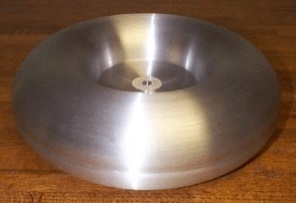 Toroidal transformers are electrical components constructed using a wire-wound, ring-shaped metal core. Ring-shaped circular transformers are known as toroidal because their basic construction involves a toroid, the solid form of a geometric torus. Toroids can informally be described as "donut-shaped."
A toroidal transformer's core is first wound with wire to form the primary (input) coil, then overlaid with insulation. The secondary (output) wire is then wound over the insulation. In the image below, (8) represents the primary winding, (4) represents the secondary winding, and (5), (6), and (7) are insulation layers between coils.
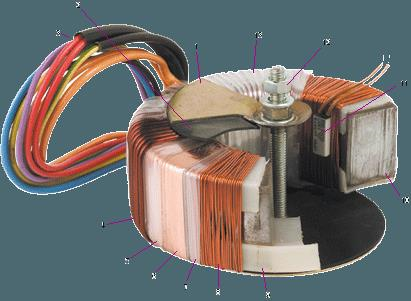
A deconstructed toroidal transformer. Image credit: A+azon
Toroidal transformers feature several advantageous differences when compared to traditionally-built devices:
Overlapped coils, as opposed to two separate coils, allow for much smaller devices.
Magnetic flux is generally limited to the toroidal core, meaning that toroidal transformers essentially shield themselves from producing electromagnetic interference (EMI).
By requiring a smaller number of turns per coil, toroidal transformers feature higher inductance relative to a similarly-sized traditional transformer.
Toroidal transformers also include inherent disadvantages. Because each coil winding must pass through the transformer's center hole automated winding becomes difficult and may necessitate a dedicated winding machine specific to toroidal devices. The unique coil winding also renders toroidal transformers more expensive to manufacture.
The advantages of toroidal transformers are best realized in small, specialized devices. As the size of the transformer increases, the advantages tend to diminish. For this reason, toroidal transformers are best applied to signal applications, such as audio and radio frequency (RF), in sensitive circuits because of the product's miniature construction and noise-limiting attributes. Toroidal transformers are generally not suited to all but the lowest voltage power applications due to their small size.
Specifications
Configuration
A transformer's configuration refers to the number of input voltages it can accept, and by extension the number of leads it must include. As the number of leads and required copper wiring increase, the manufacturing and product cost also increase.
Typical toroidal transformer configurations include:
Single configuration transformers include only one primary coil winding and can therefore accept one input voltage.
Dual configuration devices feature two windings in the primary coil and can accept two different voltages. In order to switch input voltages, a two-lead voltage selector must be used in conjunction with the transformer.
5-lead transformers are wired to accept five different input voltages. Like other multiple configuration products, they must be used with a switching device.
Mounting
A toroidal transformer may be mounted using one of several different methods.
- Chassis mount devices are screwed onto an internal framework using built-in tabs.
- Chip transformers are integrated circuits (IC) manufactured using thin film technology.
- Dish / disk mount products are secured to a flat surface using a simple rubber washer and a metal disk. This method typically uses a through-hole to screw the device onto the surface.
- H-frame mounting uses an H-shaped frame to secure the transformer to a flat surface, and is used in high vibration or high shock applications.
- Some transformers are compatible with modular jacks, such as RJ-45.
- Printed circuit board, or PCB, devices attach directly to a circuit board using through-hole or surface mount technology, and often require solder.
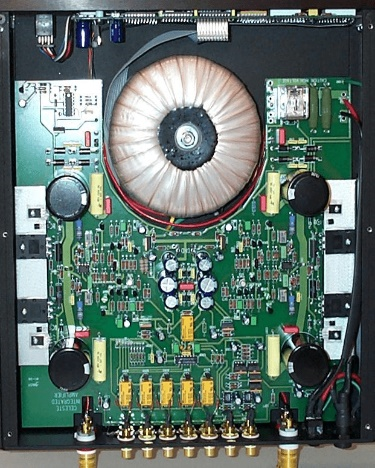

A chassis-mounted transformer, connected to a PCB using leads | A surface mount (SMD) chip transformer
Image credit: Home Theater HiFi | Belden
Additional Specifications
For more information about basic transformer operation, power ratings, and standards, please visit the Transformers Selection Guide.
Toroidal Transformer FAQs
What are the advantages of toroidal transformers?
Toroidal transformers have a low stray field, making them ideal for audio equipment due to their evenly wound primaries and secondaries.
They offer lower off-load power consumption, which can lead to long-term cost savings due to increased electrical efficiency.
They are lighter and smaller in size, which can reduce manufacturing costs and overall system costs by allowing for more compact chassis designs.
What are some design tips for toroidal transformers?
When designing toroidal transformers, there are several key considerations to keep in mind to optimize performance and cost-effectiveness. Here are some design tips based on the information available:
The choice of material for the toroidal core is crucial. Premium-grade virgin steel typically offers better performance compared to other materials. However, if budget constraints are a concern, recycled steel (Grade B) can be used, though it may result in lower reliability and performance.
Proper winding is essential for improving magnetic flux and reducing leakage inductance. Enameled wires should be wound evenly and leveled around the core to ensure a lightweight and cost-effective design. Adjusting the winding strength of the machine is important to prevent wire perforation and reduce the risk of short circuits.
What is the winding process for toroidal transformers?
When it comes to the winding process for toroidal transformers, there are several important aspects to consider to ensure optimal performance and cost-effectiveness:
Winding Technique
The winding process is crucial for improving magnetic flux and reducing leakage inductance. Proper winding ensures a lightweight and cost-effective transformer design.
Material and Wire Arrangement
Enameled wires should be wound evenly and leveled around the core. This arrangement helps in maintaining the balance of the magnetic field and minimizes potential issues such as wire perforation and short circuits.
Machine Adjustment
Adjusting the winding strength of the machine is important to prevent wire perforation. This adjustment reduces the risk of short circuits, which can compromise the reliability and safety of the transformer.
Challenges in Automation
The unique coil winding process, which requires each coil winding to pass through the transformer's center hole, makes automated winding difficult. This may necessitate a dedicated winding machine specific to toroidal devices, which can increase manufacturing costs.
When selecting materials for toroidal transformers, there are several important considerations to ensure optimal performance and cost-effectiveness:
Material Options
Engineers have a wide range of materials to choose from when designing toroidal transformers. The selection depends on the specific performance requirements and budget constraints.
Premium-Grade Virgin Steel
Toroidal cores made from premium-grade virgin steel typically offer superior performance compared to other materials. This choice is ideal when high reliability and performance are critical.
Recycled Steel (Grade B)
As a cost-effective alternative, recycled steel (Grade B) can be used for toroidal core design. However, it may result in lower reliability and performance, making it suitable for applications where budget constraints are a primary concern.
These considerations are essential for designing toroidal transformers that meet specific performance requirements while managing costs effectively.
What are the advantages of using premium-grade virgin steel in toroidal transformers?
The advantages of using premium-grade virgin steel in toroidal transformers are primarily related to performance and reliability. Here are the key benefits:
Toroidal cores made from premium-grade virgin steel typically perform better than those made from other materials. This is due to the high-quality properties of virgin steel, which can enhance the overall efficiency and effectiveness of the transformer
Premium-grade virgin steel offers higher reliability compared to alternative materials like recycled steel. This makes it an ideal choice for applications where consistent performance and long-term durability are critical.
What is the impact of material selection on the magnetic properties of toroidal transformers?
The impact of material selection on the magnetic properties of toroidal transformers is significant, as it directly influences the performance and reliability of the transformer. Here are some key points based on the information available:
Engineers have a wide range of materials to choose from when designing toroidal transformers. The selection depends on the specific performance requirements and budget constraints
Toroidal cores made from premium-grade virgin steel typically offer excellent overall performance compared to other materials. Despite this, specialized core materials have been developed for use in certain specific applications. Here are some examples that may be available for your application.
Silicon Steel Cores
Silicon steel laminated cores, are made from a thin strip of silicon steel laminated together to reduce eddy current losses. They are widely used for power distribution, electric motors, and appliances where energy efficiency is crucial. Due to the laminated structure they have low core losses, high magnetic permeability, and excellent efficiency.
Ferrite Cores
These cores are made from a ceramic compound of iron oxide (Fe2O3) combined with other metals. They have high magnetic permeability and are suited for use in high-frequency applications, such as telecommunications, audio equipment, and high-frequency power supplies. They have low eddy current losses, and good thermal stability, allowing them to operate effectively across a range of temperatures without significant loss of magnetic properties.
Amorphous Cores
These consist of an alloy of iron, boron, silicon, and other elements. This unique structure gives them high permeability and low coercivity. This means they can easily be magnetized and demagnetized, optimizing energy transfer and minimizing losses. Amorphous cores excel in high-efficiency applications like inverter systems, renewable energy solutions, and power supplies.
Powdered Iron Cores
Powdered iron cores, are made by compressing iron powder into a solid core. The result is good magnetic properties and minimal core losses. These are often used in transformers for cost-effective and moderate frequency operation. They can also be found in chokes, filters, and various electronic magnetic components. Their attributes include favorable magnetic permeability and efficiency at lower frequencies.
The choice of material affects the magnetic flux and inductance properties of the transformer. Proper material selection, along with correct winding techniques, can improve magnetic flux and reduce leakage inductance, leading to a more efficient design
Toroidal Transformer Media Gallery
References
GlobalSpec—Design tips for toroidal transformers
Image credits
capturedlighting.org | A+azon | Home Theater HiFi |Belden