Electrodynamics: An Introduction Including Quantum Effects
Chapter 6: Macroscopic Magnetostatics

6.1 Introductory Remarks

Up to this point we have only considered currents I or precisely known current densities j which describe a stationary microscopic flow of charge. In macroscopic problems the total current density is not known precisely. The atomic or molecular ring-like currents (and spins) of the electrons in matter determine the latter's magnetic properties, whose effective magnetic moments contribute to the vector potential A(r), as also the conduction electrons of the macroscopic transport of charge. For macroscopic effects again only an averaging over a macroscopic volume is meaningful. We can keep the microscopic current density j considered thus far as the density of macroscopic charge transport; this has to be supplemented, however, by the contributions of microscopic molecular currents. Hence we write


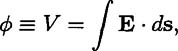
We are interested here in currents in conductors. We defined the ideal conductor electrostatically as an equipotential domain in which the electrons can move about without doing work. If a potential difference V is applied, and hence a field E,


e.g. V = V 1 ? V 2 = EL (L = length of the conductor), then the conduction electrons move in the direction determined by E. One thus has a current I and a current density j. However, in general these conduction electrons can not move about completely freely. The nuclei of the atoms of the conductor occupy points in the lattice of the rigid body structure of the metal, and...

UNLIMITED FREE
ACCESS
TO THE WORLD'S BEST IDEAS

SUBMIT
Already a GlobalSpec user? Log in.

This is embarrasing...

An error occurred while processing the form. Please try again in a few minutes.

Customize Your GlobalSpec Experience

Category: Superconductors and Superconducting Materials
Finish!
Privacy Policy

This is embarrasing...

An error occurred while processing the form. Please try again in a few minutes.