
All Acid Anhydrides Organic Chemicals
Description
Acid anhydrides are organic chemicals that serve as powerful acetylating agents. They are typically used to introduce acyl groups into other compounds, which is a crucial step in various chemical reactions. These compounds are characterized by their ability to form acids upon the addition of water.
Working Principle
Acid anhydrides work by reacting with water to form acids. This reaction is fundamental to their role as acetylating agents. The process involves the anhydride reacting with a nucleophile, such as water, to yield two molecules of carboxylic acid. This property makes them highly useful in chemical synthesis, particularly in the production of esters and amides. Their ability to introduce acyl groups into other molecules is what makes them valuable in various industrial and laboratory settings.
Applications
Acid anhydrides are used in a variety of applications. For instance, acetic anhydride is employed in the production of cellulose acetate, which is used in photographic films and textiles. They are also used in the synthesis of aspirin and other pharmaceuticals. In the field of epoxy resins, anhydrides serve as curing agents, providing enhanced thermal and mechanical properties to the final product. This makes them ideal for applications requiring high heat resistance, such as in the protection of circuit boards and pipelines.
Advantages over other Organic Chemicals
One of the primary advantages of acid anhydrides over other organic chemicals is their efficiency as acetylating agents. They are more reactive than carboxylic acids, which allows for faster and more complete reactions. This reactivity is particularly beneficial in industrial processes where time and yield are critical factors. Additionally, their ability to enhance the thermal and mechanical properties of epoxy resins makes them superior to other curing agents in high-temperature applications.
Limitations
Despite their advantages, acid anhydrides have limitations. They are highly reactive and can be corrosive, requiring careful handling and storage. Their reactivity also means they can be sensitive to moisture, which can lead to premature hydrolysis and reduced effectiveness. This necessitates stringent control of environmental conditions during their use and storage.
Considerations
When considering the use of acid anhydrides, several factors should be taken into account. Initial costs can be high due to the need for specialized handling and storage equipment to prevent moisture exposure. Operating expenses may also be elevated due to the need for safety measures and environmental controls. Durability is generally not a concern as they are used up in reactions, but accuracy in measurement and handling is crucial to ensure desired outcomes. Replacement and maintenance costs are primarily associated with the equipment used to handle these chemicals safely.

from Matrix Scientific
4,4'-(Hexafluoroisopropylidene)diphthalic anhydride. Molecular Formula: C19H6F6O6. Molecular Weight: 444.25 [See More]
- Chemical Family: All Acid Anhydrides
- Chemical Formula: C19H6F6O6
- Chemical Name: 4,4'-(Hexafluoroisopropylidene)diphthalic anhydride
- CAS Number: 1107-00-2
from Penta Manufacturing Company
Product Code: 01-04800. CAT Number: 01-04800. CAS Number: 108-24-7. FEMA Number: N/A. Kosher: Yes. Natural: No. European Pharm: No. NF: No. USP: No. British Pharm: No. FCC: No. Halal: No. Japanese Pharm: No [See More]
- Chemical Family: All Acid Anhydrides
- CAS Number: 108-24-7
- Chemical Name: ACETIC ANHYDRIDE
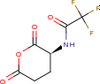
from SynQuest Laboratories, Inc.
Molecular Weight: 225.12. TSCA: Not listed on TSCA inventory; for R&D use only [See More]
- Chemical Family: All Acid Anhydrides
- Chemical Name: (L)-N-(Trifluoroacetyl)glutamic acid anhydride
- Trigger: Acid
- Chemical Formula: C 7 H 6 F 3 NO 4