
Ethylene Glycol Organic Chemicals
Description
Ethylene glycol is an organic compound primarily used as a raw material in the production of other chemicals. It is a colorless, odorless, and sweet-tasting liquid that is highly soluble in water. Its primary function is to serve as a precursor to polymers and other chemical compounds.
Working Principle
Ethylene glycol works by undergoing chemical reactions that transform it into various useful products. One of the key processes involves its oxidation to produce ethylene oxide, which is then further processed to create glycols. These reactions are typically catalyzed by silver, which allows for efficient conversion with lower environmental impact compared to older methods. The utility of ethylene glycol lies in its ability to lower the freezing point of water, making it an essential component in antifreeze formulations. Its chemical structure allows it to interact with water molecules, disrupting their ability to form ice at standard freezing temperatures.
Applications
Ethylene glycol is widely used in the production of antifreeze and coolants, which are essential for the operation of vehicles and machinery in cold climates. It is also a critical component in the manufacture of polyester fibers and resins, which are used in textiles and plastic bottles. Additionally, ethylene glycol is used in the production of de-icing solutions for aircraft and runways, as well as in the formulation of hydraulic fluids and inks.
Advantages over other Organic Chemicals
Ethylene glycol offers several advantages over other organic chemicals. Its ability to effectively lower the freezing point of water makes it superior for use in antifreeze applications compared to other compounds. Additionally, its high solubility in water and low volatility make it a safer and more efficient choice for various industrial applications. The production process of ethylene glycol, particularly through the oxidation of ethylene, is also more environmentally friendly and cost-effective compared to older methods that involved chlorine.
Limitations
One of the main limitations of ethylene glycol is its toxicity. It is harmful if ingested, and exposure can lead to serious health issues. This necessitates careful handling and disposal to prevent environmental contamination and health risks. Additionally, while ethylene glycol is effective at lowering the freezing point of water, it can become more viscous at lower temperatures, which may require adjustments in system design to maintain efficient flow rates.
Considerations
When considering the use of ethylene glycol, it is important to account for initial costs, which can vary depending on the scale of production and the specific application. Operating expenses may include the cost of catalysts and energy required for the oxidation process. Durability and maintenance are also key considerations, as systems using ethylene glycol may require regular monitoring and replacement to ensure optimal performance and safety. The accuracy of ethylene glycol concentration in solutions is crucial for effective application, particularly in antifreeze formulations, where precise freezing point depression is necessary.

from Linde North America, Inc.
Supplying ultra-pure chemicals for the global microelectronics industry through our joint venture with AUECC. We supply chemicals for electronic manufacturing though our joint venture with Asia Union Electronic Chemical Corporation (AUECC), a leading supplier of wet process chemicals to high-tech... [See More]
- Chemical Family: All Carboxylic Acids; All Alcohols; Acetic Acid; Isopropanol; Ethanol; Ethylene Glycol
- Chemical Name: Acetone, N-methyl, 2 pyrrolodine (nMP), Monoethanolamine, Propylene glycol methyl ether acetate, Methyl ethyl ketone,and More
- Trigger: Solvent; Acid; Base
- State of Matter: Gas

from Medical Isotopes, Inc.
Diethylene Glycol [See More]
- Chemical Family: All Alcohols; Ethylene Glycol
- CAS Number: 111-46-6
- Chemical Formula: C 4 H 10 O 3
from Penta Manufacturing Company
Product Code: 04-14500. CAT Number: 04-14500. CAS Number: 111-46-6. FEMA Number: N/A. Kosher: No. Natural: No. European Pharm: No. NF: No. USP: No. British Pharm: No. FCC: No. Halal: No. Japanese Pharm: No [See More]
- Chemical Family: All Alcohols; Ethylene Glycol
- CAS Number: 111-46-6
- Chemical Name: DIETHYLENE GLYCOL

from GFS Chemicals, Inc.
ITEM#:2346. (C2H5OCH2CH2)2O. CAS#:112-36-7. F.W.:162.23. NFPA#: Specific Gravity: 0.906. DOT:NR. Descriptions: For use with Organic Halogen Reagent. Specification. TEST. 1. Halogen 0.1 ppm. Properties. No properties. [See More]
- Chemical Family: All Alkenes; All Ethers; All Alcohols; Ethylene / Ethene; Ethylene Glycol
- Chemical Name: DIETHYLENE GLYCOL DIETHYL ETHER HALOGEN FREE
- Trigger: Solvent
- Chemical Formula: (C2H5OCH2CH2)2O

from Toronto Research Chemicals, Inc.
Polyethyleneglycol Derivatives [See More]
- Chemical Family: All Alcohols; Ethylene Glycol
- Chemical Formula: C12H27NO6
- Chemical Name: 1-Aminohexaethylene Glycol
- CAS Number: 39160-70-8

from Chemical Strategies, Inc.
Chemical Strategies offers over 3,000 products by Chempax. If you are unable to locate a chemical you need, our sales department can custom source any needed materials for you directly. [See More]
- Chemical Family: All Alcohols; Ethylene Glycol
- Chemical Name: ETHYLENE GLYCOL

from Technic, Inc.
Hydrogen peroxide mixtures (APM) are widely used for removing particles from substrate surfaces in semiconductor manufacturing. Technic offers standard as well as customized high purity hydrogen peroxide solutions to meet each customer ’s requirements. To inquire about any of products listed... [See More]
- Chemical Family: All Alcohols; Ethylene Glycol
- Chemical Name: Ethylen Glycol
- Trigger: Solvent

from Toronto Research Chemicals, Inc.
Polyethyleneglycol Derivatives [See More]
- Chemical Family: All Alcohols; Ethylene Glycol
- Chemical Formula: C16H35NO8
- Chemical Name: 1-Aminooctaethylene Glycol
- CAS Number: 352439-37-3

from Chemical Strategies, Inc.
Chemical Strategies offers over 3,000 products by JT Baker. If you are unable to locate a chemical you need, our sales department can custom source any needed materials for you directly. [See More]
- Chemical Family: All Alcohols; Ethylene Glycol
- Chemical Name: Ethylene Glycol

from Toronto Research Chemicals, Inc.
Polyethyleneglycol Derivatives [See More]
- Chemical Family: All Alcohols; Ethylene Glycol
- Chemical Formula: C10H21N3O5
- Chemical Name: 1-Azidohexaethylene Glycol
- CAS Number: 86770-68-5
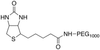
from Toronto Research Chemicals, Inc.
Biotin Derivatives [See More]
- Chemical Family: All Alcohols; Ethylene Glycol
- Chemical Name: Biotinamido Poly(ethylene glycol)1000

from Toronto Research Chemicals, Inc.
Diagnostic [See More]
- Chemical Family: All Alcohols; Ethylene Glycol
- Chemical Formula: C16H36N2O7
- Chemical Name: O,O′-Bis(2-aminoethyl)hexaethylene Glycol
- CAS Number: 332941-25-0

from Toronto Research Chemicals, Inc.
Diagnostic [See More]
- Chemical Family: All Alcohols; Ethylene Glycol
- Chemical Formula: C14H30N4O6
- Chemical Name: O-(2-Aminoethyl)-O’-(2-azidoethyl)pentaethylene Glycol
- CAS Number: 957486-82-7

from Toronto Research Chemicals, Inc.
Polyethyleneglycol Derivatives [See More]
- Chemical Family: All Alcohols; Ethylene Glycol
- Chemical Formula: C12H26N4O5
- Chemical Name: O-(2-Aminoethyl)-O’-(2-azidoethyl)tetraethylene Glycol
- CAS Number: 516493-93-9

from Toronto Research Chemicals, Inc.
Diagnostic [See More]
- Chemical Family: All Alcohols; Ethylene Glycol
- Chemical Formula: C10H2N4O4
- Chemical Name: O-(2-Aminoethyl)-O’-(2-azidoethyl)triethylene Glycol
- CAS Number: 951671-92-4
![O-(2-Aminoethyl)-O’-[2-(Boc-amino)ethyl]hexaethylene.. -- A608860 - Image](https://partimages.globalspec.com/13/1563/1276563_medium.png "O-(2-Aminoethyl)-O’-[2-(Boc-amino)ethyl]hexaethylene.. -- A608860 - Image")
from Toronto Research Chemicals, Inc.
Polyethyleneglycol Derivatives [See More]
- Chemical Family: All Alcohols; Ethylene Glycol
- Chemical Formula: C21H44N2O9
- Chemical Name: O-(2-Aminoethyl)-O’-[2-(Boc-amino)ethyl]hexaethylene Glycol
- CAS Number: 206265-98-7
![O-(2-Aminoethyl)-O’-[2-(Boc-amino)ethyl]pentaethylen.. -- A608865 - Image](https://partimages.globalspec.com/36/0436/1275436_medium.png "O-(2-Aminoethyl)-O’-[2-(Boc-amino)ethyl]pentaethylen.. -- A608865 - Image")
from Toronto Research Chemicals, Inc.
Polyethyleneglycol Derivatives [See More]
- Chemical Family: All Alcohols; Ethylene Glycol
- Chemical Formula: C19H40N2O8
- Chemical Name: O-(2-Aminoethyl)-O’-[2-(Boc-amino)ethyl]pentaethylene Glycol
- CAS Number: 1091627-77-8