
Acetaldehyde Organic Chemicals
Description
Acetaldehyde, also known as ethanal, is a colorless liquid with a pungent, suffocating odor that can be somewhat fruity and pleasant in dilute concentrations. It is miscible with water and most common organic solvents, such as acetone, benzene, ethyl alcohol, ether, gasoline, toluene, xylenes, turpentine, and acetic acid. Acetaldehyde is widely used as a starting material in organic syntheses, including the production of resins, dyestuffs, and explosives. It also serves as a reducing agent, preservative, and medium for silvering mirrors.
Working Principle
Acetaldehyde operates primarily through its versatile chemical reactivity, which allows it to participate in a variety of chemical reactions. It is produced commercially by the oxidation of alcohol vapors over a silver catalyst at high temperatures. This process can achieve conversions of 74 to 82 percent per pass, with the added benefit of generating steam for use elsewhere in the process. The chemical structure of acetaldehyde, featuring a carbonyl group (C=O), makes it a reactive compound, enabling it to form bonds with other molecules, which is why it is useful in synthesizing other chemicals.
Applications
Acetaldehyde is used in the manufacture of resins, dyestuffs, and explosives. It is also employed as a reducing agent and preservative. In the production of resins, paraldehyde, a polymer of acetaldehyde, is sometimes preferred due to its higher boiling and flash points. Additionally, acetaldehyde is used as a medium for silvering mirrors, which involves depositing a thin layer of silver onto glass surfaces.
Advantages over other Organic Chemicals
One of the advantages of acetaldehyde over other organic chemicals is its high reactivity, which makes it a valuable starting material for a wide range of chemical syntheses. Its ability to mix with a variety of solvents and its effectiveness as a reducing agent and preservative further enhance its utility in industrial applications.
Limitations
Acetaldehyde has several limitations, including its pungent odor and potential health hazards. It is a flammable liquid with a low flash point, which poses safety risks during handling and storage. Additionally, exposure to acetaldehyde vapors can cause irritation to the eyes and respiratory tract, and high concentrations can act as a central nervous system depressant.
Considerations
When considering the use of acetaldehyde, it is important to account for initial costs, operating expenses, and safety measures due to its flammability and potential health risks. The durability and accuracy of processes involving acetaldehyde depend on maintaining controlled conditions to prevent unwanted reactions. Replacement and maintenance costs may include ensuring proper storage facilities and safety equipment to handle the chemical safely.

from GFS Chemicals, Inc.
ITEM#:3001. CH3CH(OCH2CH3)(OCH2C ≡CH). CAS#:18669-04-0. F.W.:128.17. NFPA#: Specific Gravity: 0.893. DOT:6.1/3/II. Descriptions: Requires Refrigeration. Specification. TEST. 1. Assay (GC-FID), 97.5% min. 2. Identification by GC/MS - Conforms. 3. Appearance - Clear, colorless to yellow liquid. [See More]
- Chemical Family: All Aldehydes; Acetaldehyde
- Chemical Formula: CH3CH(OCH2CH3)(OCH2CCH)
- Chemical Name: (+/-)-ACETALDEHYDE ETHYL PROPARGYL ACETAL 98%
- CAS Number: 18669-04-0

from Matrix Scientific
Trifluoroacetaldehyde methyl hemiacetal, tech. Molecular Formula: C3H5F3O2. Molecular Weight: 130.07 [See More]
- Chemical Family: All Aldehydes; Acetaldehyde
- Chemical Formula: C3H5F3O2
- Chemical Name: Trifluoroacetaldehyde methyl hemiacetal, tech.
- CAS Number: 431-46-9

from Toronto Research Chemicals, Inc.
Retinoids [See More]
- Chemical Family: All Aldehydes; Acetaldehyde
- Chemical Formula: C15H22O
- Chemical Name: (7E,9E)-β-Ionylidene Acetaldehyde
- CAS Number: 3917-41-7
from Medical Isotopes, Inc.
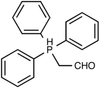
(Triphenylphosphoranylidene)acetaldehyde [See More]
- Chemical Family: All Aldehydes; Acetaldehyde
- CAS Number: 2136-75-6
- Chemical Formula: C 20 H 19 OP

from Pfaltz & Bauer, Inc.
Palladium Acetylacetonate [See More]
- Chemical Family: Acetaldehyde
from Toronto Research Chemicals, Inc.
Retinoids [See More]
- Chemical Family: All Aldehydes; Acetaldehyde
- Chemical Formula: C15H17D5O
- Chemical Name: (7E,9E)-β-Ionylidene-d5 Acetaldehyde
from Medical Isotopes, Inc.
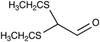
2,2-Bis(ethylthio)acetaldehyde [See More]
- Chemical Family: All Aldehydes; Acetaldehyde
- Chemical Formula: C 6 H 12 OS 2
from Toronto Research Chemicals, Inc.
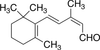
Retinoids [See More]
- Chemical Family: All Aldehydes; Acetaldehyde
- Chemical Formula: C15H22O
- Chemical Name: (7E,9Z)-β-Ionylidene Acetaldehyde
- CAS Number: 54226-17-4
from Medical Isotopes, Inc.
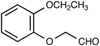
2-(2-Ethoxyphenoxy)acetaldehyde [See More]
- Chemical Family: All Aldehydes; Acetaldehyde
- Chemical Formula: C 10 H 12 O 3
from Medical Isotopes, Inc.
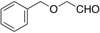
2-(Benzyloxy)acetaldehyde [See More]
- Chemical Family: All Aldehydes; Acetaldehyde
- CAS Number: 60656-87-3
- Chemical Formula: C 9 H 10 O 2

from Medical Isotopes, Inc.
4-(Phenylmethoxy)-benzeneacetaldehyde [See More]
- Chemical Family: All Aldehydes; Acetaldehyde
- CAS Number: 40167-10-0
- Chemical Formula: C 15 H 14 O 2
from Medical Isotopes, Inc.
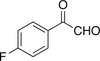
4-Fluoro- α-oxo-benzeneacetaldehyde [See More]
- Chemical Family: All Aldehydes; Acetaldehyde
- CAS Number: 403-32-7
- Chemical Formula: C 8 H 5 FO 2
from Medical Isotopes, Inc.
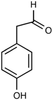
4-Hydroxyphenylacetaldehyde [See More]
- Chemical Family: All Aldehydes; Acetaldehyde
- CAS Number: 7339-87-9
- Chemical Formula: C 8 H 8 O 2

from Medical Isotopes, Inc.
Bromochloroacetaldehyde [See More]
- Chemical Family: All Aldehydes; Acetaldehyde
- CAS Number: 98136-99-3
- Chemical Formula: C 2 H 2 BrClO
from Medical Isotopes, Inc.
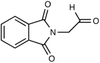
Phthalimidoacetaldehyde [See More]
- Chemical Family: All Aldehydes; Acetaldehyde
- CAS Number: 2913-97-5
- Chemical Formula: C 10 H 7 NO 3