
Chloroethane Organic Chemicals
Description
Chloroethane, also known as ethyl chloride, is a colorless, volatile, and flammable liquid when compressed. It is primarily used as a solvent and refrigerant.
Working Principle
Chloroethane works by leveraging its chemical properties as a volatile organic compound. Its volatility allows it to evaporate quickly, which is useful in applications requiring rapid cooling or solvent action. The compound's flammability and reactivity are also key characteristics that make it useful in various chemical synthesis processes.
Applications
Chloroethane is used in the manufacture of tetraethyl lead, which was historically used as an anti-knock agent in gasoline. It also serves as a solvent for fats and waxes and is used in the synthesis of insecticides. Additionally, chloroethane is employed as an alkylating agent in organic synthesis.
Advantages over other Organic Chemicals
One advantage of chloroethane over other organic chemicals is its effectiveness as a solvent due to its volatility. This property allows it to evaporate quickly, leaving minimal residue, which is beneficial in cleaning and degreasing applications. Its ability to act as an alkylating agent also makes it valuable in chemical synthesis, providing a versatile tool for creating complex organic compounds.
Limitations
Chloroethane's flammability poses a significant safety risk, requiring careful handling and storage to prevent accidents. Its volatility, while advantageous in some applications, can also lead to rapid evaporation and loss of material if not properly contained. Additionally, its use in the production of tetraethyl lead, a compound now largely phased out due to environmental concerns, limits its applicability in modern contexts.
Considerations
When considering the use of chloroethane, it is important to account for initial costs, which may be influenced by its production and handling requirements. Operating expenses can be affected by the need for specialized storage and safety measures due to its flammability. Durability is not a primary concern given its chemical nature, but accuracy in its application is crucial to ensure safety and effectiveness. Replacement and maintenance costs may arise from the need to maintain safe storage conditions and equipment used in its handling.
from Medical Isotopes, Inc.
1,1,1,2-Tetrachloroethane-d 2 [See More]
- Chemical Family: All Halogenated; Chloroethane
- CAS Number: 117164-18-8
- Chemical Formula: ClCD 2 CCl 3

from GFS Chemicals, Inc.
ITEM#:1064. ClCH2CH2Cl. CAS#:107-06-2. F.W.:98.96. NFPA#:3-3-1. Specific Gravity: 1.250. DOT:3/6.1/II. Descriptions: Specification. TEST. 1. Assay 99.0% min. 2. Appearance - Clear, colorless liquid. 3. Residue after evaporation 0.002%. 4. Titrable acid 0.0003 meq/g. 5. Water (KF) 0.03%. 6. Color... [See More]
- Chemical Family: All Alkanes; All Halogenated; Ethane; Chloroethane
- Chemical Name: 1,2-DICHLOROETHANE REAGENT (ACS)
- Trigger: Solvent
- Chemical Formula: ClCH2CH2Cl
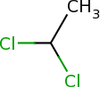
from SynQuest Laboratories, Inc.
Molecular Weight: 98.96. TSCA: Listed on TSCA inventory; for R&D use only [See More]
- Chemical Family: All Halogenated; Chloroethane
- Chemical Formula: C 2 H 4 Cl 2
- Chemical Name: 1,1-Dichloroethane
- CAS Number: 75-34-3
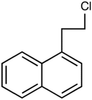
from Medical Isotopes, Inc.
1-(1-Naphthyl)-2-chloroethane [See More]
- Chemical Family: All Alkanes; All Halogenated; Ethane; Chloroethane
- Chemical Formula: C 12 H 11 Cl