
Plastic Pipe Information
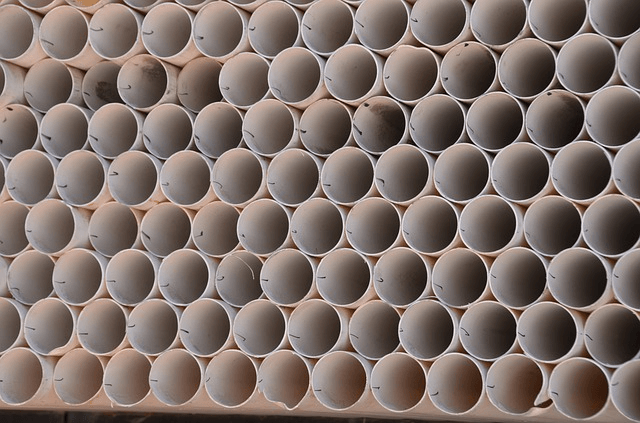 Plastic pipe is lightweight, flexible, durable, and versatile. Products are made of plastics and composite materials and are used in many of the same applications as traditional metal and ceramic piping. Plastic pipe offers significant savings in terms of both weight and installation, however. Plastic piping comes in solid wall and corrugated configurations, and is available in a variety of common materials.
Standards
Standards from organizations such as the Plastics Pipe Institute (PPI) specify which plastic materials are suitable for use in hazardous environments and fire protection systems. The American National Standards Institute (ANSI) assigns pipe schedule numbers to classify wall thicknesses at different pressures.
Applications
Specific applications for plastic pipe include:
- fire water sprinklers
- chemical fluid handling
- natural gas distribution
- potable water distribution
- floor heating systems
Plastic piping is also used in plumbing, drainage, and wastewater systems; and as culvert pipes and DWV pipes for drain, waste, and vent applications.
Materials
Common materials for plastic pipe include:
- polyvinyl chloride (PVC)
- chlorinated polyvinyl chloride (CPVC)
- high-density polyethylene (HDPE)
- low-density polyethylene (LDPE)
- acrylonitrile butadiene styrene (ABS)
PVC pipe provides good flexibility, a smooth surface, and nontoxic qualities. Because PVC piping is inert, some grades are used in food and chemical processing. CPVC pipe shares many of the same advantages and uses as PVC, but typically carries higher temperature ratings. HDPE pipe provides good temperature resistance and is used in drainage structures and systems. LDPE pipe is used in drainage systems as well as industrial process components, laboratories, and sprinkler and drip irrigation systems. ABS pipe provides good chemical and creep resistance as well as dimensional stability. Other types of plastic pipe are also available.
Specifications
Plastic pipe is available in both English and metric sizes. Wall thickness may be specified numerically or defined according to a pipe schedule. Other specifications for plastic pipe include section shape, maximum pressure, and temperature range.
Features
In terms of features, plastic pipe may provide abrasion resistance, biological resistance, or chemical resistance. Products are also described as lightweight, nontoxic, and low maintenance. Easy identification, the ability to use plastic pipe with a variety of joining methods, and the low thermal conductivity of plastic piping are some additional benefits.
Related Information
CR4 Community—Thinking About Building Something That Can Detect Poly Pipe
Engineering360—Partial Water Pipe Replacement Ups Health Risk: Study
- 1 1/2"
- 1 1/4"
- 1"
- 1/2"
- 1/4"
- 10"
- 100mm - 200mm
- 10mm - 20mm
- 12"
- 14"
- 16"
- 18"
- 2 1/2"
- 2"
- 20"
- 200mm - 500mm
- 20mm - 30mm
- 22"
- 24"
- 26"
- 28"
- 3 1/2"
- 3"
- 3/4"
- 3/8"
- 30"
- 30mm - 40mm
- 32"
- 34"
- 36"
- 4"
- 40
- 40mm - 50mm
- 5"
- 500mm - 1000mm
- 50mm - 100mm
- 6"
- 8"
- 80
- CPVC
- Chemical
- Corrugated
- Drainage
- Drinking Water
- Flexible
- Gases
- Hot Water
- PVC
- Pipe Liner / Lined
- Polyethylene (PE, HDPE)
- Polypropylene (PP)
- SDR 13.5
- Underground Rated
- Wastewater
- schedule 80 pipe
- schedule 120 pipe
- 10 foot diameter corrugated pipe
- 12 diameter plastic pipe
- 24 inch diameter corrugated pipe
- 3 diameter plastic pipe
- 36 diameter corrugated pipe
- 4 foot diameter plastic pipe
- 8 diameter plastic pipe
- 8 inch ABS pipe
- butyrate plastic pipe
- glass reinforced plastic pipe
- low pressure plastic pipe
- non PVC plastic pipe
- pressure rated ABS pipe
- shapeable plastic pipe
- solid core ABS pipe
- yellow corrugated pipe