Video and Media Servers: Technology and Applications, Second Edition
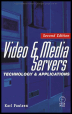
An excellent practical guide, this second edition continues to provide a technical understanding of professional digital video recording systems.
 TABLE OF CONTENTS
 For those anticipating an enterprise migration to digital there are many questions being raised about which approaches to take. As operations managers find themselves balancing the demands for expanding disk space, continually asking promotion, sales and programming departments to delete older files or clips, or finding ways to reduce operational labor expenses, the near-line digital tape archive can help to solve a portion of those problems. The automated tape library (ATL) is a logical extension for handling the expanding needs in data storage, overall media asset management, and general data protection or backup.
When the facility begins to face the "out of disk space" dilemma, managers scramble to find budget, operational changes or non-cost effective means to solve the problem. Once the server disk space runs out, the enterprise begins to approach the risk of losing the library
The issue of facing the digital archive becomes a non-issue once the facility's servers move to storing program length material, a direction we most certainly expect to occur. Once this boundary is reached storage needs will grow even larger.
News entities that already rely on server technology for editing with a goal of total digital migration on the horizon have similar requirements. However, the difference with news is that they can seldom predict the access demand or the volume of on-line storage they will need. Timely programming events, such as news and magazine shows, require faster access to their libraries than does the daily broadcast or content delivery operation (with the general exception...