Switch-Mode Power Converters: Design and Analysis
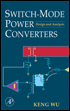
Chapter 13: State-Space Averaging and the Cuk Converter

Overview

The theory of state-space averaging applied in the switch-mode power converter was conceived in the early 1970s and well developed in the early 1980s. Dr. Robert Middlebrook and his then graduate student Dr. Slobodan Cuk were credited with the concept and techniques associated with it. Therefore, the switch-mode converter models generated on the basis of the theory have oftentimes been named Middlebrook models.

Over the years, the theory and the numerous models it created have been employed extensively by both academic researchers and industrial practitioners. Over this time, misuse of the theory also has arisen. In this chapter, we try to clarify this misapplication and present a complete example exhibiting the flow for using this powerful technique.

13.1 State-Space Averaging

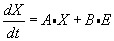
In theory, a dynamic system can be described by a set of first-order differential equations. For example, the circuit of Figure 1.29 is analytically described by equations (1.60) (1.62). The equation set can be further placed in a compact form using matrix symbolic representation, the state equation

(13.1)

For instance, see (1.115), where X is the state vector representing all state variables in the system. The implication is that, if the system structure switches cyclically between two alternating topologies within a preset period of time T, both topologies are governed by two distinctive state equations:

(13.2)

and the output by

(13.3)

The state-space averaging technique claims that, if a low (frequency)-pass control element exists in the system, the low-frequency behavior of the switching system under the steady...

UNLIMITED FREE
ACCESS
TO THE WORLD'S BEST IDEAS

SUBMIT
Already a GlobalSpec user? Log in.

This is embarrasing...

An error occurred while processing the form. Please try again in a few minutes.

Customize Your GlobalSpec Experience

Category: Switching Power Supplies
Finish!
Privacy Policy

This is embarrasing...

An error occurred while processing the form. Please try again in a few minutes.