Electronic Instrument Handbook, Third Edition
Joseph E. Mueller
Agilent Technologies
Loveland, Colorado
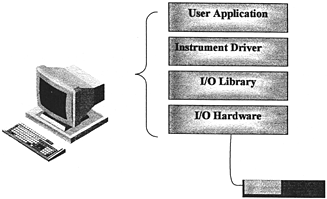
In many test and measurement applications, it is important to connect instruments to computers. The applications vary from complex, high-speed automation to simply transferring measurement data from the instrument into an application on the computer for analysis or presentation. The actual implementation that provides the connection is composed of:
The physical I/O connection
The I/O library that runs on the computer
Instrument interface software on the computer (also known as instrument drivers)
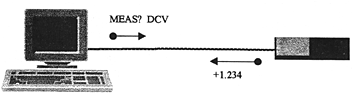
In addition to these implementation layers, a key part of the total system is the actual messages that are transmitted between an instrument and computer. Figure 43.1 shows the implementation layers for I/O on the computer, and Fig. 43.2 shows a typical instrument-computer interchange. This chapter considers each of these aspects of the computer to instrument connection.
Originally, instruments were stand-alone devices that helped engineers design and test their products. With the advent of low-cost computers in the 70s, people began to look for ways to automate their measurement tasks by connecting instruments to computers. This was particularly important in manufacturing, where product testing required lots of repetition and the time required to do the test was a key part of the manufacturing cost of the product. Automation was also crucial where the test might require many hours or weeks, for...