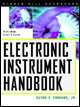
Electronic Instrument Handbook, Third Edition
Jan Ryles
Agilent Technologies
Loveland, Colorado
The user interface is the medium by which the user makes use of the underlying technology described in many of the chapters of this book. Literally, as the interface to the user, it can be presented in a manner that facilitates the user s task success or inhibits this activity. It can serve to simplify the presentation of complicated technology or expose it in excruciating detail. The instrument user often interacts with a combination of hardware interfaces (as described in Chapter 12) and graphical user interfaces, both of which vary across instrument types and instrument vendors. Users of multiple instruments are challenged to learn a variety of interface styles, which increases their learning time.
As personal computer (PC) standards dominate the workplace, they also make their way onto the workbench and the factory environment. In many cases, text-based user interfaces have been replaced by graphical user interfaces and graphical user interfaces replaced by Windows-based interfaces, providing a more-standardized appearance and behavior. PC-based functionality can be used to augment and/or replace test and measurement functionality available in the instrument box. These changes have altered the way that users perceive their instruments and systems and accomplish their tasks.
The goal of this chapter is to describe these changes as they affect instrument configurations, the evolution of graphical user interfaces and the subsequent impact on the instrument users experience. The final section of the chapter includes criteria for assessing the usability of the graphical user interface...