Electronic Instrument Handbook, Third Edition
Darren Kwock
Agilent Technologies
Loveland, Colorado
Virtual instruments are devices configured from independent hardware components by software to perform custom instrumentation functions. Because they are software defined, they can be reconfigured to perform different measurement and instrumentation functions when needed. This differs from traditional electronic instruments, which are hard wired into one configuration and used to perform one specific task.
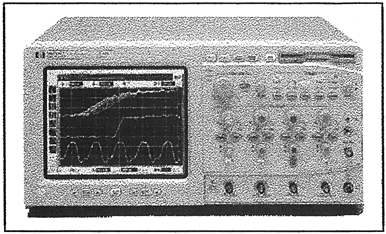
Traditionally, electronic instruments have been easily identifiable, boxshaped objects with a front panel. The front panel provides a user interface that allows the operator to interact and control the instrument. Typically, a front panel contains knobs, buttons, and possibly a display, as shown in Fig. 45.1. Advances in electronics have provided great improvements in accuracy, functionality, and reliability for instrumentation. At the same time, the rise of digital technology has led to data buses that connect instruments to computers efficiently. This provides the computer with the ability to control and exchange data with the instrument in an effective and timely manner.
Computers have evolved at a very high rate. Low-cost, high-performance computers are very common tools for engineers and technicians. This pervasiveness of computer technology has had a profound impact on traditional instruments. A computer, along with advanced software and graphical user interfaces, allows users to emulate and often surpass the capabilities of traditional instrumentation. This is also assisted by modular instruments, which provide basic measurement functionality on printed circuit...