
ZIP / SZIP IC Interconnect Components
Last Updated: April 1, 2025
Description
ZIP/SZIP IC Interconnect Components are designed to connect microelectronic semiconductor chips to printed circuit boards (PCBs) or larger-scale devices. These components serve as a bridge between two conductors, facilitating the flow of current or light waves from one to the other. They are integral to electronic packaging, which typically involves a plastic, ceramic, or metal enclosure housing an integrated circuit (IC) on a silicon or metal die .
Working Principle
The working principle of ZIP/SZIP IC Interconnect Components involves creating a reliable electrical connection between semiconductor chips and PCBs. This connection is crucial for the transmission of electrical signals and power, ensuring that the various components of an electronic device can communicate and function together effectively. By bridging the gap between conductors, these interconnects help maintain signal integrity and reduce power consumption, which is particularly beneficial in high-density applications .
Applications
ZIP/SZIP IC Interconnect Components are used in a variety of applications where reliable and efficient electrical connections are required. Specific examples include their use in connecting ICs to PCBs in consumer electronics, automotive systems, and industrial machinery. They are also employed in high-density IC interconnect SiP technology, which can significantly reduce the physical size of printed wiring board assemblies while decreasing weight and power consumption .
Advantages over other IC Interconnect Components
One of the primary advantages of ZIP/SZIP IC Interconnect Components is their ability to achieve significant reductions in physical size and power consumption. For instance, high-density IC interconnect SiP technology can reduce the size of printed wiring board assemblies by as much as 27 times, along with corresponding reductions in weight and power consumption. This is largely due to the shorter interconnect lengths, which also help eliminate the need for termination resistors in some net topologies .
Limitations
While ZIP/SZIP IC Interconnect Components offer numerous benefits, they may also present certain limitations. These could include potential challenges in maintaining signal integrity over longer distances or in environments with high electromagnetic interference. Additionally, the complexity of integrating these components into existing systems may require specialized knowledge and tools .
Considerations
When considering the use of ZIP/SZIP IC Interconnect Components, several factors should be taken into account. Initial costs may vary depending on the complexity and specifications of the components. Operating expenses could be influenced by the need for additional cooling or power management solutions. Durability and accuracy are critical, especially in high-performance applications, and should be evaluated based on the specific requirements of the project. Replacement and maintenance costs should also be considered, as these components may require periodic inspection and servicing to ensure optimal performance .
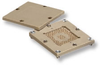
from Aries Electronics, Inc.
FEATURES. Any grid size pitch available from 0.20mm. Socket lid nests device into socket for a reliable connection. Suitable for prototyping, test, or burn-in of CSP, BGA, µBGA and LGA devices. ZIF style socket using Aries solderless, Au-plated pressure mount Spring Probe. Special lid designs... [See More]
- Socket Type: BGA; CSP; LGA; SZIP
- Mounting: Through-Hole
- Product Type: IC Socket
- Operating Temperature: -55 to 150