
Split Core Power Transformers
Last Updated: April 1, 2025
Description
Split Core Power Transformers are designed to measure alternating current (AC) by allowing one of the cores to be opened or moved, enabling easy installation around a conductor without disconnecting it. This design facilitates the monitoring of electrical systems by providing a means to measure current flow in a non-intrusive manner.
Working Principle
The working principle of Split Core Power Transformers is similar to that of traditional current transformers. When AC current flows through the primary winding, it generates an alternating magnetic field in the magnetic core. This magnetic field then induces an alternating current in the secondary winding. The ability to open the core allows for easy installation and removal, making them particularly useful for applications where the conductor cannot be easily disconnected or where space is limited .
Applications
Split Core Power Transformers are versatile and can be used in various applications. They are commonly employed in energy management systems to monitor and optimize power utilization. Specific examples include load profiling, which involves tracking energy consumption patterns to identify inefficiencies, and demand response, which helps manage and reduce peak demand to lower energy costs. Additionally, they are used in submetering to measure energy usage in specific areas or for individual tenants in multi-occupancy buildings .
Advantages over other Power Transformers
One of the primary advantages of Split Core Power Transformers is their ease of installation and maintenance. The ability to open the core allows for quick installation without the need to disconnect the conductor, which is particularly beneficial in systems where downtime is costly or impractical. This design also reduces the complexity of wiring, making them suitable for use in inaccessible or harsh conditions .
Limitations
While Split Core Power Transformers offer several advantages, they also have limitations. The openable core design may result in slightly lower accuracy compared to solid core transformers, as the core's alignment can affect measurement precision. Additionally, they may not be suitable for high-precision applications where exact measurements are critical.
Considerations
When considering Split Core Power Transformers, it is important to evaluate factors such as initial costs, operating expenses, and maintenance requirements. Their durable design can lead to lower maintenance costs over time, as they are easier to access and service. However, the initial cost may be higher than traditional solid core transformers due to their specialized design. It is also essential to consider the accuracy requirements of the application, as the open core design may not provide the same level of precision as solid core transformers .
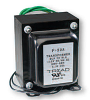
from Triad Magnetics
Triad isolation transformers are power transformers for isolating equipment from direct connection to the power line. They are offered in a variety of voltages and case types. Triad isolation transformers are also offered in hospital type (designed with an MD suffix) which are designed and... [See More]
- Construction: SplitCore
- Input Voltage: 115 to 230
- Transformer Type: Isolation
- Output Voltage: 115
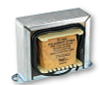
from Triad Magnetics
Triad isolation transformers are power transformers for isolating equipment from direct connection to the power line. They are offered in a variety of voltages and case types. Triad isolation transformers are also offered in hospital type (designed with an MD suffix) which are designed and... [See More]
- Construction: SplitCore
- Input Voltage: 115 to 230
- Transformer Type: Isolation
- Output Voltage: 115