
J Motor Starters and Contactors
Description
J Motor Starters and Contactors are devices used to control the operation of electric motors. They serve as a switch to start and stop the motor, ensuring that the motor receives the appropriate amount of power to operate efficiently. These devices are essential for managing the electrical current flow to the motor, providing a means to safely engage and disengage the motor from the power supply.
Working Principle
Motor starters and contactors operate by using an electromagnetic coil to open or close a set of contacts. When the coil is energized, it creates a magnetic field that pulls the contacts together, allowing electrical current to flow to the motor. This mechanism is crucial for preventing excessive current draw during motor startup, which can cause damage to the motor and associated equipment. By controlling the current flow, these devices help in maintaining the motor's operational efficiency and prolonging its lifespan.
Applications
Motor starters and contactors are widely used in various industrial and commercial applications. For instance, they are employed in conveyor systems to manage the start and stop functions of motors driving the belts. In HVAC systems, they control the operation of compressors and fans. Additionally, they are used in manufacturing plants to operate machinery such as pumps, mixers, and grinders, ensuring that these machines start and stop safely and efficiently.
Advantages over other Motor Starters and Contactors
One of the significant advantages of using J Motor Starters and Contactors is their ability to provide overload protection, which is not always available in simpler starter types. This feature helps prevent motor damage due to excessive current. Additionally, they offer better control over motor operation, allowing for smoother startups and shutdowns, which can reduce mechanical stress on the motor and connected equipment.
Limitations
Despite their advantages, J Motor Starters and Contactors have some limitations. They can be more expensive than simpler starter types due to their additional features and complexity. Moreover, they require regular maintenance to ensure reliable operation, as the contacts can wear out over time due to repeated opening and closing.
Considerations
When selecting J Motor Starters and Contactors, it is essential to consider factors such as initial costs, operating expenses, and maintenance requirements. While they may have a higher upfront cost compared to basic starters, their ability to protect the motor and extend its lifespan can result in cost savings over time. Durability and accuracy are also critical considerations, as these devices must reliably handle the electrical load and provide precise control over motor operation. Regular maintenance is necessary to ensure longevity and prevent unexpected failures, which can incur additional costs.
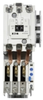
from Eaton Corporation
NON REVERSING TYPE. IEC J SIZE. 60 AMPERE (UL), 75 AMPERE (IEC THERMAL CURRENT) CURRENT RATING. OPEN ENCLOSURE TYPE. IEC CONSTRUCTION STANDARD. 110 VAC AT 50 HZ, 120 VAC AT 60 HZ COIL VOLTAGE. 15 KW AT 220 V 3 PHASE, 30 KW AT 380/415/440/500/550 V 3 PHASE, 18.5 KW AT 660 V 3 PHASE, 5 HP AT 115 V 1... [See More]
- IEC Size: J
- Continuous Current: 60 to 75
- AC Motor Phase: Single; Three
- Motor Voltage: 110 to 120
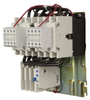
from Eaton Corporation
FULL VOLTAGE, REVERSING TYPE. IEC J SIZE. 60 AMPERE (UL), 75 AMPERE (IEC THERMAL CURRENT) CURRENT RATING. OPEN ENCLOSURE TYPE. IEC CONSTRUCTION STANDARD. 110 V AT 50 HZ, 120 V AT 60 HZ COIL VOLTAGE. 15 KW AT 220 V 3 PHASE, 18.5 KW AT 660 V 3 PHASE, 30 KW AT 380/415/440/500/550 V 3 PHASE, 5 HP AT 115... [See More]
- IEC Size: J
- Continuous Current: 60 to 75
- AC Motor Phase: Single; Three
- Motor Voltage: 110 to 120