
Diode Arrays Information
Last revised: October 29, 2024
Reviewed by: Scott Orlosky, consulting engineer
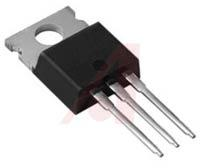 Diode arrays are composed of multiple discrete (usually unconnected) diodes on a single silicon chip. Diode arrays are important semiconductor products because they save assembly time and improve reliability over individually packaged diodes. In general, diode arrays use four or more diodes in a single package. The most efficient packaging scheme is typically eight diodes or more in a dual inline package (DIP). Diode arrays have been used for many years in both digital and linear circuits. Diode arrays are commonly used in such applications as computer and peripheral I/O ports, core driver switching, high frequency data lines, interface networks, LAN and WAN networks, and steering diode applications.
Why Use Diode Arrays?
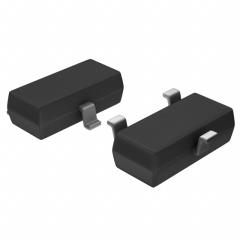 Diode arrays, such as a SIP diode array, are a single inline or system packaged diode array. The objective of SIP diode arrays is to merge many electronic requirements of a functional system or a subsystem into one package. SIP diode arrays typically include chip-level interconnect technology, such as a flip chip, wire bond, Tape Automated Bonding (TAB) diodes, or other technology to interconnect directly to an Integrated Circuit (IC) chip. A SMT diode array is a surface mount diode array that is used to connect passive components to other SMT-compatible components, such as connectors to SIP substrates.
What is a Diode Array Detector?
A diode array detector is a detector that absorbs light within UV or visible wavelength spectrums to perform spectroscopic scanning and to obtain precise absorbance readings at a variety of wavelengths. Diode array detectors are commonly used for chromatography, which is a system for separating and analyzing complex mixtures.
Specific materials will have a characteristic wavelength signature and the diode array detector can construct these complex signatures to identify specific mixtures.
Diode arrays may also use a photo diode array (PDA) detector to measure the absorbance across a broad spectrum of wavelengths simultaneously. PDAs have some advantages in that they allow measurement of a single selected wavelength at any point in a chromatogram. High performance liquid chromatography (HPLC) uses diode array detectors to detect material in the nanogram range for impurity testing, degradant analysis, excipient characterization (a means of determining the percentage of inert material content in drug manufacturing, and analysis of non-chromophore materials (materials that do not significantly alter the color of a mixture)
- DSCC-DWG-94030 — Semiconductor Device, Unidirectional Transient Suppressor Diode Array
- MIL-PRF-19500/474 — Semiconductor Device, Silicon, Multiple Diode Arrays, TYPES 1N5768, 1N5770, 1N5772, 1N5774, 1N6100, 1N6101, 1N6496, 1N6506, 1N6507, 1N6508, 1N6509, 1N6510, AND 1N6511, JAN, JANTX, JANTXV, AND JANS
Diode Arrays FAQs
What are the applications of diode arrays?
Automotive Applications
Diode arrays are used in automotive systems for various functions such as controlling headlamps, backlights, dashboard lights, anti-glare mirrors, and windshield wipers. These applications enhance driver comfort and safety by automating certain functions, reducing the need for manual adjustments, and improving visibility
Optical Communication and Sensing
Diode arrays, particularly photodiodes, are used in optical communication devices. They are also employed in applications like pollution analysis and measuring blood pressure, where precise detection and measurement of light are required.
Consumer Electronics and Wearables
In consumer electronics, diode arrays are used in devices like TV screens and anti-glare mirrors. In wearables, they play a role in innovations due to their small size and low power consumption, which are ideal characteristics for integration into compact devices.
General Electronic Applications
Diodes, including those in arrays, are commonly used for signal rectification, voltage clamping, reference-voltage circuits, light emission, and photodetection. These applications are fundamental in various electronic systems and devices.
How do diode arrays contribute to the functionality of wearables?
Foremost, their small size and low power consumption, makes them ideal for compact devices. Diode arrays, particularly photodiodes, take advantage of small size and efficient power usage. For portable devices space and battery life are at a premium.
In wearables, diode arrays can be used for various functions such as light detection and emission. These functions are essential for features like heart rate monitoring, where photodiodes detect changes in light absorption as blood pulses through the body.
The integration of diode arrays in wearables is seen as a key area for future innovation in medical monitoring. Their ability to perform essential functions while maintaining a low profile and minimal energy consumption opens up possibilities for new applications and enhancements in wearable technology.
What are the challenges in integrating diode arrays into wearable devices?
Wearable devices require components that are compact and lightweight. Diode arrays, particularly photodiodes, need to be small enough to fit into the limited space available in wearables without compromising their functionality.
Wearables often rely on battery power, so components like diode arrays must consume minimal energy to prolong battery life. Achieving low power consumption while maintaining performance is a critical challenge.
The integration of diode arrays into wearables involves ensuring compatibility with other components and systems within the device. This requires careful design and engineering to ensure that the diode arrays function correctly within the overall system architecture.
What are the latest innovations in diode array technology for wearables?
High-Speed PIN Photodiodes
This photodiode is designed for use in wearable devices such as fitness trackers and smartwatches. The term PIN indicates the construction of the diode with P-type doping, undoped or Intrinsic silicon and N-type doping. It can be used with green LEDs for optical heart rate detection and red LEDs for pulse oximetry applications. The reduced size allows for easier integration into smaller products like earbuds and offers increased flexibility in sensor placement, making it ideal for cost-sensitive devices like smart bands. These are known best for their high-speed response and are available with a broad range of light sensitivities.
Space-Saving Photodetectors
Innovations in photodetector technology are targeting fitness trackers and other wearables by offering space-saving designs. These advancements allow for the integration of multiple photodiodes in a single optical system, improving signal detection precision and enabling slimmer sensor designs.
What are the advantages of using diode arrays in electronic systems?
Diode arrays, such as SIP and SMT diode arrays, allow for the integration of multiple electronic requirements into a single package. This integration helps save space and simplifies the design of electronic systems by reducing the number of discrete components needed.
Diode arrays are versatile and can be used in a variety of applications, including automotive systems (e.g., controlling headlamps and dashboard lights), optical communication devices, pollution analysis, and consumer electronics like TV screens and wearables.
Diode arrays can perform essential functions such as signal rectification, voltage clamping, and light emission. These functions are fundamental in various electronic systems, contributing to their overall functionality and performance.
Diode Arrays Media Gallery
References
Electronics360—Space-Saving Photodetector Targets Fitness Trackers
Electronics360— Vishay Intertechnology high speed PIN photodiode delivers enhanced sensitivity for visible light in compact package
GlobalSpec—Understanding Semiconductor Devices
- Common Anode
- Common Cathode
- D2PAK
- DPAK
- Detector
- General Purpose (PN Junction Diodes)
- High Voltage
- Last Shipments
- Low Leakage
- Maturity
- Mixer
- Not Recommended (Declining)
- PIN Diodes
- POWERMITE? 3
- Protector
- RF Diodes
- Rectifier Diode
- RoHS Compliant
- SC-59
- SC-74
- SMA
- SOD-123
- SOD-323
- SOD-523
- SOT143
- SOT23
- SOT26
- SOT323
- SOT343
- SOT346
- SOT353
- SOT363
- SOT416
- SOT457
- SOT523
- Schottky Barrier Diodes
- Step-recovery Diodes
- Switching
- TO-220
- TO-247
- TO-3
- TO-92
- Transient Voltage Suppressor Diodes (TVS)
- Varactor Diodes
- Voltage Regulation
- Zener Diodes