
Thermistor Sensor Transmitters
Last Updated: April 1, 2025
Description
Thermistor sensor transmitters are devices that convert the resistance changes of a thermistor into a standardized output signal, typically a 4-20 mA current loop. These transmitters are designed to work specifically with thermistors, which are temperature-sensitive resistors, to provide accurate temperature readings in various environments.
Working Principle
The working principle of thermistor sensor transmitters is based on the temperature-dependent resistance of thermistors. Thermistors are semiconductor devices whose resistance changes with temperature. There are two main types: negative temperature coefficient (NTC) thermistors, where resistance decreases as temperature increases, and positive temperature coefficient (PTC) thermistors, where resistance increases with temperature. The transmitter converts these resistance changes into a proportional electrical signal, which can be easily interpreted by other devices in a control system. This makes thermistor sensor transmitters useful for precise temperature monitoring and control in various applications.
Applications
Thermistor sensor transmitters are used in a wide range of applications due to their sensitivity and accuracy. Specific examples include automotive systems for monitoring and controlling exhaust emissions, ice detection systems, medical devices such as skin sensors and blood analyzers, and consumer electronics like refrigerators and mobile phones. They are also employed in precision instrumentation, such as hand-held meters and temperature gauges, where accurate temperature readings are crucial.
Advantages over other Sensor Transmitters
Thermistor sensor transmitters offer several advantages over other types of sensor transmitters. They are known for their high degree of stability and accuracy, making them suitable for applications requiring precise temperature measurements. Additionally, thermistors are small and long-lasting, which allows for their integration into compact and durable designs. Compared to other temperature sensors, thermistors are also relatively inexpensive, with prices starting as low as $0.10, making them a cost-effective choice for many applications.
Limitations
Despite their advantages, thermistor sensor transmitters have some limitations. They have a limited temperature range and are not suitable for extreme temperature conditions. Their non-linearity can also pose challenges in certain applications, requiring additional calibration or compensation. Furthermore, thermistors are fragile and can be prone to self-heating, which may affect their accuracy if not properly managed.
Considerations
When considering thermistor sensor transmitters, several factors should be taken into account. Initial costs are generally low, but the specific application and required accuracy may influence the overall expense. Operating expenses are typically minimal, but durability can be a concern due to the fragile nature of thermistors. Accuracy is a strong point, but it may require calibration to address non-linearity issues. Replacement and maintenance costs are generally low, but the specific environment and application can impact the longevity and reliability of the device.

from Define Instruments
This versatile 2-wire transmitter accepts a range of standard input types, and outputs a 4-20mA loop. USB programming is hassle free, and takes less than a minute using Define ToolBox. 2-wire universal transmitter (DIN-mount, isolated). Current, voltage, thermocouple, RTD and potentiometer input. [See More]
- Inputs: Thermocouple Input; Thermistor Input; RTD Input
- Analog Input: 100mV to ±10V; 1µA–24mA
- Form Factor: DIN Rail
- Excitation & Features: Voltage

from Define Instruments
What it does: The TM-4DPI accepts one of several input signal types and generates one of four commonly required outputs: 4-20mA, 0-20mA, 0-10V, &plusm;10V. The TM-4DPI is designed for applications that have an auxiliary supply to power the transmitter. It can be powered directly from a 24V DC... [See More]
- Inputs: Thermocouple Input; Thermistor Input; RTD Input
- Form Factor: DIN Rail
- Outputs: Analog Current Output; Analog Voltage Output
- Analog Input: 100mV to ±10V; 1µA–24mA
from Define Instruments
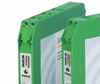
What it does: The Javelin accepts one of several popular input signal types and outputs a 4-20mA signal. Input types: RTD, mA, V, Pot, TC. The Javelin is a loop powered, isolated transmitter. One of its key features is its easy software setup using Define ToolBox. ToolBox enables simple and flexible... [See More]
- Inputs: Thermocouple Input; Thermistor Input; RTD Input
- Analog Channels: 1
- Outputs: Analog Current Output; Analog Voltage Output; Relay Output
- Form Factor: DIN Rail
from Define Instruments
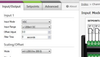
The Sentry Trip Amplifier can be used for a myriad of control and alarm applications, and will also be at home in the signal conditioning arena. It accepts analog inputs from a range of industrial sensors, including: process, temperature, flow, frequency, and voltage from 200mV to 300V. It features... [See More]
- Inputs: Thermocouple Input; Thermistor Input; RTD Input; NTC, Digital Pulse, AC Current Sensor
- Analog Channels: 1
- Outputs: Analog Current Output; Analog Voltage Output; Relay Output
- Form Factor: DIN Rail