
Encoder Sensor Transmitters
Last Updated: April 1, 2025
Description
Encoder sensor transmitters are devices that convert physical or chemical variables into electrical signals. They are capable of sensing changes in magnitude of some physical or chemical variable such as frequency, radiation, heat, pressure, or salinity and responding with a proportional electrical output. These devices act as interfaces between the physical world and electronics, making it possible for electronic circuitry to interpret various physical phenomena.
Working Principle
Encoder sensor transmitters operate as signal converters, accepting an input and transmitting a proportional signal in a differing output. This process typically involves an input excitation stage, an input amplification stage, and a signal conversion stage. The conversion is accomplished using a series of resistors, capacitors, operational amplifiers, and transistors. The usefulness of encoder sensor transmitters lies in their ability to provide accurate measurements of a variable, which can control some function directly or be converted and measured for further analysis.
Applications
Encoder sensor transmitters are used in a wide range of applications. They are essential in process and machine controls and measurement systems. Specific examples include their use in home appliances, office equipment, food and chemical process lines, machine tools, and instruments in ships, aircraft, and automobiles. They are also required in telecommunications equipment, computers, robots, and various scientific and medical instruments.
Advantages over other Sensor Transmitters
One of the main advantages of encoder sensor transmitters is their reduced development effort compared to mountable pressure sensors or measuring cells. Additionally, a transmitter is much easier to replace after a failure, which can be a significant advantage in maintaining system uptime and reducing maintenance costs.
Limitations
Encoder sensor transmitters with a current output have a rather high energy consumption compared to transducers with a voltage output. This can be a limitation in applications where energy efficiency is a critical concern.
Considerations
When considering encoder sensor transmitters, it is important to evaluate initial costs, operating expenses, durability, accuracy, and replacement and maintenance costs. The choice of transmitter should align with the specific requirements of the application, taking into account factors such as the environment in which it will operate and the level of precision required. Additionally, the compatibility of the transmitter with existing systems and standards should be considered to ensure seamless integration and operation.
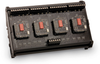
from BEI Sensors
The Sensor Signal Broadcaster accepts standard incremental encoder inputs, (two channels in quadrature plus an index and complements) and can broadcast up to four encoder signals to four independent devices. Each of the broadcast signals are optically isolated, eliminating ground loops. This compact... [See More]
- Inputs: Encoder Input; Quadrature
- Differential Channels: Yes
- Analog Channels: 4
- Form Factor: DIN Rail
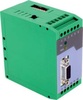
from Leine & Linde AB
Signal converter for frequency to. analogue and serial output. Tachometer functionality ±10 Vdc,. 0-20 mA or 4-20 mA analogue output or. optional RS232 / RS485 serial output. Input frequency range 0.1 Hz - 1 MHz. Compact housing for DIN rail mounting. For connection of incremental TTL,. HTL... [See More]
- Inputs: Encoder Input
- Analog Channels: 1
- Outputs: Analog Current Output; Analog Voltage Output
- Form Factor: Modular Bay or Slot System