
Relay Sensor Transmitters
Last Updated: April 1, 2025
Description
Relay Sensor Transmitters are devices that function as signal converters, accepting an input from a sensor and transmitting a proportional signal in a differing output. They are typically designed for compatibility with specific sensor types, such as accelerometers, thermistors, flow sensors, thermocouples, and strain gauges. These transmitters play a crucial role in converting sensor data into a format that can be easily interpreted by other systems or devices.
Working Principle
Relay Sensor Transmitters operate by amplifying and conditioning the weak electrical signals generated by sensors. This process ensures that the signals can be transmitted over long distances without degradation due to noise. The transmitters typically consist of an input excitation stage, an input amplification stage, and a signal conversion stage. These stages work together to convert a voltage input into a current loop, commonly a 4-20 mA current loop, which is a standard in industrial applications for transmitting sensor data. This conversion is achieved using a series of resistors, capacitors, operational amplifiers, and transistors.
Applications
Relay Sensor Transmitters are used in a variety of applications where it is necessary to convert sensor data into a usable format for monitoring and control systems. For example, in industrial automation, they are used to transmit data from pressure sensors to control systems that regulate machinery operations. In automotive applications, they can be used to relay information from temperature sensors to the vehicle's central computer for engine management.
Advantages over other Sensor Transmitters
One of the primary advantages of Relay Sensor Transmitters is their ability to provide electrical isolation between the control circuit and the primary circuit. This isolation ensures that the control circuit remains unaffected by high voltages or currents in the primary circuit, enhancing safety and reliability. Additionally, they allow a relatively small control power to manage a larger power, which is beneficial in applications where power efficiency is critical.
Limitations
Relay Sensor Transmitters may have limitations in terms of their response time and the complexity of the signal conversion process. The need for multiple stages of amplification and conversion can introduce delays, making them less suitable for applications requiring real-time data processing. Additionally, the complexity of the circuitry can increase the potential for component failure, impacting reliability.
Considerations
When selecting Relay Sensor Transmitters, it is important to consider factors such as initial costs, operating expenses, durability, accuracy, and maintenance requirements. The initial cost can vary depending on the complexity and specifications of the transmitter. Operating expenses may include power consumption and the need for regular calibration to maintain accuracy. Durability is a critical factor, especially in harsh environments, where robust designs are necessary to withstand physical and environmental stresses. Maintenance costs can also be significant, particularly if the transmitters require frequent recalibration or component replacement to ensure optimal performance.
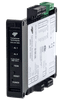
from Transducer Techniques, LLC
MODEL SST-HV. The SST-HV is a Plug & Play Smart TEDS IEEE 1451.4 compliant Transmitter. Just plug in a TEDS compatible Load Cell or Torque Sensor and the SST-HV will automatically self-calibrate. When used with a non-TEDS Load Cell or Torque Sensor, the SST-LV Transmitter is easily programmed... [See More]
- Outputs: Analog Current Output; Analog Voltage Output; Relay Output
- Analog Input: 20.000, 50.000, 100.00, 250.00, 500.00 mV
- Form Factor: Stand-alone
- Excitation & Features: Voltage; Current

from ABB Measurement & Analytics
Users of the AWT440 benefit from plug-and-play connectivity, automatic sensor recognition and set-up. Enabling: – Automatic connection of up to 4 digital sensor. – Intuitive software with full colour graphical display. – Data logging and graphical process trending. – Full... [See More]
- Outputs: Ethernet; Relay Output
- Form Factor: Panel / Chassis Mount
- Analog Channels: 4
- Analog Input: 24 V

from West Control Solutions
The Uniflex SG 45 is a transmitter for processing and monitoring input signals form strain gauges, load cells, melt pressure sensors, and resistance bridges. It can be used in practically all industrial applications involving the precise measurement, indication, and processing of force, weight, or... [See More]
- Outputs: Relay Output
- Inputs: Bridge Input
- Form Factor: DIN Rail
- User Interface: Front Panel
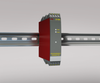
from PR electronics
Application. Linearized, electronic temperature measurement with RTD or TC sensor. Conversion of linear resistance variation to a standard analog current / voltage signal, i.e. from solenoids and butterfly valves or linear movements with attached potentiometer. Power supply and signal isolator for... [See More]
- Outputs: Analog Current Output; Relay Output
- Inputs: Thermocouple Input; RTD Input
- Form Factor: DIN Rail
- Analog Input: 0...250 VDC -2500...+2500 mV; 0...100 mA

from OMEGA Engineering, Inc.
The DRA-MDM-11 is a mux/demux system which transfers analog information accurately via a single pair of wires. The multiplexer unit (DRA-M-11) accepts up to sixteen 4-20 mA process current inputs. The multiplexed inputs are transferred to the demultiplexer unit (DRA-DM-11) at a scan rate of up to... [See More]
- Outputs: Analog Current Output; Relay Output
- Form Factor: DIN Rail
- Analog Channels: 16
- Analog Input: 4-20 mA
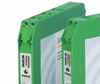
from Define Instruments
What it does: The Javelin accepts one of several popular input signal types and outputs a 4-20mA signal. Input types: RTD, mA, V, Pot, TC. The Javelin is a loop powered, isolated transmitter. One of its key features is its easy software setup using Define ToolBox. ToolBox enables simple and flexible... [See More]
- Outputs: Analog Current Output; Analog Voltage Output; Relay Output
- Form Factor: DIN Rail
- Analog Channels: 1
- Inputs: Thermocouple Input; Thermistor Input; RTD Input

from Hayward Flow Control
The HMC Series Indicating Transmitters offer advanced reading display and transmission. The multicolor, configurable LCD graphical display provides easy viewing of process variables. Built-in relays, open collectors, analog outputs and serial output allow a wide range of communications and control... [See More]
- Outputs: Analog Current Output; Relay Output
- Form Factor: DIN Rail
- Analog Channels: 2
- Inputs: RTD Input; pH/ORP, Conductivity/resistivitely
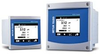
from Mettler-Toledo Technologies GmbH
Features and Benefits. High Flexibility. Multi-parameter transmitters as one or two channel models accept analog sensors and ISM sensors. Intuitive Operation. Exceptional user friendly operation with a touch-screen and a clear display of important information. Fast startup. Error-free Plug and... [See More]
- Outputs: Analog Current Output; Relay Output
- Form Factor: DIN Rail
- Analog Channels: 2
- Inputs: pH/ORP, Conductivity, DO, Ozone
from PR electronics
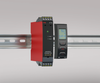
Advanced features. Programmable via detachable display front (4501), process calibration, signal and relay simulation, password protection, error diagnostics and selection of help text in several languages. Application. Linearized, electronic temperature measurement with RTD or TC sensor. Conversion... [See More]
- Outputs: Analog Current Output; Analog Voltage Output; Relay Output
- Analog Input: 0...12 VDC; 0...20 mA
- Inputs: Thermocouple Input; RTD Input
- T/C Type: E; J; K; N; T; B; S; R; W
from Define Instruments
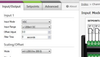
The Sentry Trip Amplifier can be used for a myriad of control and alarm applications, and will also be at home in the signal conditioning arena. It accepts analog inputs from a range of industrial sensors, including: process, temperature, flow, frequency, and voltage from 200mV to 300V. It features... [See More]
- Outputs: Analog Current Output; Analog Voltage Output; Relay Output
- Form Factor: DIN Rail
- Analog Channels: 1
- Inputs: Thermocouple Input; Thermistor Input; RTD Input; NTC, Digital Pulse, AC Current Sensor
from Mettler-Toledo Technologies GmbH
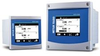
Features and Benefits. High Flexibility. Multi-parameter transmitters as one or two channel models accept analog sensors and ISM sensors. Intuitive Operation. Exceptional user friendly operation with a touch-screen and a clear display of important information. Fast startup. Error-free Plug and... [See More]
- Outputs: Analog Current Output; Relay Output
- Form Factor: DIN Rail
- Analog Channels: 2
- Inputs: pH/ORP, Conductivity, DO, Ozone