
Programmable Gain Sensor Transmitters
Last Updated: April 1, 2025
Description
Programmable Gain Sensor Transmitters are devices that convert sensor inputs into a proportional output signal. They are designed to work with various sensor types, such as accelerometers, thermistors, flow sensors, thermocouples, and strain gauges. These transmitters typically operate by accepting an input signal and transmitting a proportional signal in a different output format, often converting a voltage input to a 4-20 mA current loop .
Working Principle
Programmable Gain Sensor Transmitters function by amplifying the input signal from a sensor to a level suitable for further processing or transmission. This is achieved through a series of stages, including an input excitation stage, an input amplification stage, and a signal conversion stage. The amplification and conversion processes are facilitated by components such as resistors, capacitors, operational amplifiers, and transistors . The ability to adjust the gain allows these transmitters to accommodate sensors with varying operational characteristics, ensuring optimal output voltage ranges .
Applications
Programmable Gain Sensor Transmitters are used in a variety of specific applications. For example, they are employed in medical devices, piezo-electric pressure sensors, fluid sensors, optical sensors, strain gauges, and thermocouples . These transmitters are also used in sensor health monitoring systems, where they help maintain the accuracy and reliability of sensor readings .
Advantages over other Sensor Transmitters
One of the key advantages of Programmable Gain Sensor Transmitters is their ability to linearize non-linear sensors and provide ratiometric output, which is beneficial when using an ADC with VDD as its reference voltage . They also offer the flexibility of multiplexing several sensors and detecting open sensor failures, which enhances their utility in complex sensor networks .
Limitations
Despite their advantages, Programmable Gain Sensor Transmitters have limitations, such as poor common mode noise rejection and the requirement for a controller and firmware to operate effectively . Additionally, they may not be well-suited for precision applications, such as CT scanners, due to potential stability issues .
Considerations
When considering Programmable Gain Sensor Transmitters, it is important to evaluate factors such as initial costs, operating expenses, durability, accuracy, and maintenance costs. The choice of components, such as resistors and digital potentiometers, can influence the cost and board area, with trade-offs in resistance and resolution . Ensuring the right balance between performance and cost is crucial for optimizing the use of these transmitters in various applications.
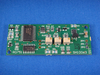
from Spectron Glass and Electronics Inc.
The SA40072 is a single channel signal conditioner, which provides a 4 to 20mA output. With the ability to interface directly with the complete line of Spectron single axis electrolytic tilt sensors (not included), the SA40072 is the perfect solution for narrow or wide angle measurements. The open... [See More]
- Excitation & Features: Voltage; Programmable; Amplifier
- Analog Channels: 1
- Outputs: Analog Voltage Output
- Form Factor: PC Board

from Red Pitaya, d.o.o.
SDRlab 122-16 External clock is based on the SDRlab 122-16 model that is modified to be used with an external clock oscillator, which is important especially for RF applications that operate at other frequencies, require better quality clock or clock synchronization. [See More]
- Excitation & Features: Voltage (optional feature); Current (optional feature); Programmable; Amplifier (optional feature)
- Analog Channels: 6
- Outputs: Ethernet; TTL; Analog Voltage Output; Frequency or Pulse Output; Timer / Counter Output; Relay Output (optional feature)
- Differential Channels: Yes (optional feature)

from Red Pitaya, d.o.o.
SDRlab 122-16 was developed specifically for software-defined radio and more demanding RF applications. [See More]
- Excitation & Features: Voltage (optional feature); Current (optional feature); Programmable; Amplifier (optional feature)
- Analog Channels: 6
- Outputs: Ethernet; TTL; Analog Voltage Output; Frequency or Pulse Output; Timer / Counter Output; Relay Output (optional feature)
- Differential Channels: Yes (optional feature)

from Red Pitaya, d.o.o.
SIGNALlab 250-12 is most sophisticated Red Pitaya product, built for more demanding industrial applications and research, where robustness and performance matter more than cost. [See More]
- Excitation & Features: Voltage (optional feature); Current (optional feature); Programmable; Amplifier (optional feature)
- Analog Channels: 6
- Outputs: Ethernet; TTL; Analog Voltage Output; Frequency or Pulse Output; Timer / Counter Output; Relay Output (optional feature)
- Differential Channels: Yes (optional feature)

from Red Pitaya, d.o.o.
SIGNALlab 250-12 is most sophisticated Red Pitaya product, built for more demanding industrial applications and research, where robustness and performance matter more than cost. [See More]
- Excitation & Features: Voltage (optional feature); Current (optional feature); Programmable; Amplifier (optional feature)
- Analog Channels: 6
- Outputs: Ethernet; TTL; Analog Voltage Output; Frequency or Pulse Output; Timer / Counter Output; Relay Output (optional feature)
- Differential Channels: Yes (optional feature)

from Red Pitaya, d.o.o.
STEMlab 125-14 4 Inputs is based on STEMlab 125-14 board, but instead of 2 inputs and 2 output channels offers 4 Input channels that with improved performance. [See More]
- Excitation & Features: Voltage (optional feature); Current (optional feature); Programmable; Amplifier (optional feature)
- Analog Channels: 8
- Outputs: Ethernet; TTL; Analog Current Output (optional feature); Analog Voltage Output (optional feature); Frequency or Pulse Output (optional feature); Timer / Counter Output; Relay Output (optional feature)
- Differential Channels: Yes (optional feature)

from Red Pitaya, d.o.o.
STEMlab 125-14 is our most versatile and popular product, which was introduced to the market in 2013 when Red Pitaya was established. Since then it has been used in a wide variety of contexts, from hobbyists and ham radio operators to industry, research, and space applications. [See More]
- Excitation & Features: Voltage (optional feature); Current (optional feature); Programmable; Amplifier (optional feature)
- Analog Channels: 6
- Outputs: Ethernet; TTL; Analog Voltage Output; Frequency or Pulse Output; Timer / Counter Output; Relay Output (optional feature)
- Differential Channels: Yes (optional feature)

from Red Pitaya, d.o.o.
STEMlab 125-14 is our most versatile and popular product, which was introduced to the market in 2013 when Red Pitaya was established. Since then it has been used in wide variety of contexts, from hobbyists and ham radio operators to industry, research and space applications. [See More]
- Excitation & Features: Voltage (optional feature); Current (optional feature); Programmable; Amplifier (optional feature)
- Analog Channels: 6
- Outputs: Ethernet; TTL; Analog Voltage Output; Frequency or Pulse Output; Timer / Counter Output; Relay Output (optional feature)
- Differential Channels: Yes (optional feature)

from Red Pitaya, d.o.o.
STEMlab 125-14 Edu Pack is based on Red Pitaya's best-selling DAQ platform and with the chosen accessories a perfect fit for educational purposes. [See More]
- Excitation & Features: Voltage (optional feature); Current (optional feature); Programmable; Amplifier (optional feature)
- Analog Channels: 6
- Outputs: Ethernet; TTL; Analog Voltage Output; Frequency or Pulse Output; Timer / Counter Output; Relay Output (optional feature)
- Differential Channels: Yes (optional feature)

from Red Pitaya, d.o.o.
STEMlab 125-14 External clock is based on the STEMlab 125-14 model that is modified to be used with an external clock oscillator, which is important especially for RF applications that operate at other frequencies, require better quality clock or clock synchronization. With this modification, users... [See More]
- Excitation & Features: Voltage (optional feature); Current (optional feature); Programmable; Amplifier (optional feature)
- Analog Channels: 6
- Outputs: Ethernet; TTL; Analog Voltage Output; Frequency or Pulse Output; Timer / Counter Output; Relay Output (optional feature)
- Differential Channels: Yes (optional feature)