
AC Current Sensor Transmitters
Last Updated: April 1, 2025
Description
AC Current Sensor Transmitters are devices designed to detect and convert alternating current (AC) into a proportional signal that can be easily measured and analyzed. These transmitters are integral in monitoring and managing electrical systems by providing real-time data on current flow.
Working Principle
AC Current Sensor Transmitters operate by utilizing various sensing technologies to measure the current flowing through a conductor. One common method involves the use of current transformers, which work on the principle of magnetic induction. When AC flows through the primary winding of the transformer, it generates a changing magnetic field that induces a current in the secondary winding, which is then converted into a measurable signal . This process allows for accurate monitoring of AC currents without direct contact with the high-voltage circuit, ensuring safety and reliability.
Applications
AC Current Sensor Transmitters are used in a wide range of applications. They are essential in power metering, where they help in monitoring and managing energy consumption. In control system diagnostics, these transmitters provide critical data for assessing the performance of electrical systems. They are also used in the condition monitoring of rechargeable batteries and in the control of complex loads from electric motors .
Advantages over other Sensor Transmitters
One of the key advantages of AC Current Sensor Transmitters, particularly those using Hall-effect sensors, is their excellent isolation capabilities. These sensors do not require direct metallic contact with the primary circuit, which enhances safety and reduces the risk of electrical interference . Additionally, they are capable of measuring both AC and DC currents with good accuracy, making them versatile for various applications.
Limitations
A limitation of AC Current Sensor Transmitters is that no single sensor type is optimal for all applications. Each sensor is suitable for specific current ranges and environmental conditions, which means that careful selection is necessary to ensure compatibility with the intended application .
Considerations
When selecting AC Current Sensor Transmitters, several factors should be considered. Initial costs can vary depending on the technology and specifications required. Operating expenses are generally low, but durability and accuracy are crucial for long-term reliability. Maintenance and replacement costs should also be factored in, as these can impact the overall cost-effectiveness of the system. Ensuring that the transmitter is compatible with existing systems and meets the necessary safety standards is essential for optimal performance .
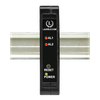
from Laurel Electronics LLC
Features. 0.2, 2, 20, 200, 300 and 600V AC voltage ranges. 2, 20, 200 mA & 5A AC or AC+DC current ranges. Accuracy to 0.03% of full scale, 0.1% to 100% of FS, 10 Hz to 5 kHz. 0.03% accuracy of full scale at crest factor to 3.0. True RMS AC measurement with crest factor of 3.0 at full scale. [See More]
- Outputs: Analog Current Output; Analog Voltage Output
- Operating Temperature: -40 to 158
- Form Factor: DIN Rail
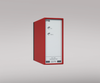
from PR electronics
Advanced features. ±20% adjustment of the 0 and the 100% measurement range is possible at the front panel. Input and output ranges are programmable by use of internal DIP-switches. Application. AC current measurement e.g. in connection with a current transformer or a current clamp. Direct AC... [See More]
- Outputs: Analog Current Output; Analog Voltage Output
- Operating Temperature: -4 to 140
- Analog Input: 0...250 VRMS / 40...400 Hz; 0...1 ARMS / 40...400 Hz

from Acromag, Inc.
bull; DC voltage or DC current input. • DC voltage or DC current output. • Loop or DC or AC power. • Excellent accuracy and stability ensure reliable measurements in harsh industrial environments. Input isolated from output/power. These models convert sensor inputs to proportional... [See More]
- Outputs: Analog Current Output (optional feature); Analog Voltage Output (optional feature)
- Differential Channels: Yes
- Analog Channels: 1
- Form Factor: DIN Rail

from OMEGA Engineering, Inc.
The DRF series DIN rail signal conditioners are designed to accept a broad range of input signals, such as ac and dc voltage and current, frequency, temperature (thermocouple and RTD), and process transducers, and provide standard process outputs of either 4 to 20 mA, or 0 to 10 Vdc. The DRF series... [See More]
- Outputs: Analog Current Output; Analog Voltage Output
- Inputs: Thermocouple Input; RTD Input; Bridge Input
- Form Factor: DIN Rail
- Analog Input: 0-650 V; 0-5 A; 0-650 V; 0-5 A; 0-50 kHz

from Acromag, Inc.
100 ohm Pt RTD or 0-900 ohm input. 4 to 20mA DC output. 9-32V DC from output loop power. USB-configured. The ST131 is a low-cost two-wire transmitter that converts a 100 ohm Platinum RTD sensor input to a proportional 4-20mA signal. Power is received from the output loop current. The transmitter... [See More]
- Outputs: Analog Current Output
- Inputs: RTD Input
- Form Factor: DIN Rail; DIN Form B
- Analog Input: 0.5mA

from OMEGA Engineering, Inc.
The DRF series DIN rail signal conditioners are designed to accept a broad range of input signals, such as ac and dc voltage and current, frequency, temperature (thermocouple and RTD), and process transducers, and provide standard process outputs of either 4 to 20 mA, or 0 to 10 Vdc. The DRF series... [See More]
- Outputs: Analog Current Output; Analog Voltage Output
- Analog Input: 0-5 A; 0-5 A
- Form Factor: DIN Rail
- User Interface: None