
AC Voltage Sensor Transmitters
Last Updated: April 1, 2025
Description
AC Voltage Sensor Transmitters are devices designed to measure alternating current (AC) voltage levels and convert these measurements into a proportional output signal. This output is typically in the form of a 4-20 mA current loop, which is a standard for transmitting analog signals over long distances with minimal signal loss.
Working Principle
AC Voltage Sensor Transmitters operate by first receiving an AC voltage input. This input is then processed through several stages: an input excitation stage, an input amplification stage, and a signal conversion stage. The signal is amplified and converted using components such as resistors, capacitors, operational amplifiers, and transistors. The final output is a current signal that is proportional to the measured voltage, allowing for easy integration with monitoring and control systems. These transmitters are useful because they provide a reliable means of monitoring AC voltage levels, which is critical for maintaining the stability and efficiency of electrical systems.
Applications
AC Voltage Sensor Transmitters are used in a variety of applications. They are essential in power demand control, where they help manage the distribution of electrical power to prevent overloads. They are also used in power failure detection systems to quickly identify and respond to outages. In load sensing applications, these transmitters help monitor the electrical load on a system to ensure it operates within safe limits. Additionally, they are used in safety switching and motor overload control to protect equipment from damage due to excessive voltage levels.
Advantages over other Sensor Transmitters
One of the main advantages of AC Voltage Sensor Transmitters over other types of sensor transmitters is their ability to provide a standardized 4-20 mA output, which is less susceptible to electrical noise and can be transmitted over long distances without significant signal degradation. This makes them particularly suitable for industrial environments where long cable runs are common. Additionally, their design allows for accurate phase response, which is crucial for precise power and energy calculations.
Limitations
A limitation of AC Voltage Sensor Transmitters is their potential for phase shift errors, which can affect the accuracy of power and energy measurements. This phase shift should be minimized to ensure reliable data. Furthermore, these devices may require calibration and maintenance to maintain accuracy over time, which can add to operational costs.
Considerations
When selecting an AC Voltage Sensor Transmitter, it is important to consider factors such as initial costs, operating expenses, and durability. The initial cost can vary depending on the complexity and features of the transmitter. Operating expenses may include energy consumption and maintenance costs, which can be influenced by the transmitter's durability and the environment in which it operates. Accuracy is another critical factor, as it affects the reliability of the data collected. Finally, replacement and maintenance costs should be considered, as these can impact the long-term cost-effectiveness of the device.
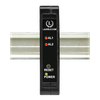
from Laurel Electronics LLC
Features. 0.2, 2, 20, 200, 300 and 600V AC voltage ranges. 2, 20, 200 mA & 5A AC or AC+DC current ranges. Accuracy to 0.03% of full scale, 0.1% to 100% of FS, 10 Hz to 5 kHz. 0.03% accuracy of full scale at crest factor to 3.0. True RMS AC measurement with crest factor of 3.0 at full scale. [See More]
- Outputs: Analog Current Output; Analog Voltage Output
- Operating Temperature: -40 to 158
- Form Factor: DIN Rail
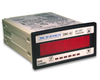
from Macro Sensors
The DMC-A2 Series Dual Channel AC LVDT Controller is an accurate, high performance, programmable dual channel controller that delivers precise measurement and control for applications using AC LVDT (Linear Variable Differential Transformer) inputs. The 6-digit alphanumeric LED display provides easy... [See More]
- Outputs: Ethernet; Analog Current Output; Analog Voltage Output
- Form Factor: Panel / Chassis Mount
- Analog Channels: 2
- Inputs: LVDT

from Acromag, Inc.
bull; DC voltage or DC current input. • DC voltage or DC current output. • Loop or DC or AC power. • Excellent accuracy and stability ensure reliable measurements in harsh industrial environments. Input isolated from output/power. These models convert sensor inputs to proportional... [See More]
- Outputs: Analog Current Output (optional feature); Analog Voltage Output (optional feature)
- Differential Channels: Yes
- Analog Channels: 1
- Form Factor: DIN Rail
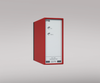
from PR electronics
Advanced features. ±20% adjustment of the 0 and the 100% measurement range is possible at the front panel. Input and output ranges are programmable by use of internal DIP-switches. Application. AC current measurement e.g. in connection with a current transformer or a current clamp. Direct AC... [See More]
- Outputs: Analog Current Output; Analog Voltage Output
- Operating Temperature: -4 to 140
- Analog Input: 0...250 VRMS / 40...400 Hz; 0...1 ARMS / 40...400 Hz
from Avery Weigh-Tronix
Low cost, sense amplifier, isolated output, on-board adjustments [See More]
- Outputs: Analog Current Output; Analog Voltage Output
- Analog Input: 100 - 260 VAC
- Form Factor: Panel / Chassis Mount
- User Interface: None

from OMEGA Engineering, Inc.
The DRF series DIN rail signal conditioners are designed to accept a broad range of input signals, such as ac and dc voltage and current, frequency, temperature (thermocouple and RTD), and process transducers, and provide standard process outputs of either 4 to 20 mA, or 0 to 10 Vdc. The DRF series... [See More]
- Outputs: Analog Current Output; Analog Voltage Output
- Inputs: Thermocouple Input; RTD Input; Bridge Input
- Form Factor: DIN Rail
- Analog Input: 0-650 V; 0-5 A; 0-650 V; 0-5 A; 0-50 kHz
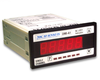
from Macro Sensors
The DMI-A1 Series AC LVDT Indicator is an accurate, high performance, programmable single channel AC LVDT indicator that delivers precise measurement for applications using AC LVDT (Linear Variable Differential Transformer) inputs. The 5-digit alphanumeric LED display provides easy-to-follow setup... [See More]
- Outputs: Ethernet; Analog Current Output; Analog Voltage Output
- Form Factor: Panel / Chassis Mount
- Analog Channels: 1
- Inputs: LVDT

from OMEGA Engineering, Inc.
The DRF series DIN rail signal conditioners are designed to accept a broad range of input signals, such as ac and dc voltage and current, frequency, temperature (thermocouple and RTD), and process transducers, and provide standard process outputs of either 4 to 20 mA, or 0 to 10 Vdc. The DRF series... [See More]
- Outputs: Analog Current Output; Analog Voltage Output
- Analog Input: 0-650 V; 0-650 V
- Form Factor: DIN Rail
- User Interface: None