
Frequency Sensor Transmitters
Last Updated: April 1, 2025
Description
Frequency sensor transmitters are devices that convert a frequency input into a proportional electrical signal output. These transmitters are designed to work with specific types of sensors to provide accurate and reliable data transmission.
Working Principle
Frequency sensor transmitters operate by accepting a frequency input from a sensor and converting it into a standardized electrical signal, typically a 4-20 mA current loop. This conversion process involves several stages, including input excitation, amplification, and signal conversion. The use of resistors, capacitors, operational amplifiers, and transistors facilitates this transformation. These transmitters are useful because they enable the integration of frequency-based sensor data into broader control and monitoring systems, ensuring consistent and precise data communication.
Applications
Frequency sensor transmitters are used in various applications where frequency-based measurements are critical. Specific examples include:
- Industrial Automation: Monitoring and controlling machinery speed and performance.
- Environmental Monitoring: Measuring wind speed or water flow rates.
- Telecommunications: Ensuring accurate frequency transmission in communication systems.
Advantages over other Sensor Transmitters
Frequency sensor transmitters offer several advantages over other types of sensor transmitters:
- Signal Integrity: The 4-20 mA current loop used in these transmitters is less susceptible to signal loss over long distances compared to voltage signals.
- Compatibility: They can be easily integrated with existing systems that use frequency-based sensors, providing flexibility in system design.
Limitations
Some limitations of frequency sensor transmitters include:
- Interference: The 4-20 mA signal can be susceptible to interference from radio frequencies, which may affect accuracy.
- Axis Sensitivity: Certain designs may be sensitive to only one axis, limiting their use in multi-dimensional sensing applications.
Considerations
When selecting and using frequency sensor transmitters, several considerations should be taken into account:
- Initial Costs: The cost of these transmitters can vary based on the complexity and specifications required for the application.
- Operating Expense: While generally low, operating expenses can increase if frequent recalibration is necessary due to environmental factors.
- Durability: These devices are typically robust, but their performance can be affected by extreme environmental conditions.
- Accuracy: Ensuring proper installation and calibration is crucial for maintaining accuracy.
- Replacement and Maintenance Costs: Regular maintenance is required to ensure long-term reliability, and replacement costs should be considered in the overall budget.
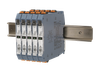
from Knick Interface LLC
The P16000 receives signals from speed sensors and transmits and converts them into electrically isolated analog standard signals. Pulse frequency measurement, e.g., of speed sensors / rotary encoders for safe detection of the train ’s speed or standstill; galvanic isolation and. conversion... [See More]
- Outputs: 0 ... 10 V , 0 ... 20 mA , 4 ... 20 mA; Analog Current Output; Analog Voltage Output
- Operating Temperature: -40 to 158
- Analog Input: 0 ... 0.5 kHz , 0 ... 1 kHz , 0 ... 2 kHz , 0 ... 5 kHz , 0 ... 10 kHz , 0 ... 20 kHz , Speed sensor signal
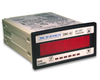
from Macro Sensors
The DMC-A2 Series Dual Channel AC LVDT Controller is an accurate, high performance, programmable dual channel controller that delivers precise measurement and control for applications using AC LVDT (Linear Variable Differential Transformer) inputs. The 6-digit alphanumeric LED display provides easy... [See More]
- Outputs: Ethernet; Analog Current Output; Analog Voltage Output
- Form Factor: Panel / Chassis Mount
- Analog Channels: 2
- Inputs: LVDT
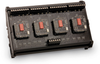
from BEI Sensors
The Sensor Signal Broadcaster accepts standard incremental encoder inputs, (two channels in quadrature plus an index and complements) and can broadcast up to four encoder signals to four independent devices. Each of the broadcast signals are optically isolated, eliminating ground loops. This compact... [See More]
- Analog Channels: 4
- Form Factor: DIN Rail
- Differential Channels: Yes
- Inputs: Encoder Input; Quadrature
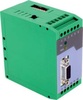
from Leine & Linde AB
Signal converter for frequency to. analogue and serial output. Tachometer functionality ±10 Vdc,. 0-20 mA or 4-20 mA analogue output or. optional RS232 / RS485 serial output. Input frequency range 0.1 Hz - 1 MHz. Compact housing for DIN rail mounting. For connection of incremental TTL,. HTL... [See More]
- Outputs: Analog Current Output; Analog Voltage Output
- Form Factor: Modular Bay or Slot System
- Analog Channels: 1
- Inputs: Encoder Input
from OMEGA Engineering, Inc.
The DRP-8500 Series modules offer a low cost analog I/O solution for micro PLCs. The series is ideal for discrete automation applications requiring one or two analog I/O channels. All models in the series interface with the PLC high speed counter inputs or pulse outputs. Digital signal pulse-width... [See More]
- Outputs: Analog Current Output; Analog Voltage Output; Frequency or Pulse Output
- Inputs: Thermocouple Input; RTD Input; Bridge Input
- Form Factor: DIN Rail
- Analog Input: 0-10 V; 4-20 mA; 0-5000 Hz
from Acromag, Inc.
bull; DC voltage or DC current input. • DC voltage or DC current output. • Loop or DC or AC power. • Excellent accuracy and stability ensure reliable measurements in harsh industrial environments. Input isolated from output/power. These models convert sensor inputs to proportional... [See More]
- Outputs: Analog Current Output
- Differential Channels: Yes
- Analog Channels: 1
- Form Factor: DIN Rail
from LORD MicroStrain Sensing Systems
LORD MicroStrain ® Displacement Variable Reluctance Transducer (DVRT ®) systems enable precise micro-position measurement for a wide variety of applications. From slow, slight movements over time to high frequency vibration, the DVRT ® system provides accurate, repeatable measurement. [See More]
- Outputs: Analog Voltage Output
- Analog Input: 156 kHz typical
- Inputs: LVDT
- Excitation & Features: Filter

from Red Pitaya, d.o.o.
SDRlab 122-16 External clock is based on the SDRlab 122-16 model that is modified to be used with an external clock oscillator, which is important especially for RF applications that operate at other frequencies, require better quality clock or clock synchronization. [See More]
- Outputs: Ethernet; TTL; Analog Voltage Output; Frequency or Pulse Output; Timer / Counter Output; Relay Output (optional feature)
- Differential Channels: Yes (optional feature)
- Analog Channels: 6
- Form Factor: PC Board; Panel / Chassis Mount; Modular Bay or Slot System; DIN Rail; Stand-alone
from Macro Sensors
The DMI-A1 Series AC LVDT Indicator is an accurate, high performance, programmable single channel AC LVDT indicator that delivers precise measurement for applications using AC LVDT (Linear Variable Differential Transformer) inputs. The 5-digit alphanumeric LED display provides easy-to-follow setup... [See More]
- Outputs: Ethernet; Analog Current Output; Analog Voltage Output
- Form Factor: Panel / Chassis Mount
- Analog Channels: 1
- Inputs: LVDT

from OMEGA Engineering, Inc.
The DRF series DIN rail signal conditioners are designed to accept a broad range of input signals, such as ac and dc voltage and current, frequency, temperature (thermocouple and RTD), and process transducers, and provide standard process outputs of either 4 to 20 mA, or 0 to 10 Vdc. The DRF series... [See More]
- Outputs: Analog Current Output; Analog Voltage Output
- Inputs: Thermocouple Input; RTD Input; Bridge Input
- Form Factor: DIN Rail
- Analog Input: 0-650 V; 0-5 A; 0-650 V; 0-5 A; 0-50 kHz

from Red Pitaya, d.o.o.
SDRlab 122-16 was developed specifically for software-defined radio and more demanding RF applications. [See More]
- Outputs: Ethernet; TTL; Analog Voltage Output; Frequency or Pulse Output; Timer / Counter Output; Relay Output (optional feature)
- Differential Channels: Yes (optional feature)
- Analog Channels: 6
- Form Factor: PC Board; Panel / Chassis Mount; Modular Bay or Slot System; DIN Rail; Stand-alone

from OMEGA Engineering, Inc.
The DRF series DIN rail signal conditioners are designed to accept a broad range of input signals, such as ac and dc voltage and current, frequency, temperature (thermocouple and RTD), and process transducers, and provide standard process outputs of either 4 to 20 mA, or 0 to 10 Vdc. The DRF series... [See More]
- Outputs: Analog Current Output; Analog Voltage Output
- Analog Input: 0-50 kHz
- Form Factor: DIN Rail
- User Interface: None

from Red Pitaya, d.o.o.
SIGNALlab 250-12 is most sophisticated Red Pitaya product, built for more demanding industrial applications and research, where robustness and performance matter more than cost. [See More]
- Outputs: Ethernet; TTL; Analog Voltage Output; Frequency or Pulse Output; Timer / Counter Output; Relay Output (optional feature)
- Differential Channels: Yes (optional feature)
- Analog Channels: 6
- Form Factor: PC Board; Panel / Chassis Mount; Modular Bay or Slot System; DIN Rail; Stand-alone