
Integral Filter Sensor Transmitters
Last Updated: April 1, 2025
Description
Integral Filter Sensor Transmitters are devices that convert an input signal from a sensor into a proportional output signal. They are designed to work with specific types of sensors, such as accelerometers, thermistors, flow sensors, thermocouples, and strain gauges. These transmitters are crucial in ensuring that the signal from the sensor is accurately and efficiently transmitted for further processing or monitoring.
Working Principle
Integral Filter Sensor Transmitters operate by accepting an input signal from a sensor and converting it into a different output signal, typically a 4-20 mA current loop. This conversion process involves several stages, including input excitation, input amplification, and signal conversion. The use of analog filters within these transmitters helps improve the signal-to-noise ratio and eliminate unwanted frequencies, ensuring that the transmitted signal is clean and accurate. This functionality is essential for maintaining signal integrity and reducing noise interference, which is particularly important in environments with high levels of electrical noise.
Applications
While specific applications for Integral Filter Sensor Transmitters are not detailed in the provided documents, these devices are generally used in various industrial and engineering settings where precise signal transmission from sensors is required. They are commonly found in systems that monitor environmental conditions, machinery performance, and other critical parameters.
Advantages over other Sensor Transmitters
Integral Filter Sensor Transmitters offer several advantages over other types of sensor transmitters. They provide improved signal integrity by reducing noise and interference, thanks to their integrated filtering capabilities. This makes them particularly useful in environments with significant electrical noise. Additionally, their ability to convert signals into a standardized output, such as a 4-20 mA current loop, allows for easy integration with existing data acquisition and control systems.
Limitations
One limitation of Integral Filter Sensor Transmitters is the potential for increased complexity and cost due to the inclusion of analog filters. These filters require precise component values and stable resonance frequencies, which can add to the overall expense and complexity of the system. Additionally, the need for specific compatibility with certain sensor types may limit their versatility in some applications.
Considerations
When considering the use of Integral Filter Sensor Transmitters, it is important to evaluate factors such as initial costs, operating expenses, and maintenance requirements. The inclusion of analog filters can increase the initial cost and complexity of the system. However, the improved signal integrity and reduced noise interference may justify these costs in environments where accurate signal transmission is critical. Durability and accuracy are also key considerations, as these factors will impact the long-term performance and reliability of the transmitters. Regular maintenance and potential replacement costs should also be factored into the overall cost of ownership.

from Dataforth Corporation
Each DSCP20 2-wire transmitter is designed for measuring temperature using thermocouples or RTDs. The input type, measurement range, and other features are software configurable. A PC, the DSCX-887 and DSCX-416 interface cables, and the DSCX-895 configuration software are required to configure the... [See More]
- Excitation & Features: Current; Filter; Amplifier
- Analog Channels: 1
- Outputs: Analog Current Output
- Differential Channels: Yes

from Dataforth Corporation
Each isolated DSCP81 signal conditioner is designed for measuring voltages up to ±1000VDC and currents up to ±100mA. The input type, measurement range, and other features are software configurable. A PC with RS-232C serial port, the DSCX-787 and DSCX-587 interface cables, and the... [See More]
- Excitation & Features: Filter; Amplifier
- Form Factor: DIN Rail
- Outputs: Analog Current Output
- User Interface: Computer Programmable
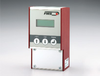
from FMS USA, Inc.
Digital, microprocessor controlled. Top performance at highest speed. 3 programming keys and 2-line LCD. Easy to set up and operate. 3 housing versions. Available as wall, rail and panel mount. Galvanic isolated. Protected against electrical noise. Additional features. Auto-Calibration and -Tare... [See More]
- Excitation & Features: Voltage; Filter; Amplifier
- Analog Channels: 2
- Outputs: Ethernet; Analog Current Output; Analog Voltage Output
- Form Factor: Panel / Chassis Mount; DIN Rail

from LORD MicroStrain Sensing Systems
Carrier Amplifier-Oscillator/Demodulator for DVRTs ®; Inductive, Capacitive and Resistive Bridge Circuits. Overview. The DEMOD-DC ® in-line signal conditioner makes DVRT ® sensors as easy to use as a potentiometer. With integral signal conditioning electronics, the user connects power,... [See More]
- Excitation & Features: Filter
- Inputs: LVDT
- Outputs: Analog Voltage Output
- Analog Input: 6-16 V

from Interface, Inc. - AZ
Why the Interface series SGA AC/DC Powered Signal Conditioner is the best in class: User selectable analog output ±10V, ±5V, 0-10V, 0-5V, 0-20mA, 4-20mA. 110 VAC, 220 VAC OR 18-24 VDC power. Switch selectable filtering 1 Hz to 5 kHz. Single channel powers up to 4 transducers. [See More]
- Excitation & Features: Voltage; Current; Filter
- Form Factor: Stand-alone
- Outputs: Analog Current Output; Analog Voltage Output
- Inputs: mV/V
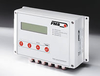
from FMS USA, Inc.
Features. Advantages. Digital microprocessor controlled. High performance & speed capability. Up to 4 independent channels. Saves machine space and money. 4 key programming. Easy to setup and operate. BUS interfacing capability. Remote connectability and integration simplicity. Special features... [See More]
- Excitation & Features: Voltage; Filter; Amplifier
- Analog Channels: 1
- Outputs: Analog Current Output; Analog Voltage Output
- Form Factor: Wall Mount
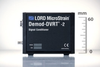
from LORD MicroStrain Sensing Systems
LORD MicroStrain ® Displacement Variable Reluctance Transducer (DVRT ®) systems enable precise micro-position measurement for a wide variety of applications. From slow, slight movements over time to high frequency vibration, the DVRT ® system provides accurate, repeatable measurement. [See More]
- Excitation & Features: Filter
- Inputs: LVDT
- Outputs: Analog Voltage Output
- Analog Input: 156 kHz typical
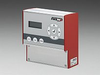
from FMS USA, Inc.
The EMGZ321, a left/right strain gauge amplifier, measures the material tension on both sides of the roller independently. Thus it is possible to monitor the load distribution over the measuring roller with great accuracy. This high-grade product comes as a plug & play unit and is easy to setup. [See More]
- Excitation & Features: Voltage; Filter; Amplifier
- Analog Channels: 2
- Outputs: Ethernet; Analog Current Output; Analog Voltage Output
- Form Factor: Panel / Chassis Mount; DIN Rail