
Current Excitation Supply Sensor Transmitters
Last Updated: April 1, 2025
Description
Current Excitation Supply Sensor Transmitters are devices that convert an input signal from a sensor into a proportional output signal, typically in the form of a current loop. These transmitters are designed to be compatible with specific types of sensors, such as accelerometers, thermistors, flow sensors, thermocouples, and strain gauges. They operate by accepting an input and transmitting a proportional signal in a different output format, often converting a voltage input to a 4-20 mA current loop .
Working Principle
Current Excitation Supply Sensor Transmitters work by providing an excitation source to active sensors, which require a power supply to control the flow of electrons and make a measurement. The excitation can be either a voltage or current output, which powers the sensor and allows it to generate a measurable signal. The transmitter then amplifies and converts this signal using a series of resistors, capacitors, operational amplifiers, and transistors, ultimately transmitting a proportional output signal .
Applications
These transmitters are widely used in industrial settings where long-distance signal transmission is required. For example, temperature transmitters are used to convert low-level resistance signals from RTD sensors into high-level signals, typically 4-20 mA, which can be transmitted over long distances without signal loss .
Advantages over other Sensor Transmitters
One of the main advantages of using current output transmitters is their low susceptibility to interference, which makes them ideal for environments with high electrical noise. Additionally, transmitters with current outputs are easier to replace after a failure, reducing development effort and maintenance time .
Limitations
A notable limitation of current output transmitters is their relatively high energy consumption compared to voltage output transducers. This can be a consideration in applications where power efficiency is critical .
Considerations
When selecting a Current Excitation Supply Sensor Transmitter, several factors should be considered:
- Initial Costs: The initial cost can vary depending on the complexity and specifications of the transmitter.
- Operating Expense: Due to higher energy consumption, operating expenses may be higher compared to voltage output devices.
- Durability: These transmitters are generally robust, but their durability can be affected by the environmental conditions in which they operate.
- Accuracy: They provide accurate signal conversion, which is crucial for precise measurements.
- Replacement and Maintenance Costs: While they are easier to replace, the cost of replacement and maintenance should be factored into the overall lifecycle cost of the device .
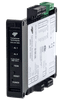
from Transducer Techniques, LLC
MODEL SST-HV. The SST-HV is a Plug & Play Smart TEDS IEEE 1451.4 compliant Transmitter. Just plug in a TEDS compatible Load Cell or Torque Sensor and the SST-HV will automatically self-calibrate. When used with a non-TEDS Load Cell or Torque Sensor, the SST-LV Transmitter is easily programmed... [See More]
- Excitation & Features: Voltage; Current
- Form Factor: Stand-alone
- Outputs: Analog Current Output; Analog Voltage Output; Relay Output
- Analog Input: 20.000, 50.000, 100.00, 250.00, 500.00 mV

from Dataforth Corporation
Each DSCP20 2-wire transmitter is designed for measuring temperature using thermocouples or RTDs. The input type, measurement range, and other features are software configurable. A PC, the DSCX-887 and DSCX-416 interface cables, and the DSCX-895 configuration software are required to configure the... [See More]
- Excitation & Features: Current; Filter; Amplifier
- Analog Channels: 1
- Outputs: Analog Current Output
- Differential Channels: Yes
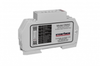
from Interface, Inc. - AZ
Din rail mountable with user selectable outputs of +/-10V, +/-5V or 4-20 mA. 10-28VDC powered suitable for battery or automotive use. Features 1000 Hz bandwidth and push-button shunt calibration. New & Improved Wiring Layout!. User Selectable Analog Output ±10V, ±5V, 4-20 mA. [See More]
- Excitation & Features: Voltage; Current
- Form Factor: DIN Rail
- Outputs: Analog Current Output; Analog Voltage Output
- Analog Input: 5 to 50 mV

from Acromag, Inc.
100 ohm Pt RTD or 0-900 ohm input. 4 to 20mA DC output. 9-32V DC from output loop power. USB-configured. The ST131 is a low-cost two-wire transmitter that converts a 100 ohm Platinum RTD sensor input to a proportional 4-20mA signal. Power is received from the output loop current. The transmitter... [See More]
- Excitation & Features: Current
- Form Factor: DIN Rail; DIN Form B
- Outputs: Analog Current Output
- Inputs: RTD Input

from Time Mark Corporation
Liquid level controllers generally require a 4-20mA loop current that represents zero to 34.6 feet. The loop current indicates the level of liquid in a tank or reservoir, and is usually generated by an expensive pressure transducer or ultrasonic sensor. If you already have a tank with float switches... [See More]
- Excitation & Features: Current
- Analog Channels: 6
- Outputs: Analog Current Output
- Form Factor: Panel / Chassis Mount

from Interface, Inc. - AZ
Why the Interface series 500 In-Line Signal Conditioner is the best in class: DC powered. ±5 VDC or 4-20 mA. Small size. Ultra-stable electronics. More Information. Small, DC powered in-line signal conditioner with 9-pin connectors, +/-5V and 4-20mA outputs and 1000Hz bandwidth. [See More]
- Excitation & Features: Voltage; Current; Amplifier
- Form Factor: Stand-alone
- Outputs: Analog Current Output; Analog Voltage Output
- Analog Input: +/- 10 mV