
Cast (Continuous, Centrifugal, etc.) Nonferrous Metals and Alloys
Description
Cast nonferrous metals and alloys are materials that have been shaped into specific forms through various casting processes. These materials are typically used to create parts with controlled accuracy and can be produced rapidly. The casting process allows for the creation of complex shapes that might be difficult or costly to achieve through machining. Nonferrous metals, such as aluminum, are often chosen for their specific properties like low weight, rust resistance, and thermal conductivity.
Working Principle
Casting involves pouring molten metal into a mold where it solidifies into the desired shape. Continuous casting, for example, involves the solidification of molten metal by conveying it into a mold continuously, which is efficient and reduces waste. Centrifugal casting uses centrifugal force to distribute molten metal evenly in a rotating mold, resulting in parts with superior internal soundness. These processes are useful because they allow for the production of parts with specific mechanical properties and dimensions, often with reduced material waste and cost.
Applications
Cast nonferrous metals and alloys are used in various industries. For instance, aluminum castings are prevalent in the automotive and aerospace industries due to their strength and lightweight properties. Investment casting is used in the aerospace and medical fields for its ability to produce complex and detailed parts. Centrifugal casting is ideal for large parts, such as those used in industrial equipment, where the part's symmetry and size are critical.
Advantages over other Nonferrous Metals and Alloys
Centrifugal casting offers advantages such as superior internal soundness and the ability to produce large parts that might not be feasible with other casting methods. Investment casting is advantageous for creating intricate and detailed parts without the need for additional machining or surface treatments. Continuous casting is efficient and reduces waste, making it cost-effective for producing long sheets or rods with uniform properties.
Limitations
One limitation of casting processes is that they cannot replace all types of machined parts due to material, configuration, and stress requirements. Additionally, certain casting methods may not be suitable for all metal types or part sizes. For example, centrifugal casting is typically used for symmetrical parts and may not be ideal for parts with intricate details.
Considerations
When considering cast nonferrous metals and alloys, factors such as initial costs, operating expenses, durability, and maintenance should be evaluated. Casting processes can be cost-effective for large production runs but may incur higher initial setup costs. The durability and accuracy of the cast parts depend on the chosen casting method and the material properties. Replacement and maintenance costs can vary based on the complexity and application of the cast parts.
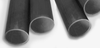
from MarsMetal
Mars Metal Company, Specialty Casting Division is your supplier for extruded lead pipe and bar products. The extrusion process provides a very accurate shape that is very dense. The pressures necessary for extruding pipes or shapes ensures very little porosity in the lead and it provides a very... [See More]
- Features: Continuous, Centrifugal or Other Casting Process
- Shape / Form: Semi-finished, Mill Stock or Near Net Shapes; Bar Stock (optional feature); Hollow Stock (Tube, Pipe, Column) (optional feature); Round Bar or Rod Stock
- Nonferrous: LowMelting; Lead
- Applications: BuildingConstruction

from MarsMetal
Our MarShield division manufactures straight, interlocking, and corner lead bricks, commonly used for radiation shielding or ballast weight. Bricks are available in a wide range of sizes, thicknesses and shapes to suit your application. [See More]
- Features: Continuous, Centrifugal or Other Casting Process
- Shape / Form: Semi-finished, Mill Stock or Near Net Shapes; Squares; Bar Stock; Brick
- Nonferrous: LowMelting; Lead
- Applications: BuildingConstruction
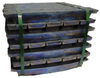
from MarsMetal
Mars Metal is your source for ingot lead. Lead ingots have managed to acquire a variety of industry specific names. Ingot lead can also be known as lead pigs, bullion or bar lead and range in size from 10 LB ice cube tray ingots to 70 LB large ingots. For more information please see the dimensioned... [See More]
- Features: Continuous, Centrifugal or Other Casting Process
- Specifications: ASTM / ASME
- Nonferrous: LowMelting; Lead
- Shape / Form: Ingot or Billet

from MarsMetal
Using lead shot for radiation shielding? Visit our MarShield website for comprehensive information. Mars Metal provides lead shot as an easy, cost-effective solution for areas where solid lead is impractical, due to location, shape, or accessibility. Applications include ballast, stress testing,... [See More]
- Features: Continuous, Centrifugal or Other Casting Process
- Shape / Form: Shot
- Nonferrous: LowMelting; Lead
- Applications: Aerospace or Aircraft Quality (optional feature); Armor / Ballistic Protection (optional feature); Marine (optional feature)

from Concast Metal Products Co.
Aluminum bronze is the highest strength standard copper based alloy. Concast produces C95400, C95500 and C95900 in standard sizes of rounds, tubes and rectangles. Aluminum in conjunction with iron and nickel in C95500 acts as a strengthener in these alloys. All of the aluminum bronzes can be heat... [See More]
- Features: Continuous, Centrifugal or Other Casting Process
- Specialty / Other Types: Alloy
- Nonferrous: Copper
- Grade: 95200
from National Bronze & Metals Inc.
C90500 Tin Bronze "SAE 62"" ASTM B187, ASTM B152, SAE 62. Typical Uses for C90500 Tin Bronze "SAE 62": BUILDERS HARDWARE: Clamps. BUILDING: Heavy Construction Equipment. ELECTRICAL: Connectors. FASTENERS: Nuts. INDUSTRIAL: Pump Bodies, Valves, Gears, Piston Rings, Pump Impellers, Bushings, Bearings,... [See More]
- Features: Continuous, Centrifugal or Other Casting Process; Wear Resistant
- Specialty / Other Types: Alloy
- Nonferrous: Copper
- UNS Number: 90500

from Rhenium Alloys, Inc.
Molybdenum is a soft, ductile refractory metal that is ideal for thermocouple sheaths, especially when used in very high heat conditions. Molybdenum Tubing is also specified for electrical, electronic, and semiconductor applications. Seamless Tubing That Sets The Industry Standards. Precision tubing... [See More]
- Features: Continuous, Centrifugal or Other Casting Process; Vacuum Arc Melted / Remelted (VAR) (optional feature)
- Shape / Form: Semi-finished, Mill Stock or Near Net Shapes; Hollow Stock (Tube, Pipe, Column)
- Nonferrous: Refractory / Reactive; Molybdenum
- Applications: Aerospace or Aircraft Quality; Alternative / Renewable Energy; Chemical or material processing; Electronics or semiconductors; HV / Electrical; Nuclear; Resistance Alloy / Heating; Semiconductors, Thermocouple Sheaths, Medical Devices, Furnace Parts