
Nuclear Nonferrous Metals and Alloys
Description
Nuclear nonferrous metals and alloys are specialized materials that do not contain iron as their base metal. These materials are designed to withstand the extreme conditions found in nuclear environments, such as high temperatures, radiation, and corrosive atmospheres. They are composed of elements like aluminum, copper, nickel, titanium, and other refractory metals, which are known for their high melting points and resistance to corrosion.
Working Principle
Nuclear nonferrous metals and alloys work by leveraging the inherent properties of their constituent elements to provide durability and stability in nuclear applications. These metals and alloys are engineered to maintain their structural integrity under intense radiation and thermal stress. The absence of iron reduces the risk of corrosion and embrittlement, which are critical factors in nuclear environments. Their crystalline structure and alloying techniques enhance their mechanical properties, making them suitable for use in reactors and other nuclear facilities.
Applications
Nuclear nonferrous metals and alloys are used in a variety of specific applications within the nuclear industry. For example, they are employed in the construction of reactor vessels, fuel cladding, and heat exchangers. These materials are also used in the production of control rods and other components that require high resistance to radiation and thermal degradation. Additionally, they are utilized in the development of nuclear waste containment systems, where long-term durability and corrosion resistance are paramount.
Advantages over other Nonferrous Metals and Alloys
One of the primary advantages of nuclear nonferrous metals and alloys over other nonferrous materials is their exceptional resistance to radiation damage and high temperatures. For instance, alloys containing nickel and titanium are known for their ability to maintain strength and stability in extreme conditions, which is crucial for nuclear applications. Additionally, these materials often exhibit superior corrosion resistance compared to ferrous alloys, reducing the risk of failure in corrosive nuclear environments.
Limitations
Despite their advantages, nuclear nonferrous metals and alloys have certain limitations. They can be more expensive to produce due to the complex alloying processes and the cost of raw materials. Additionally, some of these alloys may require specialized fabrication techniques, which can increase production costs and time. Furthermore, while they offer excellent resistance to radiation and corrosion, they may not be suitable for all nuclear applications, particularly where specific mechanical properties are required.
Considerations
When selecting nuclear nonferrous metals and alloys, several considerations must be taken into account. Initial costs can be high due to the price of raw materials and the complexity of manufacturing processes. Operating expenses may also be elevated, as these materials often require specialized handling and maintenance. Durability is a significant factor, as these alloys are expected to perform reliably over long periods in harsh conditions. Accuracy in fabrication is crucial to ensure that components meet stringent nuclear industry standards. Replacement and maintenance costs should also be considered, as the longevity and performance of these materials can impact the overall lifecycle costs of nuclear facilities.

from MarsMetal
Over 70 tons of sheet lead in stock in various sizes are available for quick turnaround at our warehouse! Our high quality Sheet Lead is manufactured from pure lead conforming to ASTM B-29, B-749 and Federal QQ-L-201F, QQ-L-171E.Mars Metal offers sheet lead as laminated panels, adhesive bonded to... [See More]
- Applications: BuildingConstruction; Nuclear
- Specifications: ASTM / ASME
- Nonferrous: LowMelting; Lead
- Shape / Form: Semi-finished, Mill Stock or Near Net Shapes; Sheet

from High Performance Alloys, Inc.
Inconel 600 is a nickel-chromium alloy with good oxidation resistance at higher temperatures, with good resistance in carburizing and chloride containing environments. Inconel 600 is a nickel-chromium alloy designed for use from cryogenic to elevated temperatures in the range of 2000 deg F(1093 deg... [See More]
- Applications: Aerospace or Aircraft Quality; Chemical or material processing; Nuclear; Pressure Vessel (PVQ); Resistance Alloy / Heating; Wear resistant parts or tooling
- Specialty / Other Types: Alloy; Superalloy
- Nonferrous: Nickel; Miscellaneous Nonferrous Metal or Alloy
- Specifications: AMS; ASTM / ASME; UNS

from High Performance Alloys, Inc.
Inconel 718 is a Gamma Prime strengthened alloy with excellent mechanical properties at elevated temperatures, as well as cryogenic temperatures. Suitable for temperatures up to around 1300 F. Can be readily worked and age hardened. Excellent strength from -423 degrees F to 1300 degrees F (-253... [See More]
- Applications: Aerospace or Aircraft Quality; Chemical or material processing; Nuclear; Resistance Alloy / Heating; Wear resistant parts or tooling
- Specialty / Other Types: Alloy; Superalloy
- Nonferrous: Nickel; Miscellaneous Nonferrous Metal or Alloy
- Specifications: AMS; ASTM / ASME; UNS

from Matexcel
Application: Nickel-based superalloys are commonly known as its exceptional combination of high temperature strength, toughness, and resistance to degradation in corrosive or oxidizing environments. Currently, it is commonly used for aircraft and power-generation turbines, rocket engines, and other... [See More]
- Applications: Aerospace or Aircraft Quality; Chemical or material processing; Nuclear
- Shape / Form: Powder, Granule or Flake
- Nonferrous: Nickel
from Leading Edge Metals & Alloys, Inc.
Like niobium, tantalum is a heat-tolerant refractory metal with excellent corrosion resistance. Often alloyed with other metals, tantalum is used to make super alloys used in chemical processing, jet engines and nuclear reactors. Its oxidation properties also make it an excellent choice for many... [See More]
- Applications: Aerospace or Aircraft Quality; Biomaterial; Electronics or semiconductors; Nuclear
- Specialty / Other Types: Alloy
- Nonferrous: Refractory / Reactive; Tantalum
- Shape / Form: Semi-finished, Mill Stock or Near Net Shapes (optional feature); Bar Stock (optional feature); Plate (optional feature); Sheet (optional feature); Wire (optional feature)

from Rhenium Alloys, Inc.
Molybdenum is a soft, ductile refractory metal that is ideal for thermocouple sheaths, especially when used in very high heat conditions. Molybdenum Tubing is also specified for electrical, electronic, and semiconductor applications. Seamless Tubing That Sets The Industry Standards. Precision tubing... [See More]
- Applications: Aerospace or Aircraft Quality; Alternative / Renewable Energy; Chemical or material processing; Electronics or semiconductors; HV / Electrical; Nuclear; Resistance Alloy / Heating; Semiconductors, Thermocouple Sheaths, Medical Devices, Furnace Parts
- Shape / Form: Semi-finished, Mill Stock or Near Net Shapes; Hollow Stock (Tube, Pipe, Column)
- Nonferrous: Refractory / Reactive; Molybdenum
- Features: Continuous, Centrifugal or Other Casting Process; Vacuum Arc Melted / Remelted (VAR) (optional feature)
from Materion Corporation
A high strength, moderate ductility material, Materion Brush Beryllium & Composites ’ I-220H is an instrument grade beryllium that has been developed for applications in which a high micro-yield is required. Consisting of a minimum 98% beryllium, I-220H is produced through the... [See More]
- Applications: Aerospace or Aircraft Quality; Nuclear; Optical
- Specialty / Other Types: LightAlloy; Pure, Unalloyed or Very Low Alloy Additions
- Nonferrous: Refractory / Reactive; Beryllium

from Ulbrich Stainless Steels & Special Metals, Inc.
Strip, Foil, Wire, ASTM B551. APPLICATIONS. Structured packing and gaskets for chemical processing plants, getter straps and nuclear. DESCRIPTION. Zirconium 702 is a commercially pure Zirconium. It exhibits good ductility even at cryogenic temperatures and good strength comparable with other common... [See More]
- Applications: Chemical or material processing; Nuclear; Metal Gaskets For Chemical Processing Plants, Getter Straps, Nuclear Components
- Specialty / Other Types: Pure, Unalloyed or Very Low Alloy Additions
- Nonferrous: Zirconium; Refractory / Reactive; Copper
- UNS Number: 15100

from Ed Fagan, Inc.
Molybdenum TZM is an alloy of 0.50% Titanium, 0.08% Zirconium and 0.02% Carbon with the balance Molybdenum. TZM alloy is manufactured by either P/M or Arc Cast technologies and is of great utility due to its high strength/high temperature applications, especially above 2000°F. [See More]
- Applications: Aerospace or Aircraft Quality; Electronics or semiconductors; Nuclear; Metalworking
- Specialty / Other Types: Alloy
- Nonferrous: Refractory / Reactive; Molybdenum
- Specifications: ASTM / ASME; B-386, B-387
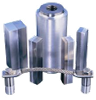
from Qnnect, formerly Hermetic Solutions Group
Materials may exhibit good corrosive resistance, electrical conductivity, or thermal conductivity, yet lack in the areas of strength, hardness, weld-ability, or wear resistance characteristics required in the final design. Qnnect, formerly Hermetic Solutions Group has helped customers to achieve the... [See More]
- Applications: Bearings or Bearing Quality; Electronics or semiconductors; Marine; Nuclear; Pressure Vessel (PVQ); Wear resistant parts or tooling
- Shape / Form: Fabricated Parts or Shapes (Castings, Forgings, Machined Parts, etc.); Billet / Bloom
- Specialty / Other Types: CladBimetal
- Features: Corrosion Resistant

from Ed Fagan, Inc.
Molybdenum's unique properties give rise to processes and applications in electronics, aerospace, nuclear and metal working industries which would not be possible with many of the more common metals and alloys. Some of the more interesting properties of Molybdenum relate to high temperature... [See More]
- Applications: Aerospace or Aircraft Quality; Electronics or semiconductors; Nuclear; Metalworking
- Specialty / Other Types: Pure, Unalloyed or Very Low Alloy Additions
- Nonferrous: Refractory / Reactive; Molybdenum
- Specifications: ASTM / ASME; B-386, B-387
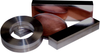
from Qnnect, formerly Hermetic Solutions Group
Design engineers are often faced with the dilemma of material selection, and frequently, they find that a combination of materials provides the optimal properties required by the design. Qnnect, formerly Hermetic Solutions Group ’s explosively bonded metals can join otherwise incompatible... [See More]
- Applications: Bearings or Bearing Quality; Electronics or semiconductors; Marine; Nuclear; Pressure Vessel (PVQ); Wear resistant parts or tooling
- Shape / Form: Fabricated Parts or Shapes (Castings, Forgings, Machined Parts, etc.); Billet / Bloom
- Specialty / Other Types: CladBimetal
- Features: Corrosion Resistant

from Ed Fagan, Inc.
Molybdenum's unique properties give rise to processes and applications in electronics, aerospace, nuclear and metal working industries which would not be possible with many of the more common metals and alloys. Some of the more interesting properties of Molybdenum relate to high temperature... [See More]
- Applications: Aerospace or Aircraft Quality; Electronics or semiconductors; Nuclear; Metalworking
- Specialty / Other Types: Pure, Unalloyed or Very Low Alloy Additions
- Nonferrous: Refractory / Reactive; Molybdenum
- Specifications: ASTM / ASME; B-386, B-387

from Ed Fagan, Inc.
Molybdenum TZM is an alloy of 0.50% Titanium, 0.08% Zirconium and 0.02% Carbon with the balance Molybdenum. TZM alloy is manufactured by either P/M or Arc Cast technologies and is of great utility due to its high strength/high temperature applications, especially above 2000°F. [See More]
- Applications: Aerospace or Aircraft Quality; Electronics or semiconductors; Nuclear; Metalworking
- Specialty / Other Types: Alloy
- Nonferrous: Refractory / Reactive; Molybdenum
- Specifications: ASTM / ASME; B-386, B-387

from Ed Fagan, Inc.
Molybdenum TZM is an alloy of 0.50% Titanium, 0.08% Zirconium and 0.02% Carbon with the balance Molybdenum. TZM alloy is manufactured by either P/M or Arc Cast technologies and is of great utility due to its high strength/high temperature applications, especially above 2000°F. [See More]
- Applications: Aerospace or Aircraft Quality; Electronics or semiconductors; Nuclear; Metalworking
- Specialty / Other Types: Alloy
- Nonferrous: Refractory / Reactive; Molybdenum
- Specifications: ASTM / ASME; B-386, B-387