
Palladium / Palladium Alloys Nonferrous Metals and Alloys
Description
Palladium is a lustrous, silvery-white metal that is part of the platinum group metals (PGM). It is the least dense and has the lowest melting point among these metals. Palladium is soft and ductile when annealed, and it significantly increases in strength and hardness when cold-worked. It is known for its good erosion resistance and high corrosion resistance with low material transfer. Palladium forms useful alloys with metals such as copper and ruthenium.
Working Principle
Palladium works effectively due to its unique ability to absorb hydrogen, up to 900 times its own volume at room temperature. This property makes it particularly useful in applications involving hydrogen storage and purification. The metal's high corrosion resistance and low material transfer also contribute to its effectiveness in various industrial applications. Palladium's ability to form alloys enhances its mechanical properties, making it suitable for high-precision requirements.
Applications
Palladium is primarily used in catalytic converters, which are crucial for reducing harmful emissions from vehicles. It is also employed in the electronics industry, particularly in integrated circuits, due to its economical and technical advantages over gold. Additionally, palladium is used in hydrogen storage and purification processes, as well as in the jewelry industry for its aesthetic appeal.
Advantages over other Nonferrous Metals and Alloys
Palladium offers several advantages over other nonferrous metals and alloys. Its ability to absorb large volumes of hydrogen makes it superior for hydrogen storage applications compared to other metals. Palladium's high corrosion resistance and low material transfer make it more durable and reliable in harsh environments. Furthermore, its cost-effectiveness compared to gold makes it an attractive option for electronic applications, particularly in the integrated circuit industry.
Limitations
One of the major limitations of palladium is its high cost, which can be a significant barrier for widespread use in some industries. Additionally, palladium can develop high contact resistance films in the presence of organic vapors, which can affect its performance in certain applications.
Considerations
When considering the use of palladium and its alloys, it is important to account for the initial costs, which can be high due to the metal's rarity and demand. Operating expenses may also be significant, particularly in applications requiring large quantities of the metal. However, palladium's durability and corrosion resistance can lead to lower maintenance and replacement costs over time. The accuracy and reliability of palladium in specific applications, such as catalytic converters and electronics, can justify the initial investment despite the high costs.

from GFS Chemicals, Inc.
ITEM#:5055. Pd. CAS#:7440-05-3. F.W.:106.40. NFPA#: Specific Gravity: DOT:4.1/II. Descriptions: Specification. TEST. 1. Assay (metals basis) 99.999% min. Properties. No properties. [See More]
- Nonferrous: PreciousNoble; Palladium
- Shape / Form: Powder, Granule or Flake
from Tokusen Kogyo Co., Ltd.
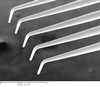
Probe card pins are high-performance pins used for electronic component testing. These pins have a precision tapered profile. Probe card pins contact electrode pads on LSI chips and other semiconductor devices during the production process to test for conductivity. As today ’s LSI chips become... [See More]
- Nonferrous: PreciousNoble; Palladium; Refractory / Reactive; Tungsten; Beryllium
- Width / OD: 0.0020 to 0.0098
- Shape / Form: Fabricated Parts or Shapes (Castings, Forgings, Machined Parts, etc.)
- Length: 0.9843 to 5.91
from Technic, Inc.
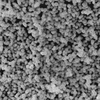
Palladium Flake [See More]
- Nonferrous: PreciousNoble; Palladium
- Shape / Form: Flake

from Umicore Metal Deposition Solutions
Coating material. Palladium. Purity. 99.95%. Form. Wire. Dimensions. Ø 1 mm. Quantity. 100 g. Theoretical density at 20 °C in g/cm ³. 12.0. Melting point in °C. 1555. 10 ⁻ ² mbar in °C. 1450. 10 ⁻ ¹ mbar in °C. 1620. Boiling point in °C. 2963. [See More]
- Nonferrous: PreciousNoble; Palladium
- Width / OD: 0.0394
-
Shape / Form: Wire;
Wire
- Length: 0.0394

from Matexcel
Storage: Store at room temperature. Purity: 99.99%; 99.999%. Size: 2mm*5mm [See More]
- Nonferrous: Palladium
- Length: 0.0787 to 0.1969
- Shape / Form: Powder, Granule or Flake
from Technic, Inc.
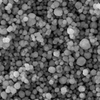
Silver-Palladium Powder, Atomized [See More]
- Nonferrous: PreciousNoble; Silver; Palladium
- Shape / Form: Powder, Granule or Flake