
Lead / Lead Alloy Nonferrous Metals and Alloys
Description
Lead and lead alloys are nonferrous metals characterized by their low melting point, high density, and low hardness. They exhibit a bluish-white color when freshly cut, which tarnishes to a dull gray upon exposure to air. These metals are highly resistant to corrosion and are very malleable, making them suitable for various industrial applications. Lead alloys can be toughened by adding small amounts of other metals, such as antimony, to enhance their mechanical properties.
Working Principle
Lead and lead alloys work by leveraging their inherent physical properties, such as high density and malleability. The high density of lead makes it effective for applications requiring weight or radiation shielding. Its malleability allows it to be easily shaped and formed into various products. The addition of alloying elements like antimony increases the hardness and mechanical strength of lead, making it more suitable for applications that require durability and resistance to wear. The low melting point of lead facilitates easy casting and machining, allowing for precise manufacturing processes.
Applications
Lead and lead alloys are used in a variety of specific applications. They are commonly employed in the production of balancing weights, radiation shielding materials, battery electrodes, and solders. For instance, lead bricks are used in radiation shielding due to their high density, which effectively attenuates radiation. In the automotive industry, lead-acid batteries utilize lead electrodes for energy storage. Additionally, lead-based solders are used in electronics for joining components due to their low melting point and good wettability.
Advantages over other Nonferrous Metals and Alloys
Lead and lead alloys offer several advantages over other nonferrous metals and alloys. Their high density makes them particularly effective for radiation shielding compared to lighter metals. The malleability of lead allows for easy shaping and forming, which is beneficial in manufacturing processes. Furthermore, the corrosion resistance of lead makes it suitable for applications in harsh environments where other metals might degrade more quickly.
Limitations
Despite their advantages, lead and lead alloys have notable limitations. Lead is toxic and can accumulate in the body if proper precautions are not taken, posing health risks. The mechanical properties of lead alloys are sensitive to variations in composition and testing conditions, which can affect their reproducibility and reliability. Additionally, lead has poor electrical conductivity, limiting its use in applications where high conductivity is required.
Considerations
When considering the use of lead and lead alloys, several factors should be taken into account. Initial costs may vary depending on the purity and alloying elements used. Operating expenses can be influenced by the need for safety measures to prevent lead exposure. The durability of lead products is generally high due to their corrosion resistance, but regular maintenance may be required to ensure safety and performance. Replacement and maintenance costs should also be considered, particularly in applications where lead exposure could pose health risks.
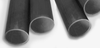
from MarsMetal
Mars Metal Company, Specialty Casting Division is your supplier for extruded lead pipe and bar products. The extrusion process provides a very accurate shape that is very dense. The pressures necessary for extruding pipes or shapes ensures very little porosity in the lead and it provides a very... [See More]
- Nonferrous: LowMelting; Lead
- Features: Continuous, Centrifugal or Other Casting Process
- Shape / Form: Semi-finished, Mill Stock or Near Net Shapes; Bar Stock (optional feature); Hollow Stock (Tube, Pipe, Column) (optional feature); Round Bar or Rod Stock
- Applications: BuildingConstruction

from MarsMetal
Our MarShield division manufactures straight, interlocking, and corner lead bricks, commonly used for radiation shielding or ballast weight. Bricks are available in a wide range of sizes, thicknesses and shapes to suit your application. [See More]
- Nonferrous: LowMelting; Lead
- Features: Continuous, Centrifugal or Other Casting Process
- Shape / Form: Semi-finished, Mill Stock or Near Net Shapes; Squares; Bar Stock; Brick
- Applications: BuildingConstruction
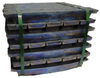
from MarsMetal
Mars Metal is your source for ingot lead. Lead ingots have managed to acquire a variety of industry specific names. Ingot lead can also be known as lead pigs, bullion or bar lead and range in size from 10 LB ice cube tray ingots to 70 LB large ingots. For more information please see the dimensioned... [See More]
- Nonferrous: LowMelting; Lead
- Shape / Form: Ingot or Billet
- Specifications: ASTM / ASME
- Features: Continuous, Centrifugal or Other Casting Process
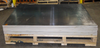
from MarsMetal
Lead Drywall: also referred to as Lead-Lined Sheetrock, Gyproc, Wallboard or Lead-Lined Gypsum Board. MarMetal's drywall is laminated with sheet lead that is designed to cover necessary surfaces or walls in a room requiring radiation shielding. It is affixed to surfaces or walls ensuring a... [See More]
- Nonferrous: LowMelting; Lead
- Shape / Form: Semi-finished, Mill Stock or Near Net Shapes; Sheet
- Specifications: ASTM / ASME
- Applications: BuildingConstruction

from MarsMetal
MarsMetal's plywood is laminated with sheet lead that is designed to cover necessary surfaces or walls in a room requiring radiation shielding. It is affixed to surfaces or walls ensuring a continuous layer of sheet lead, under the plywood, to a specified height. It is used in new construction or... [See More]
- Nonferrous: LowMelting; Lead
- Applications: BuildingConstruction
- Shape / Form: Semi-finished, Mill Stock or Near Net Shapes; Sheet

from MarsMetal
Using lead shot for radiation shielding? Visit our MarShield website for comprehensive information. Mars Metal provides lead shot as an easy, cost-effective solution for areas where solid lead is impractical, due to location, shape, or accessibility. Applications include ballast, stress testing,... [See More]
- Nonferrous: LowMelting; Lead
- Features: Continuous, Centrifugal or Other Casting Process
- Shape / Form: Shot
- Applications: Aerospace or Aircraft Quality (optional feature); Armor / Ballistic Protection (optional feature); Marine (optional feature)
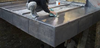
from MarsMetal
Mars Metal provides sheet lead conforming to Federal QQ-L-201F and QQ-L-171E (and ASTM B-29 and B-749). Made from 98% recyclable material, sheet lead is the most malleable of common metals and can be easily shaped, formed, bend and cut to suit a variety of applications, including lead roofing and... [See More]
- Nonferrous: LowMelting; Lead
- Shape / Form: Semi-finished, Mill Stock or Near Net Shapes; Sheet
- Specifications: ASTM / ASME
- Applications: BuildingConstruction

from MarsMetal
Over 70 tons of sheet lead in stock in various sizes are available for quick turnaround at our warehouse! Our high quality Sheet Lead is manufactured from pure lead conforming to ASTM B-29, B-749 and Federal QQ-L-201F, QQ-L-171E.Mars Metal offers sheet lead as laminated panels, adhesive bonded to... [See More]
- Nonferrous: LowMelting; Lead
- Shape / Form: Semi-finished, Mill Stock or Near Net Shapes; Sheet
- Specifications: ASTM / ASME
- Applications: BuildingConstruction; Nuclear

from Matexcel
Storage: Store at room temperature. Purity: 0.9999. Size: 325mesh [See More]
- Nonferrous: Lead
- Shape / Form: Powder, Granule or Flake
from Belmont Metals, Inc.
Lead Alloys. Featuring 99.99% Lead in a variety of forms, Pb-Base Babbitt and casting alloys for jewelry and ornamental products, and Pb-Base Solders. Lead has been commonly used for thousands of years because it is widespread, easy to extract and easy to work with since it is highly malleable as... [See More]
- Nonferrous: LowMelting; Lead
- Applications: Babbitt Alloys, Casting Alloys, Lead Weights, Bricks for Radiation Protection, Acoustical Sheet, Fusible Alloys
- Shape / Form: Ingot or Billet

from Indium Corporation
Fusible Alloys include a group of binary, ternary, quaternary, and quinary alloys containing Bismuth, lead, tin, cadmium and indium. The term fusible alloy refers to any of the more than 100 white-metal alloys that melt at relatively low temperatures. Fusible alloys are materials that melt at less... [See More]
- Nonferrous: LowMelting; Bismuth; Indium; Lead; Tin; Miscellaneous Nonferrous Metal or Alloy
- Shape / Form: Semi-finished, Mill Stock or Near Net Shapes; Bar Stock
- Specialty / Other Types: Specialty; Cadmuim
- Applications: Sealing in Cryogenic Applications, Soldering/Fusing

from Belmont Metals, Inc.
Featuring 99.99% Indium and Indium-Based Low Melting Alloys. Indium was discovered by the German chemists Ferdinand Reich and Hieronymus Richter in 1863. Reich and Richter had been looking for traces of the element thallium in samples of Zinc order, when they saw a brilliant indigo line in the... [See More]
- Nonferrous: LowMelting; Bismuth; Indium; Lead
- Applications: Bearings or Bearing Quality; Electronics or semiconductors
- Shape / Form: 2 lb Cake Even Weight

from Indium Corporation
Fusible Alloys include a group of binary, ternary, quaternary, and quinary alloys containing Bismuth, lead, tin, cadmium and indium. The term fusible alloy refers to any of the more than 100 white-metal alloys that melt at relatively low temperatures. Fusible alloys are materials that melt at less... [See More]
- Nonferrous: LowMelting; Bismuth; Indium; Lead; Tin
- Thickness: 1
- Shape / Form: Semi-finished, Mill Stock or Near Net Shapes; Bar Stock
- Length: 4.25
from Belmont Metals, Inc.
Pewter. Featuring Lead Free Pewter and Lead Free Pewter alloyed with Silver, Indium, and Bismuth, as well as Brittania, and Genuine Pewter. Pewter is a malleable metal alloy, traditionally 85 -95% Tin, with the remainder consisting of Copper, Antimony, Bismuth and sometimes, less commonly today,... [See More]
- Nonferrous: LowMelting; Lead; Tin
- Applications: Decorative objects: collectible statuettes and figurines, game figures, aircraft and other models
- Shape / Form: Ingot or Billet

from Belmont Metals, Inc.
Tin Alloys. Featuring jewelry alloys, Sn anodes for plating, Sn shot for gray iron and titanium alloy additions, Grade A and 99.99% Sn, Sn-base babbitts, 5% phosphor Sn, Pewter, Sn-base solders, Sn powder, Sn oxide powder, Sn granular. All types of Sn and Sn alloys for additions, alloying, casting... [See More]
- Nonferrous: LowMelting; Lead; Tin
- Applications: Chemical or material processing; Casting, Plating, Solder, Babbitt Alloys, Bronze Alloys
- Shape / Form: Pig, Bar, Granular, Mossy, Shot, Anodes, Rod

from Belmont Metals, Inc.
White Metals. Featuring Aluminum, Lead, Pewter, Solders, Jewelry, Sculpture, Tin, Zinc Alloys in a variety of forms for many applications. White metals are any of several light-colored alloys used as a base for plated silverware, ornaments or novelties, as well as any of several lead-based or... [See More]
- Nonferrous: LowMelting; Lead
- Specifications: ICI, ASTM, or Other Casting Grade
- Specialty / Other Types: LightAlloy
- Shape / Form: 40 lb Pigs