
Polyamide-imide (PAI) Polymers and Plastic Resins
Description
Polyamide-imide (PAI) polymers and plastic resins are high-performance materials known for their exceptional mechanical properties and thermal stability. These polymers are typically available in the form of bars, rods, and various shapes, which are molded or extruded to meet specific requirements. PAI is recognized for its low coefficient of friction, high thermal resistance, and toughness, making it suitable for demanding environments.
Working Principle
PAI polymers work by maintaining their mechanical properties and chemical resistance even at elevated temperatures. This is due to their robust molecular structure, which allows them to withstand high thermal and mechanical stress. The polymers exhibit a high retention of tensile strength at elevated temperatures, which is comparable to many engineering resins at room temperature. This makes them particularly useful in applications where both heat resistance and mechanical strength are critical.
Applications
PAI polymers are used in a variety of high-performance applications. They are commonly found in aerospace parts, where their ability to withstand high temperatures and mechanical stress is crucial. In the automotive industry, PAI is used in transmission components and other parts that require durability and thermal resistance. Additionally, PAI is utilized in the manufacturing of high-performance gears and switches, where its mechanical properties are advantageous.
Advantages over other Polymers and Plastic Resins
One of the primary advantages of PAI over other polymers is its exceptional retention of mechanical properties at high temperatures. For example, its tensile strength at 450°F is comparable to that of many engineering resins at room temperature. PAI also offers superior chemical resistance, making it suitable for environments where exposure to harsh chemicals is a concern. Its ability to maintain performance in extreme conditions sets it apart from other high-temperature thermoplastics.
Limitations
PAI polymers have a relatively viscous melt phase, which can limit their processing options. While they can be injection molded, they are often compression molded due to this viscosity. This characteristic can pose challenges in manufacturing processes that require more fluid materials. Additionally, the cost of PAI can be higher compared to other polymers, which may impact its feasibility for certain applications.
Considerations
When considering the use of PAI polymers, it is important to account for initial costs, which can be higher due to the material's high-performance nature. Operating expenses may also be influenced by the need for specialized processing techniques, such as compression molding. However, the durability and thermal stability of PAI can lead to reduced maintenance and replacement costs over time, as the material is less likely to degrade under high-stress conditions.
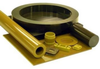
from Port Plastics, Inc.
Duratron ® PAI T5030 GF PAI Extruded is 30% glass-reinforced. It offers high rigidity, retention of stiffness, a low expansion rate and improved load carrying capabilities. This grade is well suited for applications in the electrical/electronic, business equipment, aircraft and aerospace... [See More]
- Chemical System: Polyamide-imide
- Industry: Aerospace; Electronics; Electrical/electronic, business equipment, aircraft and aerospace industries
- Type: Thermoplastic

from Ensinger North America
The addition of 30% carbon fibers to Solvay Torlon ® plastic is what gives TECAPAI CM XP730 black compression molded polyamide-imide its excellent combination of physical properties. It is Ensinger's version of a product commonly referred to in web searches as “torlon 7530 ”. This... [See More]
- Chemical System: Polyamide-imide
- Filler: Carbon or Graphite
- Type: Thermoplastic
- Industry: Aerospace; OEM or Industrial
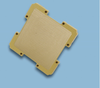
from Port Plastics, Inc.
Duratron ® T5530 is 30% glass reinforced, compression molded PAI. It is ideal for higher load structural or electronic applications. This grade is similar in composition to Duratron ® 5030 PAI. It is selected for larger shapes or when the greatest degree of dimensional control is required. [See More]
- Chemical System: Polyamide-imide
- Industry: Electronics; Ideal for higher load structural or electronic applications
- Type: Thermoplastic
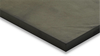
from Ensinger North America
TECAPAI CM XP530 is a compression molded polyamide-imide material that is modified with 30% glass fiber filler. Produced using Solvay Torlon ® plastic polymer, TECAPAI CM XP530 delivers a unique combination of properties and may be recognized as products commonly referred to in web searches as... [See More]
- Chemical System: Polyamide-imide
- Filler: Glass or FRP
- Type: Thermoplastic
- Industry: Aerospace; OEM or Industrial
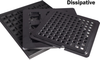
from Port Plastics, Inc.
Semitron ® ESd 520 HR PAI uses Solvay Torlon ® PAI polyamide-imide resin as a base resin. PAI offers PAI greater compressive strength and higher impact resistance than most advanced engineering plastics. High creep resistance and an extremely low coefficient of linear thermal expansion... [See More]
- Chemical System: Polyamide-imide
- Features: Anti-static or ESD Control
- Type: Thermoplastic

from Ensinger North America
Proprietary additives are what makes TECAPAI CM XP440 black-green compression molded PAI plastic an excellent choice as a bearing and seal material. Solvay Specialty Polymers provides the Torlon ® material from which this bearing grade polyamide-imide is made, and it can be considered as... [See More]
- Chemical System: Polyamide-imide
- Industry: Aerospace; OEM or Industrial
- Type: Thermoplastic
- Deflection Temperature: 500

from Port Plastics, Inc.
Polymer plus ceramic blend developed to withstand oxygen plasma & yet deliver ultra pure properties. [See More]
- Chemical System: Polyamide-imide
- Type: Thermoplastic

from Ensinger North America
TECAPAI CM XP403 green is a compression molded Torlon ® plastic material that is unreinforced and delivers an excellent combination of physical properties. Made from Solvay Torlon ® powder, this PAI material offers excellent ductility and toughness as well as good strength and stiffness at... [See More]
- Chemical System: Polyamide-imide
- Industry: Aerospace; Electronics
- Type: Thermoplastic
- Deflection Temperature: 494