
Specialty / Other Polymers and Plastic Resins
Description
Specialty polymers and plastic resins are advanced materials designed to meet specific performance criteria that standard polymers may not fulfill. These materials include specialty thermoplastics and thermosets, which are engineered to provide unique properties such as enhanced mechanical strength, thermal stability, and chemical resistance. Specialty thermoplastics can be repeatedly softened and hardened, allowing for processes like injection molding and thermoforming. Specialty thermosets, on the other hand, are crosslinked polymers that, once cured, cannot be remelted.
Working Principle
Specialty polymers and resins work by leveraging their unique molecular structures to provide specific properties. Thermoplastics, for example, can be softened by heat and reshaped, which makes them versatile for various manufacturing processes. Thermosets, once cured through heat or pressure, form a rigid, interconnected network that provides high thermal and chemical resistance. These properties make specialty polymers useful in applications where standard polymers would fail, such as in high-temperature environments or where chemical exposure is significant.
Applications
Specialty polymers and resins find applications in a wide range of industries due to their tailored properties. For instance, specialty thermoplastics are used in bioplastics and biocomposites, as well as in fluid-resistant applications. They are also employed in the production of nonwovens, fibers, and other extruded substrates like spunbonded and meltblown nonwovens. Specialty thermosets are commonly used in coatings, adhesives, and sealants, with products like epoxy resins being prevalent in these applications.
Advantages over other Polymers and Plastic Resins
Specialty polymers offer several advantages over standard polymers. For example, specialty thermosets generally have higher resistance to heat compared to thermoplastics, making them suitable for high-temperature applications. Additionally, the ability of specialty thermoplastics to be reprocessed helps in reducing waste and managing costs effectively. These polymers also provide enhanced mechanical, thermal, and chemical properties, which are crucial for demanding applications.
Limitations
Despite their advantages, specialty polymers and resins have limitations. Thermosets, once cured, cannot be remelted, which limits their recyclability compared to thermoplastics. Additionally, the initial cost of specialty polymers can be higher due to the complex manufacturing processes involved in their production. Their specific properties may also require specialized processing equipment, which can add to the overall cost.
Considerations
When selecting specialty polymers and resins, several factors should be considered. Initial costs can be high, but the long-term benefits in terms of performance and durability may justify the investment. Operating expenses can vary depending on the processing requirements and the need for specialized equipment. Durability is often a strong point for these materials, especially for thermosets, which offer excellent thermal and chemical resistance. However, the inability to recycle thermosets can be a drawback in terms of sustainability. Maintenance and replacement costs should also be evaluated, particularly for applications where the material is exposed to harsh conditions.

from AGC Chemicals Americas, Inc.
Copolymers of tetrafluoroethylene and a perfluorinated vinyl ether, Fluon ® PFA Resins can be used over a wide range of temperatures from extremely low to high (-200 °C to 260 °C) without losing excellent chemical, electrical, mechanical and surface properties. PFA resins retain many... [See More]
- Type: MoldingCompound; Thermoplastic
- Filler: Unfilled
- Chemical System: Fluoropolymer
- Tensile (Break): 5655

from Master Bond, Inc.
Master Bond Polymer System EP112 is a solventless, low viscosity two component cycloaliphatic epoxy resin system which is specifically designed for high performance outdoor and indoor electrical/electronic/ structural applications. The two components are combined in a convenient noncritical mix... [See More]
- Type: CastingResin; Optical; Thermally cured
- Filler: Unfilled
- Chemical System: Epoxy
- Industry: Electronics; Electrical Power or High Voltage; Optoelectronics or Photonics

from Mitsui Chemicals America, Inc.
ABSORTOMER ™ is a new olefin based polymer with molecular structure optimized at nano-meter level with the use of Mitsui Chemicals' long-cultivated catalyst technology. At low temperature, it has a hard feel and keep its shape. When heated, it changes to a soft, flexible feel. Absortomer is... [See More]
- Type: Thermoplastic
- Form / Shape: Pellets

from Master Bond, Inc.
Master Bond EP121CL is a two component, high performance epoxy resin system featuring high thermal stability, superior electrical insulation properties and outstanding dimensional stability for casting, sealing, potting, encapsulation and impregnation for service up to 450-500 °F. It cures... [See More]
- Type: CastingResin; Thermally cured
- Filler: Unfilled
- Chemical System: Epoxy
- Industry: Electronics; Electrical Power or High Voltage; Optoelectronics or Photonics

from Esprix Technologies
PRODUCT CHARACTERISTICS. KetoprixTM EKT23G3C3 and EKT23G3C2 resins are thermoplastic aliphatic polyketone compounds containing the base 1,4-diketone polymer backbone structure with added fiber reinforcement and thermally conductive additives. Additional thermal stabilizers and lubricants are also... [See More]
- Type: MoldingCompound; Thermoplastic
- Industry: Automotive; OEM or Industrial
- Filler: Fiber Reinforcement and Thermally Conductive Additives
- Tensile (Break): 10153 to 13053

from Toray Industries (America), Inc.
ECODEAR ® is based on polylactic acid (PLA) derived from plants, rather than petroleum and other fossil resources. This means that it can readily be returned to the natural environment after use. ECODEAR ® is an environment-friendly product that helps to conserve fossil resources and reduce... [See More]
- Type: MoldingCompound; Thermoplastic

from Real Seal Company
Engineered Thermoset Rubber Components. Rubber has its own unique array of available materials and associated properties, and can be produced in almost any conceivable configuration, including bonding to metal components. Rubber materials possess some physical properties that are superior to many... [See More]
- Type: MoldingCompound; Thermally cured
- Form / Shape: Pellets
- Filler: Unfilled
- Industry: Automotive; Repair or Construction; OEM or Industrial; Tooling

from Greene, Tweed & Co.
Thermoplastic composites are produced using thermoplastic polymers as matrix materials, which soften upon heating to elevated temperatures for processing, and harden upon cooling. High-performance thermoplastic polymers used for thermoplastic composites provide a number of benefits compared to... [See More]
- Type: Thermoplastic
- Filler: Glass or FRP; Carbon or Graphite; Aramid
- Chemical System: PEEK
- Industry: Aerospace; Electrical Power or High Voltage; Semiconductors or IC Packaging
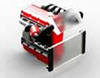
from DuPont Plastics, Polymers & Resins
Zytel ®® PLS95G35DH1 BK031is a high flow 35% glass reinforced PA using SHIELD Technology, only from DuPont, combining excellent surface appearance, excellent welding and fatigue retention, exceptional resistance in hot air & hot engine oil. The Breakthrough Plastic that Won ’t Break... [See More]
- Type: Thermoplastic

from Henkel Corporation - Electronics
Henkel's TECHNOMELT product family is diverse and versatile. No matter the application or market, there is a TECHNOMELT material for you. Despite containing features specific to particular applications, all TECHNOMELT materials provide the same common benefits, including watertight encapsulation,... [See More]
- Type: MoldingCompound; Thermoplastic
- Industry: Electronics
- Form / Shape: Pellets
- Features: UL; Thermally Conductive

from Polyplastics USA, Inc.
TOPAS ® is the trade name of a cyclic olefin copolymer (COC) developed by TOPAS ADVANCED POLYMERS GmbH, it is an amorphous transparent copolymer possessing a cyclic olefin structure. TOPAS ® has been evaluated highly in the market as a resin with optical properties comparable with PMMA... [See More]
- Type: MoldingCompound; Thermoplastic
- Deflection Temperature: 261
- Filler: Unfilled
- Tensile (Break): 6672
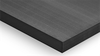
from Ensinger North America
TECANYL VH2 black is a specially formulated PPE plastic (Polyphenylene ether) designed for use in commercial aircraft interiors. It has been tested to and passed the requirements for FAR 25.853, as well as specific customer specifications for interior cabin products. The material's favorable flame... [See More]
- Type: Thermoplastic
- Deflection Temperature: 252
- Industry: Aerospace
- Tensile (Break): 7690 to 9280

from LG Chemical of America Inc.
EPC Engineering Plastic Compound. Highly-functional engineering plastic whose properties have been. enhanced with compounding. Engineering plastic is lighter yet stronger than general plastics. Thus, it is used as an industrial material for automobiles and electronic parts. EPC is a... [See More]
- Type: MoldingCompound; Thermoplastic

from Rieke Metals, Inc.
Poly(3-butylthiophene-2,5-diyl), Highly regioregular Electronic Grade. Typical results are between 80% and 90% regioregularity. The "E" series typically contains less than 0.04% Ni / < 0.02% Zn / < 0.04% Br. The "standard" series typically contains less than 0.1% Ni / < 0.5% Zn / < 0.7%... [See More]
- Type: Thermoplastic
- Form / Shape: Liquid
- Filler: Unfilled
- Industry: Electronics; Semiconductors or IC Packaging

from 3M Advanced Materials Division
Through 3M's Thermoplastic Compounding facility in Hebron, KY, customers have the ability to create formulations geared to providing specific properties or funtions which are not inherent in the base resin. Enhancements can range from making the base polymer easy to extrude, to adding properties... [See More]
- Type: ExtrusionGrade; Thermoplastic
- Filler: Glass Bubbles
- Chemical System: Polypropylene; Polyamide; PEEK; Polyphenylene Oxide; Polyurethane; Polyetherimide
- Form / Shape: Pellets
from Scientific Polymer Products, Inc.
50/50 copolymer (molar); Higher molecular weight [See More]
- Type: Thermoplastic
- Chemical System: Vinyl / PVC
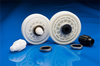
from Celanese Corporation
New Hostaform ® SlideX ™ POM from Celanese is an all-in-one, tribologically modified acetal copolymer (POM) compound with extremely low wear. It can greatly reduce wear rate friction and mechanical systems for industrial, transportation and consumer products sliding applications. With a... [See More]
- Type: Thermoplastic
- Industry: OEM or Industrial; Transportation and Consumer Products Sliding Applications
- Chemical System: Acetal or Polyoxymethylene (POM)

from Toray Industries (America), Inc.
Toray's high-performance engineering plastic TORELINA ® resin boasts excellent heat resistance, flame retardancy and chemical resistance, physical strength, and its superb fluidity leads to outstanding dimensional precision. These characteristics make it ideal for a wide range of applications:... [See More]
- Type: MoldingCompound; Thermoplastic
- Features: Flame Retardant
- Industry: Automotive; Electronics

from Henkel Corporation - Electronics
Henkel's TECHNOMELT product family is diverse and versatile. No matter the application or market, there is a TECHNOMELT material for you. Despite containing features specific to particular applications, all TECHNOMELT materials provide the same common benefits, including watertight encapsulation,... [See More]
- Type: MoldingCompound; Thermoplastic
- Industry: Electronics
- Form / Shape: Pellets
- Features: UL; Thermally Conductive
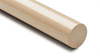
from Ensinger North America
TECATRON GF40 natural is a 40% fiber glass reinforced material that combines very high mechanical properties as well as strength and rigidity, with excellent thermal properties. Furthermore, the high performance thermoplastic PPS with 40% glass fiber reinforcement offers excellent chemical... [See More]
- Type: Thermoplastic
- Industry: OEM or Industrial
- Filler: Glass or FRP
- Thermal Conductivity: 0.2510
from Rieke Metals, Inc.
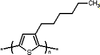
Poly(3-hexylthiophene-2,5-diyl ),Highly regioregular Electronic Grade. Typical results are between 90% and 93% regioregularity.. P3HT. The "E" series typically contains less than 0.04% Ni / < 0.02% Zn / < 0.04% Br. The "standard" series typically contains less than 0.1% Ni / < 0.5% Zn /... [See More]
- Type: Thermoplastic
- Form / Shape: Liquid
- Filler: Unfilled
- Industry: Electronics; Semiconductors or IC Packaging

from 3M Advanced Materials Division
In 1969, astronauts boarded the Apollo 11 spacecraft wearing boots containing 3M ™ Dyneon ™ Fluoroelastomers. Today, these synthetic elastomeric materials are used in some of the toughest environments on earth. From hot-running automotive engines to harsh chemicals of semiconductor... [See More]
- Type: ExtrusionGrade; FilmGrade; MoldingCompound; Optical; Thermoplastic; Thermally cured
- Filler: Unfilled
- Chemical System: Polypropylene; Polyamide; Fluoropolymer
- Form / Shape: Liquid; Pellets

from Ensinger North America
PPE GF30 is a special 30% glass fibre reinforced product which is manufactured by Ensinger under the trade name TECANYL GF30. In comparison to unfilled TECANYL, the glass filled modification demonstrates optimized properties in a number of areas. It has a high rigidity, high mechanical strength,... [See More]
- Type: Thermoplastic
- Industry: Automotive; Electronics; Electrical Power or High Voltage
- Filler: Glass or FRP
- Thermal Conductivity: 0.2800

from Rieke Metals, Inc.
Poly(3-hexylthiophene-2,5-diyl ),Highly regioregular Electronic Grade. Typical results are between 90% and 93% regioregularity.. P3HT. The "E" series typically contains less than 0.04% Ni / < 0.02% Zn / < 0.04% Br. The "standard" series typically contains less than 0.1% Ni / < 0.5% Zn /... [See More]
- Type: Thermoplastic
- Form / Shape: Liquid
- Filler: Unfilled
- Industry: Electronics; Semiconductors or IC Packaging

from Ensinger North America
TECASON P MT black is a polyphenylsulfone suited primarily to applications in the medical industry. PPSU medical grade material has improved performance in terms of temperature, impact strength and chemical resistance, and shows exceptional resistance to repeated steam autoclaving without loss of... [See More]
- Type: Thermoplastic
- Deflection Temperature: 405 to 417
- Industry: Sanitary
- CTE: 31
from Rieke Metals, Inc.
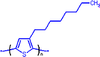
Poly(3-octylthiophene-2,5-diyl ), Highly regioregular Electronic Grade. Typical results are between 90% and 93% regioregularity. The "E" series typically contains less than 0.04% Ni / < 0.02% Zn / < 0.04% Br. The "standard" series typically contains less than 0.1% Ni / < 0.5% Zn / < 0.7%... [See More]
- Type: Thermoplastic
- Form / Shape: Liquid
- Filler: Unfilled
- Industry: Electronics; Semiconductors or IC Packaging

from Ensinger North America
#8203;TECASON P MT blue is suitable for use in medical applications. In many medical applications, it is often desirable for designers to have a number colors to choose from when making material selection decisions. TECASON P MT blue is just one of the many color options available in this family of... [See More]
- Type: Thermoplastic
- Deflection Temperature: 405 to 417
- Industry: Sanitary
- CTE: 31
from Rieke Metals, Inc.
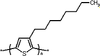
Poly(3-octylthiophene-2,5-diyl ), Highly regioregular Electronic Grade. Typical results are between 90% and 93% regioregularity. The "E" series typically contains less than 0.04% Ni / < 0.02% Zn / < 0.04% Br. The "standard" series typically contains less than 0.1% Ni / < 0.5% Zn / < 0.7%... [See More]
- Type: Thermoplastic
- Form / Shape: Liquid
- Filler: Unfilled
- Industry: Electronics; Semiconductors or IC Packaging
from Ensinger North America
TECASON P MT bone is suitable for use in medical applications. In many medical applications, it is often desirable for designers to have a number colors to choose from when making material selection decisions. TECASON P MT bone is just one of the many color options available in this family of... [See More]
- Type: Thermoplastic
- Deflection Temperature: 405 to 417
- Industry: Sanitary
- CTE: 31

from Rieke Metals, Inc.
Poly(3-decylthiophene-2,5-diyl ), Highly regioregular Electronic Grade. Typical results are between 90% and 93% regioregularity. The "E" series typically contains less than 0.04% Ni / < 0.02% Zn / < 0.04% Br. The "standard" series typically contains less than 0.1% Ni / < 0.5% Zn / < 0.7%... [See More]
- Type: Thermoplastic
- Form / Shape: Liquid
- Filler: Unfilled
- Industry: Electronics; Semiconductors or IC Packaging
from Ensinger North America
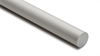
TECASON P MT grey is suitable for use in medical applications. In many medical applications, it is often desirable for designers to have a number colors to choose from when making material selection decisions. TECASON P MT grey is just one of the many color options available in this family of... [See More]
- Type: Thermoplastic
- Deflection Temperature: 405 to 417
- Industry: Sanitary
- CTE: 31
from Rieke Metals, Inc.
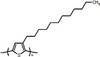
Poly(3-dodecylthiophene-2,5-diyl), Highly regioregular Electronic Grade. Typical results are between 90% and 93% regioregularity. The "E" series typically contains less than 0.04% Ni / < 0.02% Zn / < 0.04% Br. The "standard" series typically contains less than 0.1% Ni / < 0.5% Zn / <... [See More]
- Type: Thermoplastic
- Form / Shape: Liquid
- Filler: Unfilled
- Industry: Electronics; Semiconductors or IC Packaging