
Polyester (PET, PBT) Polymers and Plastic Resins
Description
Polyester polymers, specifically Polyethylene Terephthalate (PET) and Polybutylene Terephthalate (PBT), are thermoplastic polyesters known for their ability to soften when heated and harden upon cooling. This property allows them to be repeatedly melted and molded, making them highly suitable for recycling. PET is commonly used in textile fibers and food packaging, while PBT is recognized for its high heat resistance, stiffness, hardness, and excellent electrical properties.
Working Principle
The working principle of polyester polymers like PET and PBT is based on their thermoplastic nature, which allows them to be melted and reshaped multiple times. This characteristic is due to their crystalline polymer structure, which provides a balance of thermal, mechanical, electrical, and weathering properties. The rapid crystallization of PBT, in particular, allows for fast cycle times during injection molding, leading to high productivity. These polymers are also known for their superb dielectric properties and chemical resistance, making them useful in various engineering applications.
Applications
Polyester polymers are used in a wide range of applications. PET is extensively used in the production of textile fibers and food packaging due to its clarity and durability. PBT is commonly found in the automotive, electrical, and electronics industries, where it is used for functional components and structural parts formed by injection molding. Specific examples include its use in durable goods, wire coatings, and as a component in blends with other materials like PC, PET, and ABS.
Advantages over other Polymers and Plastic Resins
Polyester polymers offer several advantages over other polymers and plastic resins. They are recyclable and provide excellent thermal, mechanical, and electrical properties. PBT, in particular, is noted for its fast crystallization, which allows for efficient processing and high productivity in manufacturing. Additionally, these polymers exhibit low moisture absorption, high strength, rigidity, and toughness, making them suitable for high-performance applications.
Limitations
Despite their advantages, polyester polymers have certain limitations. Thermoplastic resins like PET can be prone to creep under sustained loads, and their properties may degrade upon repeated melting and cooling cycles. This can affect their long-term performance in certain applications.
Considerations
When considering the use of polyester polymers, factors such as initial costs, operating expenses, durability, and maintenance should be taken into account. The ease of processing and recyclability of these materials can lead to cost savings in manufacturing. However, the potential for property degradation with repeated use may necessitate additional considerations for replacement and maintenance, particularly in applications requiring long-term durability and performance.

from ELANTAS North America LLC
At any voltage, the quality and performance requirements that impregnating resins have to fulfill are exceedingly high, so as to exclude potential sources of danger from the outset. But in high-voltage use, these demands become many times greater. Resins for high-voltage use must be reliable so that... [See More]
- Chemical System: Epoxy; Thermoplastic Polyester (PET, PBT, etc.); Polyetherimide
- Industry: Aerospace; Electrical Power or High Voltage
- Type: Thermoplastic
from Ravago Manufacturing Americas
The Ravago product line is available through our sister companies: Entec Channel Prime Alliance and Muehlstein RMA products include a broad portfolio of materials that are fabricated at our state-of-the-art, centrally located facilities. The product line delivers the highest quality compounds with... [See More]
- Chemical System: Thermoplastic Polyester (PET, PBT, etc.)
- Filler: Unfilled
- Type: CastingResin; Thermoplastic
- CTE: 28

from Teknor Apex Company
Terraloy BP-20001A is a Thermoplastics Starch/Biodegradable Copolyester ready-to-process compound that contains up to 40% of TPS renewable content and is 100% biodegradable. This compound is for blown film application as well as injection molded parts. Material Status. Commercial: Active. [See More]
- Chemical System: Thermoplastic Polyester (PET, PBT, etc.)
- Form / Shape: Pellets
- Type: FilmGrade; Thermoplastic
- Tensile (Break): 3770

from Eastman Chemical Company
Eastar ™ Copolyester 5011 is a glycol modified polyethylene terephthalate(PET). The modification is made by adding a second glycol, cyclohexanedimethanol (CHDM) during the polymerization stages. The second glycol is added in the proper proportion to produce an amorphous polymer. This product... [See More]
- Chemical System: Thermoplastic Polyester (PET, PBT, etc.)
- Deflection Temperature: 144
- Type: Thermoplastic
- Tensile (Break): 3626
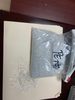
from Pacific Materials
PET Material [See More]
- Chemical System: Thermoplastic Polyester (PET, PBT, etc.)
- Form / Shape: Pellets
- Type: Thermoplastic

from MCG - Performance Polymers Division
MODIC ™ offers two technologies designed to be used as a tie-resin or for peelable purposes: MODIC ™ - ACID-GRAFTED POLYMER (TIE RESIN). MODIC ™ tie-layer resin is acid grafted polyolefin forming a layer or a coating which provides adhesion between materials that have poor... [See More]
- Chemical System: Polypropylene; Thermoplastic Polyester (PET, PBT, etc.); Polycarbonate; Polyethylene
- Industry: Automotive; Sanitary; OEM or Industrial
- Type: ExtrusionGrade; FilmGrade; MoldingCompound; Thermoplastic
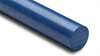
from Ensinger North America
HYDEX 4101 UD blue has been specifically designed for the demanding environment of the food processing industry. For several years, the industry has been moving towards materials used in equipment design that are detectable in some way; either visually, by metal or x-ray detection, in order to... [See More]
- Chemical System: Thermoplastic Polyester (PET, PBT, etc.)
- Industry: Sanitary
- Type: Thermoplastic
- Deflection Temperature: 275 to 393

from Celanese Corporation
CELANEX should in principle be predried. Because of the necessary low maximum residual moisture content the use of dry air dryers is recommended. The dew point should be = < - 30 ° C. The time between drying and processing should be as short as possible. [See More]
- Chemical System: Thermoplastic Polyester (PET, PBT, etc.)
- Filler: Unfilled
- Type: MoldingCompound; Thermoplastic
- Features: UL

from DuPont Plastics, Polymers & Resins
Crastin ® BM6450XD BK560 is an unreinforced supertough polybutylene terephthalate resin with very high viscosity for extrusion and blow molding applications. DuPont ™ Crastin® PBT thermoplastic polyester resins are based on polybutylene terephthalate. By making physical and technical... [See More]
- Chemical System: Thermoplastic Polyester (PET, PBT, etc.)
- Industry: Blow Molding Applications
- Type: Thermoplastic
- Tensile Modulus: 232

from Port Plastics, Inc.
an unreinforced, semi-crystalline thermoplastic polyester based on polyethylene terephthalate (PET-P). It is characterized as having the best dimensional stability coupled with excellent wear resistance, a low coefficient of friction, high strength, and resistance to moderately acidic solutions. [See More]
- Chemical System: Thermoplastic Polyester (PET, PBT, etc.)
- Type: Thermoplastic

from Polyplastics USA, Inc.
PBT is a linear thermoplastic saturated polyester containing ester bonds in its main chain. PBT stands for polybutylene terephthalate. The polymer belongs to the same family as PET resin. PBT possesses a high melting point and high crystallinity, while low water absorption and thermal expansion... [See More]
- Chemical System: Thermoplastic Polyester (PET, PBT, etc.)
- Filler: Unfilled
- Type: MoldingCompound; Thermoplastic
- Deflection Temperature: 163

from Toray Industries (America), Inc.
TORAYCON ® PBT resin is a polyester-based thermoplastic resin developed by combining Toray's technological expertise in polyester polymerization and resin-reinforced composites. Featuring outstanding long-term heat-resistance, chemical-resistance, weather resistance and electrical... [See More]
- Chemical System: Thermoplastic Polyester (PET, PBT, etc.)
- Industry: Automotive; Electronics
- Type: MoldingCompound; Thermoplastic
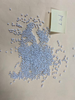
from Pacific Materials
PET Material [See More]
- Chemical System: Thermoplastic Polyester (PET, PBT, etc.)
- Form / Shape: Pellets
- Type: Thermoplastic

from Ensinger North America
HYDEX 4101L natural is the lubricated version of HYDEX 4101 PBT polyester. Like its un-lubricated sister resin, HYDEX 4101L is a more impact resistant polyester that is better suited to many fast paced industrial and food processing environments than other lubricated PET polyesters available. It is... [See More]
- Chemical System: Thermoplastic Polyester (PET, PBT, etc.)
- Industry: Automotive; Sanitary; OEM or Industrial; Semiconductors or IC Packaging
- Type: Thermoplastic
- Deflection Temperature: 195

from Celanese Corporation
To avoid hydrolytic degradation during processing, Riteflex resins have to be dried to a moisture level equal to or less than 0.05%. Drying should be done in a dehumidifying hopper dryer capable of dewpoints <-40 °F (-40 °C) at 225 °F (107 °C) for 4 hours. [See More]
- Chemical System: Thermoplastic Polyester (PET, PBT, etc.)
- Filler: Polyester Elastomer
- Type: MoldingCompound; Thermoplastic
- Use Temperature: 212 to 230

from DuPont Plastics, Polymers & Resins
Sorona ® 3015G BK001 is a 15% glass fiber reinforced black polytrimethylene terephthalate resin containing 31% renewably sourced ingredients by weight (37% based on polymer only) with good strength, stiffness and surface appearance and low warpage. DuPont ™ Sorona ® EP thermoplastic... [See More]
- Chemical System: Thermoplastic Polyester (PET, PBT, etc.)
- Filler: Glass or FRP
- Type: Thermoplastic
- Industry: OEM or Industrial
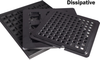
from Port Plastics, Inc.
Semitron ® ESd 300 PET uses PET (Polyethylene terephthalate) is a polyester resin known for its toughness, chemical resistance and dimensional stability. By offering higher dimensional stability than products using POM / Acetal resin but at a lower cost than products using PEI / Ultem ®... [See More]
- Chemical System: Thermoplastic Polyester (PET, PBT, etc.)
- Features: Anti-static or ESD Control
- Type: Thermoplastic
from Pacific Materials
PET Material [See More]
- Chemical System: Thermoplastic Polyester (PET, PBT, etc.)
- Form / Shape: Pellets
- Type: Thermoplastic

from Ensinger North America
TECAPET black PET is the black pigmented version of our standard PET polyester. Among other excellent product features, Ensinger's TECAPET PET is also designed for improved machining properties. In addition, as a result of the black coloration, PET black also offers improved UV protection for... [See More]
- Chemical System: Thermoplastic Polyester (PET, PBT, etc.)
- Industry: OEM or Industrial; Semiconductors or IC Packaging
- Type: Thermoplastic
- Thermal Conductivity: 0.2899

from Celanese Corporation
To avoid hydrolytic degradation during processing, Riteflex resins have to be dried to a moisture level equal to or less than 0.05%. Drying should be done in a dehumidifying hopper dryer capable of dewpoints <-40 °F (-40 °C) at 225 °F (107 °C) for 4 hours. [See More]
- Chemical System: Thermoplastic Polyester (PET, PBT, etc.)
- Filler: Polyester Elastomer
- Type: MoldingCompound; Thermoplastic
- Use Temperature: 428

from Port Plastics, Inc.
polyester is specially formulated to provide improved toughness, and enhanced machinability. This PET polyester also offers excellent sliding and wear properties, and a low coefficient of friction. [See More]
- Chemical System: Thermoplastic Polyester (PET, PBT, etc.)
- Type: Thermoplastic

from Pacific Materials
PET Material [See More]
- Chemical System: Thermoplastic Polyester (PET, PBT, etc.)
- Form / Shape: Pellets
- Type: Thermoplastic