
Electrically Conductive Compound Polymers and Plastic Resins
Description
Electrically conductive compound polymers and plastic resins are specialized materials designed to conduct electricity. These compounds are formulated by incorporating conductive fillers into a polymer matrix, which allows them to provide a pathway for electrical current. The primary function of these materials is to prevent the buildup of static electricity and to provide electrical conductivity in various applications.
Working Principle
The working principle of electrically conductive compound polymers and plastic resins involves the integration of conductive fillers such as metallic particles or conductive carbons into the polymer matrix. These fillers create a network within the polymer that allows electrons to flow, thereby enabling electrical conductivity. The choice of filler and its concentration are critical, as they determine the level of conductivity and the mechanical properties of the final product. Conductive compounds are useful because they can dissipate static charges quickly, with decay rates measured in nanoseconds, providing a ground pathway to prevent potential hazards like fires or damage to sensitive electronics .
Applications
Electrically conductive compound polymers and plastic resins are used in a wide range of applications. In the electronics industry, they are employed in the manufacture of printed circuit boards (PCBs) and surface-mount technology (SMT) assemblies. They are also used in electrical power and high-voltage products such as generators, transformers, circuit breakers, and motor assemblies. Additionally, these materials meet military specifications for aerospace applications and are utilized in automotive and optoelectronic applications .
Advantages over other Polymers and Plastic Resins
Conductive plastics offer several advantages over traditional metals or surfactant coatings. They are lighter in weight, which makes them easier to handle and fabricate. Unlike metals, they do not dent or chip, and they are less expensive to ship. These properties make conductive plastics a cost-effective and durable alternative for applications requiring electrical conductivity .
Limitations
One limitation of electrically conductive compound polymers and plastic resins is that the choice of filler can affect the mechanical properties of the material. For example, while silver is a highly conductive filler, it can undergo electrolytic migration under conditions of high humidity and DC voltage, which may affect the performance of the adhesive. Additionally, achieving the desired level of conductivity often requires a high concentration of conductive fillers, which can impact the strength and flexibility of the polymer .
Considerations
When selecting electrically conductive compound polymers and plastic resins, several factors should be considered. Initial costs can vary depending on the type and concentration of conductive fillers used. Operating expenses may be influenced by the durability and maintenance requirements of the material. Conductive plastics generally offer good durability and are resistant to denting and chipping, but their performance can be affected by environmental conditions such as humidity. Replacement and maintenance costs should also be evaluated, particularly in applications where the material is exposed to harsh conditions or requires frequent replacement .

from AGC Chemicals Americas, Inc.
Melt processable copolymers composed of tetrafluoroethylene and ethylene, Fluon ® ETFE Resins offer superior physical toughness and adaptability to meet the ranging needs of simple, high-quality, complicated and even high-performance products. The fluoropolymers maintain stable mechanical and... [See More]
- Features: UL; Electrically Conductive Compound; Flame Retardant
- Chemical System: Fluoropolymer
- Type: MoldingCompound; Thermoplastic
- Filler: Unfilled

from Master Bond, Inc.
Master Bond Polymer System EP21TDC-7 is a two component highly flexible epoxy resin system for high performance bonding, sealing, and coating. It is formulated to cure at ambient temperatures or more quickly at elevated temperatures with an easy to use one to seven mix ratio by weight. The cured... [See More]
- Features: Anti-static or ESD Control; Electrically Conductive Compound; EMI / RFI Shielding Material
- Chemical System: Epoxy; Polyurethane
- Type: CastingResin; Thermally cured
- Form / Shape: Liquid
from Duvelco Limited
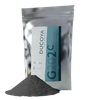
Ducoya® G202 C is a high-purity-filled polyimide for semiconductor applications requiring electrically conductive material. This material is intended for use in the latest semiconductor manufacturing operations, especially where process conditions could generate static electricity. Connecting such... [See More]
- Features: Electrically Conductive Compound
- Chemical System: Polyimide or Bismaleimide (BMI)
- Type: Thermoplastic
- Form / Shape: Pellets

from Master Bond, Inc.
Master Bond Polymer System EP21CLV compound is a two component epoxy compound for general purpose bonding or casting formulated to cure at room temperature or more rapidly at elevated temperatures, with a one-to-one mix ratio, weight or volume. It readily develops a high bonding strength of more... [See More]
- Features: Anti-static or ESD Control; Electrically Conductive Compound; EMI / RFI Shielding Material
- Chemical System: Epoxy
- Type: CastingResin; Thermally cured
- Form / Shape: Liquid

from Master Bond, Inc.
Master Bond EP21LSCL-1 is a two component, low viscosity epoxy resin system featuring superb optical clarity as well as outstanding non-yellowing properties. This system has a forgiving mix ratio of 100 to 60 by weight. It will cure readily at 75°F in 3-5 days or 3-4 hours at 150-200°F. The optimum... [See More]
- Features: Anti-static or ESD Control; Thermally Conductive; Electrically Conductive Compound; EMI / RFI Shielding Material
- Chemical System: Epoxy
- Type: CastingResin; Thermally cured
- Filler: Metal or MIM

from Master Bond, Inc.
Master Bond Polymer System EP21TDC-4 is a two component highly flexible epoxy resin system for high performance bonding, sealing, and coating. It is formulated to cure at ambient temperatures or more quickly at elevated temperatures with an easy to use one-to-four mix ratio by weight. The cured... [See More]
- Features: Anti-static or ESD Control; Electrically Conductive Compound; EMI / RFI Shielding Material
- Chemical System: Epoxy; Polyurethane
- Type: CastingResin; Thermally cured
- Form / Shape: Liquid

from 3M Advanced Materials Division
Through 3M's Thermoplastic Compounding facility in Hebron, KY, customers have the ability to create formulations geared to providing specific properties or funtions which are not inherent in the base resin. Enhancements can range from making the base polymer easy to extrude, to adding properties... [See More]
- Features: Anti-static or ESD Control; Electrically Conductive Compound
- Chemical System: Polypropylene; Polyamide; PEEK; Polyphenylene Oxide; Polyurethane; Polyetherimide
- Type: ExtrusionGrade; Thermoplastic
- Filler: Glass Bubbles

from Epoxy Technology
EPO-TEK ® offers a full suite of electrically and thermally conductive epoxy adhesives. Our extensive product line allows users from a wide range of industries to easily select the optimal adhesive for their specific application, based on the best combination of physical, electrical, and... [See More]
- Features: Thermally Conductive; Electrically Conductive Compound; EMI / RFI Shielding Material
- Chemical System: Epoxy
- Type: CastingResin; Thermally cured
- Filler: Metal or MIM; Silver
from Port Plastics, Inc.
TECAFLON PVDF ELS is a filled PVDF fluoropolymer with conductive carbon black offering an electrical conductive PVDF. It combines high thermal loading resistance, high density and high chemical resistance with very low moisture absorption. It also exhibits resistance to UV radiation. TECAFLON ®... [See More]
- Features: Electrically Conductive Compound
- Chemical System: Fluoropolymer
- Type: Thermoplastic

from Rieke Metals, Inc.
Poly(3-butylthiophene-2,5-diyl), Highly regioregular Electronic Grade. Typical results are between 80% and 90% regioregularity. The "E" series typically contains less than 0.04% Ni / < 0.02% Zn / < 0.04% Br. The "standard" series typically contains less than 0.1% Ni / < 0.5% Zn / < 0.7%... [See More]
- Features: Electrically Conductive Compound
- Filler: Unfilled
- Type: Thermoplastic
- Form / Shape: Liquid

from 3M Advanced Materials Division
In 1969, astronauts boarded the Apollo 11 spacecraft wearing boots containing 3M ™ Dyneon ™ Fluoroelastomers. Today, these synthetic elastomeric materials are used in some of the toughest environments on earth. From hot-running automotive engines to harsh chemicals of semiconductor... [See More]
- Features: Anti-static or ESD Control; Electrically Conductive Compound; Flame Retardant
- Chemical System: Polypropylene; Polyamide; Fluoropolymer
- Type: ExtrusionGrade; FilmGrade; MoldingCompound; Optical; Thermoplastic; Thermally cured
- Filler: Unfilled
from Rieke Metals, Inc.
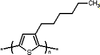
Poly(3-hexylthiophene-2,5-diyl ),Highly regioregular Electronic Grade. Typical results are between 90% and 93% regioregularity.. P3HT. The "E" series typically contains less than 0.04% Ni / < 0.02% Zn / < 0.04% Br. The "standard" series typically contains less than 0.1% Ni / < 0.5% Zn /... [See More]
- Features: Electrically Conductive Compound
- Filler: Unfilled
- Type: Thermoplastic
- Form / Shape: Liquid

from Rieke Metals, Inc.
Poly(3-hexylthiophene-2,5-diyl ),Highly regioregular Electronic Grade. Typical results are between 90% and 93% regioregularity.. P3HT. The "E" series typically contains less than 0.04% Ni / < 0.02% Zn / < 0.04% Br. The "standard" series typically contains less than 0.1% Ni / < 0.5% Zn /... [See More]
- Features: Electrically Conductive Compound
- Filler: Unfilled
- Type: Thermoplastic
- Form / Shape: Liquid
from Rieke Metals, Inc.
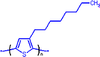
Poly(3-octylthiophene-2,5-diyl ), Highly regioregular Electronic Grade. Typical results are between 90% and 93% regioregularity. The "E" series typically contains less than 0.04% Ni / < 0.02% Zn / < 0.04% Br. The "standard" series typically contains less than 0.1% Ni / < 0.5% Zn / < 0.7%... [See More]
- Features: Electrically Conductive Compound
- Filler: Unfilled
- Type: Thermoplastic
- Form / Shape: Liquid
from Rieke Metals, Inc.
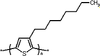
Poly(3-octylthiophene-2,5-diyl ), Highly regioregular Electronic Grade. Typical results are between 90% and 93% regioregularity. The "E" series typically contains less than 0.04% Ni / < 0.02% Zn / < 0.04% Br. The "standard" series typically contains less than 0.1% Ni / < 0.5% Zn / < 0.7%... [See More]
- Features: Electrically Conductive Compound
- Filler: Unfilled
- Type: Thermoplastic
- Form / Shape: Liquid

from Rieke Metals, Inc.
Poly(3-decylthiophene-2,5-diyl ), Highly regioregular Electronic Grade. Typical results are between 90% and 93% regioregularity. The "E" series typically contains less than 0.04% Ni / < 0.02% Zn / < 0.04% Br. The "standard" series typically contains less than 0.1% Ni / < 0.5% Zn / < 0.7%... [See More]
- Features: Electrically Conductive Compound
- Filler: Unfilled
- Type: Thermoplastic
- Form / Shape: Liquid