
Polyetherimide Polymers and Plastic Resins
Description
Polyetherimide (PEI) is a high-performance thermoplastic known for its exceptional strength, heat resistance, and flame retardancy. It offers excellent dimensional stability at high temperatures and maintains its mechanical properties under load. PEI is also recognized for its smooth as-molded surfaces, transparency, and optical properties, making it aesthetically pleasing. Additionally, it provides good solvent resistance over a wide temperature range and has inherent ignition resistance without the need for phosphorous or halogen additives.
Working Principle
Polyetherimide polymers work through a process of polymerization involving the reaction of a diamine and a dianhydride to form an amide-acid polymer. This polymer is then converted into a polyimide by removing water. The resulting material is amorphous and transparent, allowing it to be molded and processed into various forms. The high-performance characteristics of PEI, such as its high tensile strength and resistance to heat and chemicals, make it useful in demanding environments where durability and stability are required.
Applications
PEI is used in a variety of applications due to its robust properties. Specific examples include electrical connectors and printed circuit boards, where its electrical properties and heat resistance are advantageous. In the automotive industry, PEI is used for components that require high strength and thermal stability. It is also employed in medical and food service applications due to its compliance with medical and food-contact standards and its ability to be sterilized.
Advantages over other Polymers and Plastic Resins
Polyetherimide offers several advantages over other polymers and plastic resins. It provides high continuous-use temperatures and excellent machinability, which are not always available in other materials. Its inherent ignition resistance and high oxygen index make it safer for applications where fire resistance is critical. Additionally, PEI's ability to maintain its strength and shape under stress, along with its UV resistance, makes it a superior choice for structural applications and environments exposed to sunlight.
Limitations
Despite its many advantages, PEI has some limitations. It can be expensive and difficult to obtain due to its specialized nature. The material's high-performance characteristics come at a higher cost compared to more common plastics, which can be a barrier for some applications. Additionally, while PEI is durable, it may not be the best choice for applications requiring extreme flexibility or impact resistance.
Considerations
When considering the use of PEI, it is important to account for the initial costs and operating expenses associated with its use. The material's high-performance nature can lead to higher upfront costs, but its durability and reliability can offset these costs over time by reducing the need for frequent replacements and maintenance. PEI's excellent machinability and secondary-finishing characteristics can also contribute to lower long-term operating expenses. However, careful consideration should be given to the specific requirements of the application to ensure that PEI is the most suitable material choice.

from ELANTAS North America LLC
At any voltage, the quality and performance requirements that impregnating resins have to fulfill are exceedingly high, so as to exclude potential sources of danger from the outset. But in high-voltage use, these demands become many times greater. Resins for high-voltage use must be reliable so that... [See More]
- Chemical System: Epoxy; Thermoplastic Polyester (PET, PBT, etc.); Polyetherimide
- Industry: Aerospace; Electrical Power or High Voltage
- Type: Thermoplastic

from Port Plastics, Inc.
Duratron ® PEI U1000 Extruded is an amorphous polymer offering high strength and excellent flame and heat resistance. It performs continuously to 340 °F (170 °C), making it ideal for high strength/ high heat applications, and those requiring consistent dielectric properties over a... [See More]
- Chemical System: Polyetherimide
- Industry: Ideal for high strength/ high heat applications
- Type: Thermoplastic
- Features: Flame Retardant

from Ensinger North America
This is a special brown-beige 30% glass fiber reinforced PEI, manufactured by Ensinger under the tradename TECAPEI GF30 natural. In comparison to unfilled PEI (TECAPEI natural), PEI GF30 demonstrates high rigidity, very high mechanical strength, as well as extremely good dimensional stability, and... [See More]
- Chemical System: Polyetherimide
- Filler: Glass or FRP
- Type: Thermoplastic
- Industry: Aerospace; Electrical Power or High Voltage

from 3M Advanced Materials Division
Through 3M's Thermoplastic Compounding facility in Hebron, KY, customers have the ability to create formulations geared to providing specific properties or funtions which are not inherent in the base resin. Enhancements can range from making the base polymer easy to extrude, to adding properties... [See More]
- Chemical System: Polypropylene; Polyamide; PEEK; Polyphenylene Oxide; Polyurethane; Polyetherimide
- Filler: Glass Bubbles
- Type: ExtrusionGrade; Thermoplastic
- Form / Shape: Pellets

from MCA - Advanced Materials Division
ultra high strength carbon fiber + PEI injection molding compound ”. No stock shapes offered, only injection molding pellets. [See More]
- Chemical System: Polyetherimide
- Filler: Carbon or Graphite
- Type: MoldingCompound; Thermoplastic
- Form / Shape: Pellets
from Port Plastics, Inc.
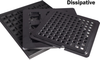
Semitron ® ESd 410C PEI is a Static Dissipative material that uses PEI Ultem ® as a base resin. Semitron ® ESd 420 offers excellent stability of physical and mechanical properties at elevated temperatures thanks to high glass transition temperature of 217 °C. Available with... [See More]
- Chemical System: Polyetherimide
- Features: Anti-static or ESD Control
- Type: Thermoplastic
- Use Temperature: 423

from Ensinger North America
TECAPEI black Ultem is a polyetherimide material with high mechanical strength and rigidity, that is also known for its good electrical properties. This material has a remarkably high creep resistance over a wide range of temperatures and furthermore, polyetherimides have a high permanent operating... [See More]
- Chemical System: Polyetherimide
- Filler: Unfilled
- Type: Thermoplastic
- Industry: Aerospace; Automotive; Electronics; Sanitary; Semiconductors or IC Packaging