
TTL Motor Controllers
Last Updated: January 16, 2025 Reviewed by: Mohsen Mostafaei, consulting engineer
Description
TTL Motor Controllers are specialized electronic devices designed to control DC motors using Transistor-Transistor Logic (TTL) level signals. These controllers interpret digital signals (0V and 5V) to regulate motor speed, direction, and torque. They serve as an interface between low-power digital control circuits and higher-power motor systems, effectively translating logic-level commands into motor actions.
Working Principle
TTL Motor Controllers operate by using transistors to switch larger currents based on small TTL input signals. When a TTL-level signal (typically 5V) is received, the controller's internal circuitry amplifies this signal through a series of transistor stages. These stages handle the power conversion necessary to drive the motor. The controller uses pulse-width modulation (PWM) to regulate motor speed, where the duty cycle of the output signal determines the average voltage supplied to the motor. Direction control is achieved through H-bridge circuitry, which can reverse current flow through the motor by switching transistor pairs.
Applications
TTL Motor Controllers are extensively used in CNC machines for precise tool positioning and speed control. They're found in automated laboratory equipment, such as automated pipettes and sample handlers, where precise motor control is crucial. Industrial printing presses use these controllers for paper feed mechanisms and ink roller speed regulation. They're also commonly implemented in robotic assembly lines for component placement and in semiconductor manufacturing equipment for wafer handling systems.
Advantages over other Motor Controllers
TTL Motor Controllers offer superior noise immunity compared to analog controllers due to their digital nature. They provide faster response times than relay-based controllers, typically in the microsecond range versus milliseconds for mechanical switches. Their compatibility with standard TTL logic levels makes them directly interfaceable with most microcontrollers and digital systems without additional voltage level conversion circuits. They also consume significantly less power than linear controllers, with typical efficiency improvements of 30-40% in most applications.
Limitations
These controllers are restricted to DC motor applications and cannot directly control AC motors without significant additional circuitry. They typically have voltage limitations, usually operating only up to 24V DC, making them unsuitable for high-voltage applications. Heat dissipation becomes a significant issue when operating at high currents, often requiring additional cooling systems above 5A continuous current. They're also susceptible to damage from voltage spikes and back-EMF from motors, necessitating additional protection circuits.
Considerations
Initial costs for TTL Motor Controllers range from $20 for basic modules to several hundred dollars for advanced systems with additional features. Operating expenses are generally low due to their high efficiency, typically resulting in power savings of 20-30% compared to linear controllers. Durability varies significantly with environmental conditions, with typical lifespans of 5-7 years in normal industrial environments. Accuracy is highly dependent on the quality of the TTL signals and power supply stability, with typical speed regulation of ±1-2% under stable conditions. Maintenance costs are minimal, usually limited to cleaning and inspection, though replacement may be necessary after significant overload events or when operating in harsh environments.

from PI (Physik Instrumente) L.P.
High Performance Precision Motion Control at Low Cost. 20 MHz Encoder Input for High Speed & Resolution. Macro Programmable Stand-Alone Functionality. Integrated Servo Power Amp Supplies up to 30 W. Data Recorder. Network Capability for Multi-Axis Applications. Non-Volatile EEPROM for Macros and... [See More]
- Communication: RS232; TTL; USB
- DC Input: 15 to 30
- Axes: 2.0
- Power: 30
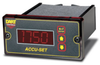
from Dart Controls, Inc.
The Accu-Set is a compact, economical control that can be used with conventional AC, DC, or Brushless DC adjustable speed drive systems to provide an LED display of set speeds and precise, digital closed loop motor speed control. An on-board microprocessor with non-volatile memory coupled with... [See More]
- Communication: TTL
- Axes: 1.0
- Product: Speed Controller; Variable Speed; Silicon Controlled Rectifier Drive
- Motor / System: DC Brushless; DC Servo; AC Servo

from Data Device Corporation (DDC)
The PW-87 series is a modular and scalable DSP-based, full featured motor controller that offers multi-interface position, torque, and speed control, and is designed for demanding high reliability industrial, military, and aerospace applications. Benefits. Fully Integrated, Plug & Play Bus... [See More]
- Communication: CANbus; RS232; RS422; RS485; TTL
- Voltage: 600 to 1200
- Product: Speed Controller
- Continuous Current: 75
from Anaheim Automation, Inc.
Eliminates motor wires, ideal for precise positioning [See More]
- Communication: TTL
- Axes: 1.0
- Product: Controller / Drive
- Motor / System: Unipolar