
Maturity Microcontrollers (MCU)
Last Updated: April 1, 2025
Description
Maturity Microcontrollers (MCUs) are highly integrated single-chip computer systems that incorporate a processor, memory, and input/output (I/O) units. They are designed to detect and process input signals and respond by asserting output signals. These microcontrollers are equipped with features necessary to perform embedded control functions and are customizable through programming to meet specific application needs.
Working Principle
Microcontrollers work by integrating a central processing unit (CPU), memory, and I/O peripherals onto a single chip. This integration allows them to perform complex tasks by executing a program stored in their memory. The program, often referred to as code, configures the microcontroller to detect external events, manipulate data, and respond with appropriate outputs. This makes them useful for a wide range of applications, as they can be programmed to perform specific tasks autonomously.
Applications
Microcontrollers are used in a variety of applications, ranging from consumer electronics to automotive systems. Specific examples include:
- Automotive Systems: They are integral to electronic control units (ECUs) in vehicles, managing functions such as antilock braking systems (ABS), engine control, and navigation systems.
- Consumer Electronics: Microcontrollers are found in mobile phones, digital cameras, and media players, where they manage user interfaces and device operations.
- Industrial Devices: PIC microcontrollers, known for their low power consumption and high performance, are used in industrial devices for tasks such as data acquisition and control.
Advantages over other Microcontrollers
PIC microcontrollers offer several advantages, including low cost, low power consumption, and high-performance capabilities. They feature built-in Flash memory, which allows for easy programming and reprogramming even after installation. Additionally, they come with a wide range of peripherals such as analog-to-digital converters (ADCs), timers, and communication interfaces, making them versatile for various applications.
Limitations
One limitation of microcontrollers is that they are often designed for specific tasks and may not be as flexible as general-purpose processors. Additionally, the integration of components onto a single chip can limit the ability to upgrade individual components, such as memory or processing power, without replacing the entire microcontroller.
Considerations
When selecting a microcontroller, several factors should be considered:
- Initial Costs: The cost of microcontrollers can vary significantly based on their capabilities and the complexity of the application.
- Operating Expense: Power consumption is a critical factor, especially for battery-powered devices, as it affects the overall operating expense.
- Durability and Accuracy: The durability of a microcontroller is essential for applications in harsh environments, while accuracy is crucial for precision tasks.
- Replacement and Maintenance Costs: Since microcontrollers are the core of many systems, replacing them can be costly and complex, requiring careful consideration during the initial selection process.
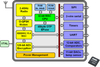
from Jennic Limited
The JN5139 is a low power, low cost wireless microcontroller suitable for IEEE802.15.4, Jennet and ZigBee applications. The device integrates a 32-bit RISC processor, with a fully compliant 2.4GHz IEEE802.15.4 transceiver, 192kB of ROM, 96kB of RAM, and a rich mixture of analogue and digital... [See More]
- Life Cycle Stage: Maturity
- Number: 3
- Data Bus: 32 Bit
- RAM: 96
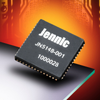
from Jennic Limited
The JN5148 is an ultra low power, high performance wireless microcontroller targeted at ZigBee PRO networking applications. The device features an enhanced 32-bit RISC processor offering high coding efficiency through variable width instructions, a multi-stage instruction pipeline and low power... [See More]
- Life Cycle Stage: Maturity
- Clock Speed: 32
- Data Bus: 32 Bit
- Number: 3