
PQFP Microcontrollers (MCU)
Last Updated: April 1, 2025
Description
PQFP (Plastic Quad Flat Package) Microcontrollers are integrated circuits that combine a processor, memory, and input/output peripherals into a single chip. These microcontrollers are designed to perform specific control functions within embedded systems, offering a compact and efficient solution for managing electronic devices.
Working Principle
PQFP Microcontrollers operate by executing programmed instructions stored in their memory. They utilize a central processing unit (CPU) to process data and control the operation of connected peripherals. The integration of memory and I/O units on the same chip allows for efficient data handling and communication with other components. This architecture makes them particularly useful in applications where space and power efficiency are critical, as they reduce the need for additional external components.
Applications
PQFP Microcontrollers are widely used in various applications, including consumer electronics, automotive systems, and industrial automation. For example, they can be found in household appliances like washing machines and microwaves, where they control timing and user interface functions. In the automotive industry, they are used in engine control units (ECUs) to manage engine performance and emissions. Additionally, they are employed in industrial settings for process control and monitoring.
Advantages over other Microcontrollers (MCU)
One of the main advantages of PQFP Microcontrollers is their compact packaging, which allows for a higher density of pins compared to other packages. This feature enables more complex connections and greater functionality within a smaller footprint. Additionally, the integration of processor, memory, and I/O units on a single chip reduces the overall cost and complexity of the system design, making them an attractive option for high-volume applications.
Limitations
Despite their advantages, PQFP Microcontrollers have limitations, such as being more challenging to handle and solder due to their fine pitch and numerous pins. This can lead to increased manufacturing complexity and potential reliability issues if not handled properly. Additionally, their fixed architecture may limit flexibility in certain applications where customization is required.
Considerations
When selecting PQFP Microcontrollers, it is important to consider factors such as initial costs, operating expenses, and durability. While they offer cost savings in terms of reduced component count, the initial investment in development tools and expertise may be higher. Operating expenses can be minimized through their efficient power consumption. Durability and reliability are generally high, but careful attention must be paid to the manufacturing process to avoid issues related to the fine pitch of the package. Maintenance and replacement costs are typically low, as these microcontrollers are designed for long-term use in embedded systems.
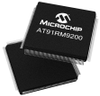
from RS Components, Ltd.
MCU 32-bit 91R ARM920T RISC 128KB ROM [See More]
- Package Type: PQFP; QFP; Other; Pqfp
- RAM: 16
- Data Bus: 32 Bit; 32bit
- ROM: 128
from RS Components, Ltd.
Z8F6423FT020SG [See More]
- Package Type: PQFP; QFP; Other; Pqfp
- RAM: 4
- Data Bus: 8 Bit; 8bit
- ROM: 64
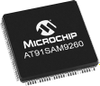
from RS Components, Ltd.
QFP,GREEN,IND TEMP [See More]
- Package Type: PQFP; QFP; Other; Pqfp
- RAM: 8
- Data Bus: 32 Bit; 32bit
- ROM: 8
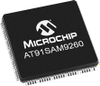
from RS Components, Ltd.
QFP,GREEN,IND TEMP [See More]
- Package Type: PQFP; QFP; Other; Pqfp
- RAM: 8
- Data Bus: 32 Bit; 32bit
- ROM: 8