
Level Controllers Information
Last revised: November 18, 2024
Reviewed by: Scott Orlosky, consulting engineer
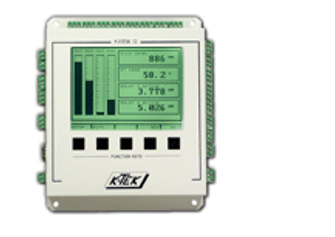
Level controllers monitor, regulate and control liquid or solid levels in a process. Level controllers receive input from a level sensor and respond accordingly based on the device and user specifications. They may be used in conjunction with pump systems, in storage tanks or reservoirs, and other applications. For detailed information about controller specifications, including control type, inputs and outputs, and certifications, please refer to the level sensing devices page.
Level Controllers FAQs
What are the common applications of level controllers?
Industry-Specific Applications: Level controllers are found in a wide range of industries, including manufacturing, food and beverage, chemical and pharmaceutical, marine, medical, and fuel/energy management, just to name a few.
Industrial Processes: Level controllers are crucial in processes involving the filling or storing of liquids in tanks or vessels. They help manage the flow rate into and out of storage vats or reactors, ensuring efficient process control.
High or Low-Level Sensing and Alarms: These controllers are used for detecting high or low liquid levels, triggering alarms to prevent overflow or dry running of equipment.
Leak Detection and Overfill Shutoff: Level controllers play a vital role in detecting leaks and preventing overfilling. Overflows can compromise safety or create environmental hazards.
Regulating Interfaces Between Different Media Levels: They are used to manage the interface between different media levels, which is important in processes where multiple liquids or phases are involved.
What are the types of level sensors used in level controllers?
Capacitance Sensors: These sensors measure the level of a liquid by detecting changes in capacitance caused by the presence of the liquid between two conductive plates. They are suitable for a variety of liquids and can be used in both conductive and non-conductive media.
Radio Frequency (RF) Sensors: RF sensors use radio frequency signals to detect the level of a liquid. They are often used in applications where the liquid is conductive or where there are changes in the dielectric constant of the liquid.
Electromechanical Sensors: These sensors use mechanical components to detect the level of a liquid. They are often used in applications where electronic sensors might not be suitable due to harsh environmental conditions.
Float/Displacer Sensors: Float sensors use a buoyant object that rises and falls with the liquid level, while displacer sensors use a submerged object that changes buoyancy as the liquid level changes. Both types are commonly used for straightforward level detection.
Load Cells: Load cells measure the weight of the liquid in a container to determine the level. They are useful in applications where the density of the liquid is constant.
Microwave Sensors: These sensors use microwave signals to detect the level of a liquid. They are often used in applications where the liquid is corrosive or where there is a risk of contamination.
Nuclear Sensors: Nuclear sensors use radioactive sources to detect the level of a liquid. They are typically used in applications where other types of sensors might not be suitable due to extreme conditions.
Optical/Laser Sensors: Optical sensors use light (often IR LEDs) to detect the level of a liquid, while laser sensors use laser beams. Both types are suitable for applications where high precision is required.
Resistance Sensors: These sensors measure the resistance of a liquid to determine its level. They are often used in applications where the liquid is conductive.
Sonic/Ultrasonic Sensors: Sonic and ultrasonic sensors use sound waves to detect the level of a liquid. They are suitable for a wide range of applications and can be used in both open and closed tanks.
Each type of sensor has its advantages and disadvantages, depending on the specific application and environmental conditions.
What are the advantages and disadvantages of using capacitance sensors in level controllers?
Advantages of Capacitance Sensors
Capacitance sensors can be used with a variety of liquids, including both conductive and non-conductive media. This makes them suitable for a wide range of applications.
These sensors can often measure levels without direct contact with the liquid, which is beneficial in applications involving corrosive or hazardous materials. A non-contacting capacitive sensor is usually built to have an isolating membrane between the liquid and the sensor. Changes in level cause the membrane to deflect changing the capacitance of the sensor.
Capacitance sensors typically require less maintenance compared to mechanical sensors, as they have no moving parts that can wear out over time.
They are capable of detecting very small changes in level, making them suitable for applications requiring high precision.
Disadvantages of Capacitance Sensors
Sensitivity to Changes in Dielectric Constant: The performance of capacitance sensors can be affected by changes in the dielectric constant of the liquid being measured. This can lead to inaccuracies if the composition of the liquid changes.
Calibration Requirements: If the density or composition of the liquid changes, the sensor may need recalibration to maintain accuracy.
Installation Complexity: Depending on the application, and the type of capacitance sensor, the installation of capacitance sensors can be more or less complex compared to mechanical sensors. Factors such as placement, power requirements, accuracy, and maintenance can all affect the decision of a suitable sensor.
Cost: Capacitance sensors can be more or less expensive than some other types of level sensors, the liquid being sensed and the level of precision required.
What are the safety considerations when using nuclear sensors in level controllers?
When using nuclear sensors in level controllers, several safety considerations must be taken into account to ensure safe and effective operation. Here are some key considerations:
Regulatory Compliance
Nuclear Regulatory Commission (NRC) Regulations: It is crucial to comply with the NRC guidelines, such as Regulatory Guide 1.118, which provides criteria for periodic testing of plant protection systems, including sensor response times.
IEEE Standards: Adherence to IEEE standards, such as IEEE 323 and IEEE 344, is important for ensuring that sensors are qualified for safety-related applications in nuclear power plants.
Radiation Tolerance
Radiation Levels: Sensors must be qualified to withstand specific radiation levels. For example, the FLT93 FlexSwitch is qualified to radiation levels of 2x10⁸ rads, ensuring it can operate safely in high-radiation environments.
Environmental Conditions
Temperature and Vibration: Sensors should be located away from high ambient temperatures and vibration to prolong their operational life and maintain accuracy
Material Selection: Using materials like stainless steel for pressure sensing lines can help withstand harsh environmental conditions
Redundancy and Reliability
Redundancy: Implementing redundancy in safety systems is vital to maintain confidence and ensure that a failing sensor does not compromise safety.
Quality Assurance: Ensuring that sensors are part of a quality assurance program, such as the 10CFR50 Appendix B, helps maintain reliability and safety over the sensor's lifespan.
Cybersecurity
Analog Sensors: Using analog sensors can reduce cybersecurity threats, which is an important consideration given the critical nature of nuclear power infrastructure.
These considerations are essential for maintaining safety and reliability when using nuclear sensors in level controllers.
What are the advantages and disadvantages of using microwave sensors in level measurement?
Advantages
Non-Contact Measurement: Microwave sensors provide non-contact measurement, which is beneficial in applications where the material being measured is corrosive or hazardous. This reduces the risk of contamination and wear on the sensor.
Versatility in Harsh Environments: These sensors are effective in moist, vaporous, and dusty environments, making them suitable for a wide range of industrial applications.
Temperature Variability: Microwave sensors can operate in systems where temperature varies, maintaining accuracy despite environmental changes.
Ease of Installation: The installation of microwave sensors is straightforward, often requiring no special changes to mount the instrument, which can simplify setup and reduce installation costs.
Continuous Measurement: They provide continuous level measurement, which allows for their use in real-time monitoring and control.
Disadvantages
Potential for False Readings: In certain conditions, such as when there is a high level of dust or vapor, microwave sensors might give false readings due to interference with the microwave signals.
Cost: Microwave sensors can be more expensive compared to other types of level sensors, which might not be justified in applications where high precision is not required.
Complexity in Calibration: Depending on the application, microwave sensors might require careful calibration to ensure accuracy. As microwaves are a form of radio waves it is not effected much by vapors or dusty particles. However they can be affected by varying dielectric constants.
These factors should be considered when deciding whether microwave sensors are the right choice for a specific level measurement application.
Level Controller Media Gallery
References
Electronics360—Flow or leak detection in nuclear power plants with accurate, reliable FLT93 FlexSwitchGlobalSpec—Maintenance of Instruments & Systems, 2nd Edition
GlobalSpec—Basic and Advanced Regulatory Control: System Design and Application, 2nd Edition
GlobalSpec—Leveling the Playing Field
GlobalSpec—Liquid Level Switches
Image credit:
- Alabama
- Arkansas
- Arizona
- California
- Colorado
- Connecticut
- Florida
- Georgia
- Illinois
- Indiana
- Louisiana
- Massachusetts
- Michigan
- Minnesota
- Missouri
- North Carolina
- Nebraska
- New Hampshire
- New Jersey
- New Mexico
- New York
- Ohio
- Oklahoma
- Oregon
- Pennsylvania
- Rhode Island
- South Carolina
- Tennessee
- Texas
- Utah
- Virginia
- Washington
- Wisconsin
- West Virginia
- Analog Voltage
- Batch Controller
- Chart Recorder
- Circuit Board
- Computer Programmable
- Current Loop
- Current Loop (Transmitter) Input
- DC Voltage Input
- DIN Rail
- Datalogger
- Digital Front Panel
- Ethernet / Networkable
- Feedforward Control
- Flow Controller
- Frequency Input
- Gas / Air
- Gravimetric
- Knobs / Switches / Meter
- Laboratory Controller
- Limit / Set Point Control
- Linear Control
- Liquid
- Multi-Function Controller
- Network / Fieldbus Input
- Network / Fieldbus Output
- PID Control
- PLC Controller
- Panel / Chassis Mount
- Pressure Controller
- Rack Mount
- Rate Indication / Control
- Resistive / Potentiometer Input
- RoHS Compliant
- Serial / Digital
- Serial / Digital Input
- Solids / Powder
- Stand-Alone
- Steam
- Switch / Relay Output
- Switch / Relay Input
- Totalizer
- Volumetric