
TTL Stepper Motor Drives
Description
TTL Stepper Motor Drives are electronic devices that control the operation of stepper motors. They provide the necessary electrical signals to the motor to enable precise control of its movement, allowing it to rotate in discrete steps.
Working Principle
Stepper motors operate by receiving electrical pulses that cause the motor to move in fixed increments, or steps. TTL Stepper Motor Drives use Transistor-Transistor Logic (TTL) to generate these pulses, which are then sent to the motor's coils. This method of control allows for precise positioning without the need for feedback systems, making them highly useful in applications where accuracy and repeatability are crucial. The ability to hold a position with high torque when stationary is another advantage of stepper motors, facilitated by the drive.
Applications
Specific applications of TTL Stepper Motor Drives include their use in 3D printers, where precise control of the print head is necessary to create detailed objects. They are also used in CNC machines for accurate cutting and shaping of materials, and in robotics for controlling the movement of robotic arms with precision.
Advantages over other Stepper Motor Drives
TTL Stepper Motor Drives offer several advantages over other types of drives. They are generally more cost-effective due to the simplicity of TTL logic circuits. Additionally, they provide high torque output and do not require complex feedback systems, which can reduce the overall system complexity and cost.
Limitations
One limitation of TTL Stepper Motor Drives is their susceptibility to noise and interference, which can affect the accuracy of the motor's movement. They also have a limited speed range and can produce vibration and noise during operation, which may not be suitable for all applications.
Considerations
When considering TTL Stepper Motor Drives, it is important to evaluate the initial costs, which are typically lower than other types of drives due to the simplicity of TTL logic. Operating expenses are generally low, but the durability and accuracy can be affected by environmental factors such as temperature and humidity. Replacement and maintenance costs are usually minimal, but regular checks are necessary to ensure optimal performance.
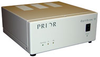
from Prior Scientific, Inc.
Controls as standard: - Stages: ES111 or ES107. - 2 Filter Wheels. - 3 Shutters. - 1 Focus Motor. Upgradeable for encoded focus. 2 x RS232 ports. High Speed USB connection with data transfer rates of up to 32 Kb/s. Smaller, space saving design with dimensions of 210mm x 85mm x 210mm deep. Upgraded... [See More]
- Communication: RS232; TTL; USB
- Setup: Computer
- Motor / System: Bipolar
- Configuration: Stand Alone
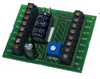
from Greenwich Instruments Ltd.
The GSM2 driver card is designed to drive a unipolar stepper motor (either with or without forcing resistors). Full, half or wave stepping modes are selectable, as is direction and speed can either be from an external or internal clock. An enable and disable input allow for a variety of start/stop... [See More]
- Communication: TTL
- Motor / System: Unipolar; Full-Step; Half-Step
- Axes: 1.0
- DC Input: 9 to 24
from Anaheim Automation, Inc.
Eliminates motor wires, ideal for precise positioning [See More]
- Communication: TTL
- Motor / System: Unipolar
- Axes: 1.0
- DC Input: 8 to 35
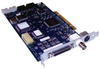
from Prior Scientific, Inc.
The Prior PCI II incorporates a 32 bit BUS that communicates at speeds of 133 MBps. This yields a communication response time of less than 250 nanoseconds - over 100 times faster than standard RS232 communications. The Prior PCI II controller is capable of driving the stage at step sizes as small as... [See More]
- Communication: RS422; TTL
- Resolution: 16
- Product: PC-Based
- PC-Based Bus: PCI
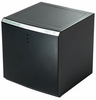
from Prior Scientific, Inc.
The ProScan ™ III Controller can control: - One ProScan stage and focus. - Four TTL input and outputs. - Supports Interactive Control Center (ICC). - 2 x RS232 ports. The compact and modular design of the ProScan ™ III system is capable of controlling up to 16 individual stepper motor... [See More]
- Communication: RS232; TTL; USB
- Motor / System: Bipolar
- Axes: 16.0
- Setup: Computer