
Metric Gears Information
Last revised: January 22, 2025
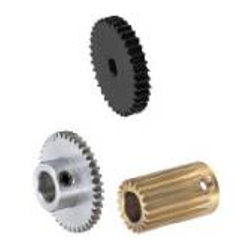
Metric gears are defined by module, which designates the center-to-center distance between successive teeth. This criterion of gear selection is used in countries which have adopted the metric system and is intended to standardize gear selection.
To define a gear's module, the pitch diameter (the teeth bearing circumference) of the gear is divided--in millimeters--by the number of teeth. If the gear is measured using inches, it is specifically referred to as the English module to avoid confusion.
Types of Metric Gears
Any type of gear can be a metric gear, including:
- Differential end gears
- Gear stock or pinion wire
- Hypoid gears
- Miter and bevel gear sets
- Racks and pinions
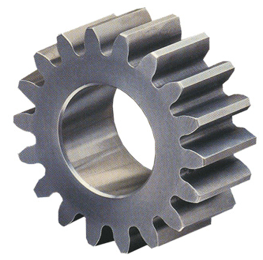
- Spur gears
- Worm drives and worm wheels
Specifications
More than just module should be studied when considering metric gears. Gears mate via teeth with very specific geometry.
- Pitch is a measure of tooth spacing and is expressed in several ways.
- Gear center can be a bored hole or an integral shaft.
- Bore diameter is the diameter of the center hole.
- Shaft diameter corresponds to the diameter of the shaft the gear mounts to, or the diameter of an integral shaft, if present.
Metric gears can be mounted on a hub or shaft. A hub is a cylindrical projection on one or both sides of a herringbone gear, often for the provision of a screw or other shaft attachment mechanism. Hubless gears are typically attached via press fit, adhesive or internal keyway.
Shaft mounting choices include the following:
|
Keyway: One or more cutouts exist in the gear bore for exact mounting on the shaft. |
Image credit: TT Net |
|
Set Screw: The gear is attached to the shaft by screws through the hub. |
|
|
Hub Clamping Screws: The gear is attached with a screw that squeezes the inner diameter of the hub to a tight fit around the shaft. |
|
|
Split: The hub is split into several pieces that are tightened down by a separate clamp to grip the shaft. |
Image credit: SDP/SI |
|
Simple Bore: A straight bore designed for adhesive attachment. |
Image credit: Monarch Bearing |
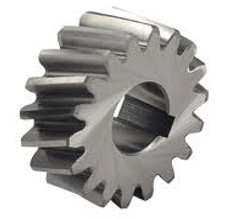
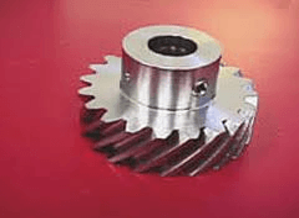 Image credit: Direct Industry
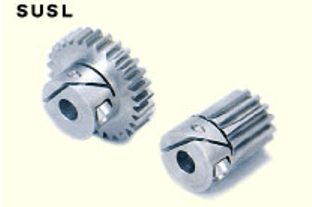 Image credit: How Stuff Works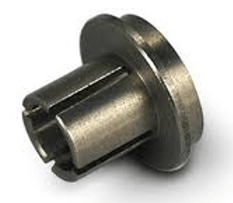
Additional Specifications and Features
Application requirements should be considered with the workload and environment of the gear set in mind.
- Power, velocity and torque consistency and output peaks of the gear drive so the gear meets mechanical requirements.
- Inertia of the gear through acceleration and deceleration. Heavier gears can be harder to stop or reverse.
- Precision requirement of gear, including gear pitch, shaft diameter, pressure angle and tooth layout. The module is included for metric gears.
- Handedness (left or right teeth angles) depending the drive angle.
- Gear lubrication requirements. Some gears require lubrication for smooth, temperate operation.
- Mounting requirements. Application may limit the gear's shaft positioning.
- Noise limitation. Commercial applications may value a smooth, quietly meshing gear.
- Corrosion resistance. Gears exposed to weather or chemicals should be especially hardened or protected.
- Temperature exposure. Some gears may warp or become brittle in the face of extreme temperatures.
- Vibration and shock resistance. Heavy machine loads or backlash, the deliberate surplus space in the circular pitch, may jostle gearing.
- Operation disruption resistance. It may be necessary for some gear sets to function despite missing teeth or misalignment.
Materials
Gear composition is determined by application, including the gear's service, rotation speed, accuracy and more.
- Cast iron provides durability and ease of manufacture.
- Alloy steel provides superior durability and corrosion resistance. Minerals may be added to the alloy to further harden the gear.
- Cast steel provides easier fabrication, strong working loads and vibration resistance.
- Carbon steels are inexpensive and strong, but are susceptible to corrosion.
- Aluminum is used when low gear inertia with some resiliency is required.
- Brass is inexpensive, easy to mold and corrosion resistant.
- Copper is easily shaped, conductive and corrosion resistant. The gear's strength would increase if bronzed
- Plastic is inexpensive, corrosion resistant, quiet operationally and can overcome missing teeth or misalignment. Plastic is less robust than metal and is vulnerable to temperature changes and chemical corrosion. Acetal, delrin, nylon, and polycarbonate plastics are common.
- Other material types like wood may be suitable for individual applications.
Metric Gears FAQs
What are the key differences between spur gears and helical gears in metric applications?
Tooth Design and Alignment
Spur Gears: These have straight teeth that are cut parallel to the axis of rotation. They are typically used to transmit motion between parallel shafts.
Helical Gears: These have teeth that are cut at an angle to the axis of rotation, forming a helix. This design allows them to transmit motion between parallel or non-parallel shafts.
Load Distribution and Noise
Spur Gears: Engage with one tooth at a time, which can lead to higher stress and noise levels, especially at high speeds.
Helical Gears: Engage gradually as more of the tooth face is engaged, allowing multiple teeth to be in contact at once. This results in better load distribution, reduced stress, and quieter operation.
Axial Thrust
Spur Gears: Do not produce axial thrust, making them simpler in terms of bearing requirements.
Helical Gears: Produce axial thrust due to the angled teeth, requiring thrust bearings to counteract this force.
Load Carrying Capacity
Spur Gears: Suitable for moderate speeds and loads.
Helical Gears: Have a superior load-carrying capacity due to the gradual engagement of teeth and the distribution of load across multiple teeth.
Manufacturing Complexity and Cost
Spur Gears: Generally simpler and less expensive to manufacture.
Helical Gears: More complex to manufacture due to the angled teeth, which can result in higher costs and maintenance requirements.
These differences highlight the suitability of each gear type for specific applications, with spur gears being more appropriate for simpler, lower-speed applications, and helical gears being preferred for higher-speed, higher-load, and quieter operations.
How do the material choices for metric gears impact their performance and durability in engineering designs?
The material choices for metric gears significantly impact their performance and durability in engineering designs.
Durability and Corrosion Resistance
Alloy Steel: Offers superior durability and corrosion resistance. It can be further hardened by adding minerals, making it suitable for harsh environments.
Cast Iron: Known for its durability and ease of manufacture, making it a common choice for many applications.
Carbon Steels: While inexpensive and strong, they are susceptible to corrosion, which can limit their use in certain environments.
Fabrication and Load Handling
Cast Steel: Provides easier fabrication and is capable of handling strong working loads and vibration resistance, making it ideal for heavy-duty applications.
Brass and Copper: Both are corrosion-resistant and easy to mold or shape. Brass is inexpensive, while copper is conductive and its strength can be increased if bronzed.
Weight and Inertia
Aluminum: Used when low gear inertia with some resiliency is required, which is beneficial in applications where weight reduction is critical.
Noise and Operational Smoothness
Plastic: Offers quiet operation and is corrosion-resistant. However, it is less robust than metal and vulnerable to temperature changes and chemical corrosion. Common plastics include acetal, delrin, nylon, and polycarbonate.
Thermoplastics and Hardened Steel: A combination often used in gear trains to reduce noise while supporting higher output torque and longer life.
Friction and Heat Management
Bronze: Supports higher continuous or impact loads but has higher frictional loads and runs hotter compared to composite gears, which can accelerate wear.
The choice of material should align with the specific requirements of the application, such as load capacity, environmental conditions, noise levels, and cost considerations.
How does temperature exposure affect different gear materials?
Temperature exposure can significantly affect different gear materials in various ways:
Warping and Brittleness
Some gear materials may warp or become brittle when exposed to extreme temperatures. This can lead to deformation and potential failure in the gear's operation.
Material-Specific Reactions
Plastic: Plastic gears are particularly vulnerable to temperature changes. They can become less robust and may suffer from chemical corrosion when exposed to high temperatures.
Bronze: Bronze gears tend to run hotter compared to composite gears, which can accelerate wear due to higher frictional loads.
Operational Impact
Temperature changes can affect the operational smoothness and noise levels of gears. For instance, thermoplastics combined with hardened steel can help reduce noise while maintaining performance under varying temperatures.
The choice of gear material should consider the specific temperature conditions of the application to ensure optimal performance and longevity.
What are some strategies to mitigate the effects of temperature on gear performance?
To mitigate the effects of temperature on gear performance, several strategies can be employed based on the materials and design considerations
Material Selection
Use of Thermally Stable Materials: Selecting materials that are less susceptible to temperature-induced warping or brittleness can help maintain gear integrity. For example, metals like alloy steel and cast steel offer superior durability and resistance to temperature changes.
Avoiding Plastics in High-Temperature Environments: Since plastic gears can become less robust and suffer from chemical corrosion at high temperatures, they should be avoided in applications where high temperatures are expected.
Lubrication
Appropriate Lubrication: Ensuring that gears are properly lubricated can help manage heat generation and reduce friction, which is particularly important for materials like bronze that tend to run hotter.
Design Considerations
Incorporating Cooling Mechanisms: Designing gear systems with cooling mechanisms or heat dissipation features can help manage temperature effects.
Using Composite Materials: Combining materials, such as using thermoplastics with hardened steel, can help reduce noise and maintain performance under varying temperatures.
Operational Adjustments
Monitoring and Controlling Operating Conditions: Regular monitoring of gear systems and controlling the operating environment can help mitigate temperature effects. This includes maintaining optimal operating temperatures and avoiding sudden temperature fluctuations.
These strategies should be tailored to the specific requirements of the application to ensure optimal gear performance and longevity.
What is the impact of lubrication on gear performance?
Lubrication plays a crucial role in the performance and longevity of gears. Here are some key impacts of lubrication on gear performance:
Heat Management
Proper lubrication helps in managing the heat generated during gear operation. This is particularly important for materials like bronze, which tend to run hotter due to higher frictional loads.
Friction Reduction
Lubrication reduces friction between gear teeth, which minimizes wear and tear. This is essential for maintaining the efficiency and lifespan of the gear system.
Noise Reduction
Lubricants can help in reducing the noise generated by gear operation. This is beneficial in applications where quiet operation is desired, such as in commercial settings.
Corrosion Protection
Lubricants can provide a protective layer that helps prevent corrosion, especially in environments where gears are exposed to moisture or chemicals.
Smooth Operation
Ensuring that gears are properly lubricated contributes to smoother operation, reducing the likelihood of operational disruptions due to missing teeth or misalignment.
These factors highlight the importance of selecting the appropriate type and amount of lubrication for specific gear applications to ensure optimal performance and durability.
What are the types of lubricants used for different gear materials?
When selecting lubricants for different gear materials, it's important to consider the specific properties and requirements of each material.
Types of Lubricants
Grease Lubrication: Suitable for low-speed gear systems, whether open or enclosed. Grease provides good fluidity in enclosed systems but may not be ideal for high load and continuous operations due to its limited cooling effect.
Oil Lubrication: Often used in high-speed or large gearbox applications. It requires additional components like oil tanks and pumps for forced lubrication systems, which help maintain the right viscosity and cleanliness by filtering and cooling the circulating lubricant.
Lubricant Properties
Viscosity: The correct viscosity is crucial for forming an oil film at the contact surface of gear teeth, minimizing friction, and preventing metal-to-metal contact.
Additives: Modern lubricants may include additives for extreme pressure, anti-foaming, and heat transfer, allowing them to function across a wide range of temperatures and conditions.
Material-Specific Considerations
Plastic Gears: Lubricants must be chosen carefully as some can chemically attack plastics or cause dimensional changes. Additives like PTFE, silicone, or graphite can be compounded into the polymer to reduce friction, but their effectiveness may vary depending on whether the gears are oiled or greased.
High-Temperature and High-Pressure Environments: Solid lubricants like graphite and molybdenum disulfide (MoS2) are effective in these conditions.
Application-Specific Lubricants
Synthetic Lubricants: These do not contain petroleum or mineral oil bases and offer exceptional fire resistance and cooling performance. They are suitable for applications requiring unique properties under diverse environmental conditions.
These insights highlight the importance of selecting the appropriate lubricant type and properties based on the gear material and application requirements to ensure optimal performance and longevity.
Metric Gears Media Gallery
References
GlobalSpec—Improving Appliances with Plastic Gears
GlobalSpec—Industrial Lubricants Information
GlobalSpec—Herringbone Gears Information
- 14.5°
- 20°
- Acetal
- Aluminum
- Anti-backlash
- Brass
- Bronze
- Carbon / Alloy Steel
- Cast Iron
- Center Bore
- Delrin
- Ground Teeth
- Hardened Steel
- Helical Gear
- Hub
- Hubless
- Hypoid Gear
- Integral Rack and Rail
- Keyway
- Left Hand
- Miter / Bevel Gear Set
- Nylon
- Pinion
- Polycarbonate
- Rack
- Right Hand
- Set Screw(s)
- Simple Bore
- Spiral Teeth
- Spur Gear
- Stainless Steel
- Straight Teeth
- Worm
- Worm Wheel