
Encoder Data Acquisition Systems and Instruments
Reviewed by: Jon Lowy, consulting engineer
Description
Encoder Data Acquisition Systems and Instruments are specialized devices designed to convert motion or position information into digital signals that can be processed by computers or other electronic systems. These systems typically use encoders, which are sensors that provide feedback about the position, speed, or direction of a moving object. The primary function of these systems is to capture precise data related to the movement of mechanical components, enabling accurate monitoring and control in various applications.
Working Principle
Encoder Data Acquisition Systems operate by using encoders to detect changes in position or motion. Encoders can be either rotary or linear, depending on the type of movement they are measuring. Rotary encoders detect rotational motion, while linear encoders measure straight-line movement. The encoder generates electrical signals, often in the form of pulses, which correspond to the movement of the object. These signals are then processed by the data acquisition system to provide real-time feedback on the object's position or speed. This feedback is crucial for maintaining precision and efficiency in automated systems, as it allows for adjustments to be made based on the data collected.
Applications
Encoder Data Acquisition Systems are widely used in industrial automation, where they play a critical role in controlling machinery and robotic systems. For example, in CNC (Computer Numerical Control) machines, encoders provide precise position feedback to ensure accurate cutting and shaping of materials. In the automotive industry, these systems are used in assembly lines to monitor the position and speed of conveyor belts and robotic arms. Additionally, encoders are employed in the aerospace sector for monitoring the position of control surfaces on aircraft, ensuring safe and efficient operation.
Advantages over other Data Acquisition Systems and Instruments
One of the key advantages of Encoder Data Acquisition Systems is their ability to provide high-resolution feedback, which is essential for applications requiring precise control and positioning. Unlike other data acquisition systems that may rely on less accurate sensors, encoders offer superior accuracy and repeatability. For instance, in precision machining, the high-resolution feedback from encoders ensures that components are manufactured to exact specifications, reducing waste and improving quality. Furthermore, encoders are often more robust and durable, making them suitable for harsh industrial environments where other sensors might fail.
Limitations
Despite their advantages, Encoder Data Acquisition Systems have certain limitations. They can be susceptible to errors caused by mechanical wear or misalignment, which can affect the accuracy of the data collected. Additionally, encoders may not perform well in environments with high levels of dust, dirt, or moisture, as these conditions can interfere with their operation. Another limitation is the potential for signal interference, which can occur if the encoder's signals are not properly shielded from electromagnetic interference.
Considerations
When selecting Encoder Data Acquisition Systems, several factors should be considered to ensure optimal performance and cost-effectiveness. Initial costs can vary significantly depending on the type and resolution of the encoder, as well as the complexity of the data acquisition system. Operating expenses should also be taken into account, including the cost of regular maintenance and potential repairs. Durability is a critical consideration, especially in industrial settings where equipment is subject to wear and tear. Accuracy is paramount, so it's important to choose a system that meets the specific precision requirements of the application. Finally, replacement and maintenance costs should be evaluated, as these can impact the long-term affordability of the system.

from Opto 22
The SNAP-IDC5Q quadrature input module is designed to allow a SNAP brain to resolve two axes of rotating position information from quadrature encoder devices. The module outputs a pulse to the brain upon each change in quadrature state. The brain counts the module output pulses and keeps track of... [See More]
- Inputs: Encoder Input
- Isolation: Channel-to-Channel Isolation; Isolated Digital Inputs
- Digital I/O Channels: 1
- Form Factor: Modular Bay or Slot System
from Aries Engineering Co., Inc.
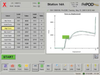
HyperView-Press ® Monitoring System provides the easiest to use, most comprehensive and highest reliability press monitoring available. With the most consistent test results and less false failures, the HyperView-Press ® will help you achieve your yield and quality objectives. Easy... [See More]
- Inputs: LVDT; Encoder Input
- Digital I/O Channels: 8
- Analog Channels: 4
- Resolution: 16
from CAS DataLoggers
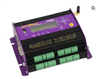
The DT80W WiFi Universal Input Data Logger allows you to connect an array of sensors through the versatile analog and digital channels, high-speed counter inputs, phase encoder inputs and programmable serial sensor channels. Temperature, voltage, current, 4-20mA loops, resistance, bridges, strain... [See More]
- Inputs: Thermocouple Input; Thermistor Input; RTD Input; Bridge Input; Encoder Input; Tach; Relay / Switch Input; Monolithic Temperature Sensors
- Digital I/O Channels: 8
- Analog Channels: 15
- Sampling Frequency: 0.0400
from Aerotech, Inc.
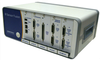
Sensor I/O easily aligned with encoder position. Data recording and playback. Combine sensor inputs in real time. 5 MHz collection rates. One easy-to-use software interface. Aerotech ’s Sensor Fusion ™ is a 3U data acquisition device integrated with our Automation 3200 (A3200) motion... [See More]
- Inputs: Encoder Input
- Digital I/O Channels: 32
- Analog Channels: 16
- Isolation: Isolated Digital Inputs; Isolated Digital Outputs