
Accelerometer Data Acquisition Systems and Instruments
Description
Accelerometer Data Acquisition Systems and Instruments are devices designed to measure linear acceleration. They capture data related to the inertial forces exerted on a seismic mass, providing valuable information about the motion of the object to which they are attached. These systems are integral in translating physical movement into electronic data that can be analyzed for various purposes.
Working Principle
Accelerometers operate by measuring the force exerted on a seismic mass within the device. This force is typically measured directly through piezoelectric sensors or indirectly through the displacement or deformation of a sensing element. The data acquired from these measurements can be used to determine the acceleration of the object in question. The utility of accelerometers lies in their ability to provide precise and stable measurements of acceleration, which are crucial for applications requiring detailed motion analysis.
Applications
Accelerometers are utilized across a wide range of industries and applications. Specific examples include product testing, such as measuring vehicle acceleration, and structure testing for buildings and bridges. They are also used in electronic devices like tablets and mobile phones to enable automatic shutdown when dropped. In the field of condition monitoring, accelerometers measure vibration in machinery such as pumps, compressors, and fans. Other applications include remote marine animal tracking, seismology systems, inertial navigation systems, and gravimetry.
Advantages over other Data Acquisition Systems and Instruments
Accelerometers offer several advantages over other data acquisition systems. For instance, force balance sensors used in accelerometers provide exceptional performance by minimizing internal displacements, which can lead to inaccuracies such as excessive hysteresis and non-linearity. This makes them particularly suitable for applications requiring high precision and reliability.
Limitations
One limitation of accelerometers is their sensitivity to low-frequency vibrations. While some accelerometers can detect vibrations as low as 0.2 Hz, they are typically inaccurate below frequencies of 10-15 Hz. This limitation can affect their performance in applications requiring precise low-frequency measurements.
Considerations
When selecting an accelerometer, several factors should be considered. Initial costs can vary depending on the type and precision of the accelerometer. Operating expenses may include power consumption, which is a critical factor for battery-operated devices. Durability is another consideration, as accelerometers must withstand the environmental conditions of their intended application. Accuracy is paramount, especially in applications requiring precise measurements. Finally, replacement and maintenance costs should be evaluated, as these can impact the long-term viability of the accelerometer system.

from Silicon Designs, Inc.
SDI's Model 3330 G-Logger® is a low-cost, USB-powered portable data acquisition systems with the same powerful monitoring, FFT analysis, and display capabilities typically found in much more expensive systems. The 3330 gives users a quick, powerful, and comprehensive real-time data stream with fast... [See More]
- Inputs: Accelerometer Input
- Sampling Frequency: 10
- Digital I/O Channels: 3
- Resolution: 16
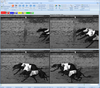
from NorPix, Inc.
StreamPix is Norpix ’s flag ship software product. Resulting from more than 10 years of interaction with our vast group of customers, StreamPix has become the ultimate Digital Video Recording software. It offers a state of the art user interface, and an enormous amount of usage flexibility for... [See More]
- Inputs: Accelerometer Input; Thermocouple Input; Tach; Timer / Clock Input; Relay / Switch Input
- Differential Channels: Yes
- Analog Channels: 32
- Digital I/O Channels: 48

from CAS DataLoggers
With its Expert Vibro EV-16 Data Acquisition System device, Delphin has successfully combined the processing of complex functions with high levels of flexibility in a user-friendly system. Vibration measurement systems can now be used where they had previously been economically infeasible. The... [See More]
- Inputs: Accelerometer Input; Trigger
- Digital I/O Channels: 8
- Analog Channels: 16
- Sampling Frequency: 50
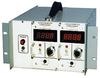
from Encore Electronics, Inc.
The Model 144 is a compact vibration monitoring system with two single-channel modules mounted in a 6 ”H x 8 ”W x 12 ”D carry case. Constant current excitation is provided for an accelerometer charge converter, whose signal is tightly filtered and monitored for exceeding a... [See More]
- Inputs: Accelerometer Input
- Excitation: Voltage; Current
- Form Factor: Stand-alone
- Auxiliary Outputs: Analog Voltage Output
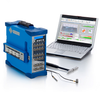
from OROS
OR36 models are intended for advanced needs in acoustic and vibration analysis measurements, for R&D as well as for testing. OR36 is a synthesis of components usually used separately for measurements. OR36 includes an acquisition front-end, with conditioning and sampling, a time domain recorder and... [See More]
- Inputs: Charge Input; Accelerometer Input; Tach
- Differential Channels: Yes
- Analog Channels: 16
- Digital I/O Channels: 1

from LORD MicroStrain Sensing Systems
Downhole Orientation Sensor and Data Logger. Overview. The 3DM-DH3 ™ is a downhole orientation sensor and datalogger. It incorporates acceleration sensors, magnetic field sensors, and temperature sensors, together with an on-board microprocessor, embedded software algorithm, non-volatile... [See More]
- Inputs: Accelerometer Input; RTD Input
- Data Logger: Datalogger
- Resolution: 24
- Form Factor: PC Board